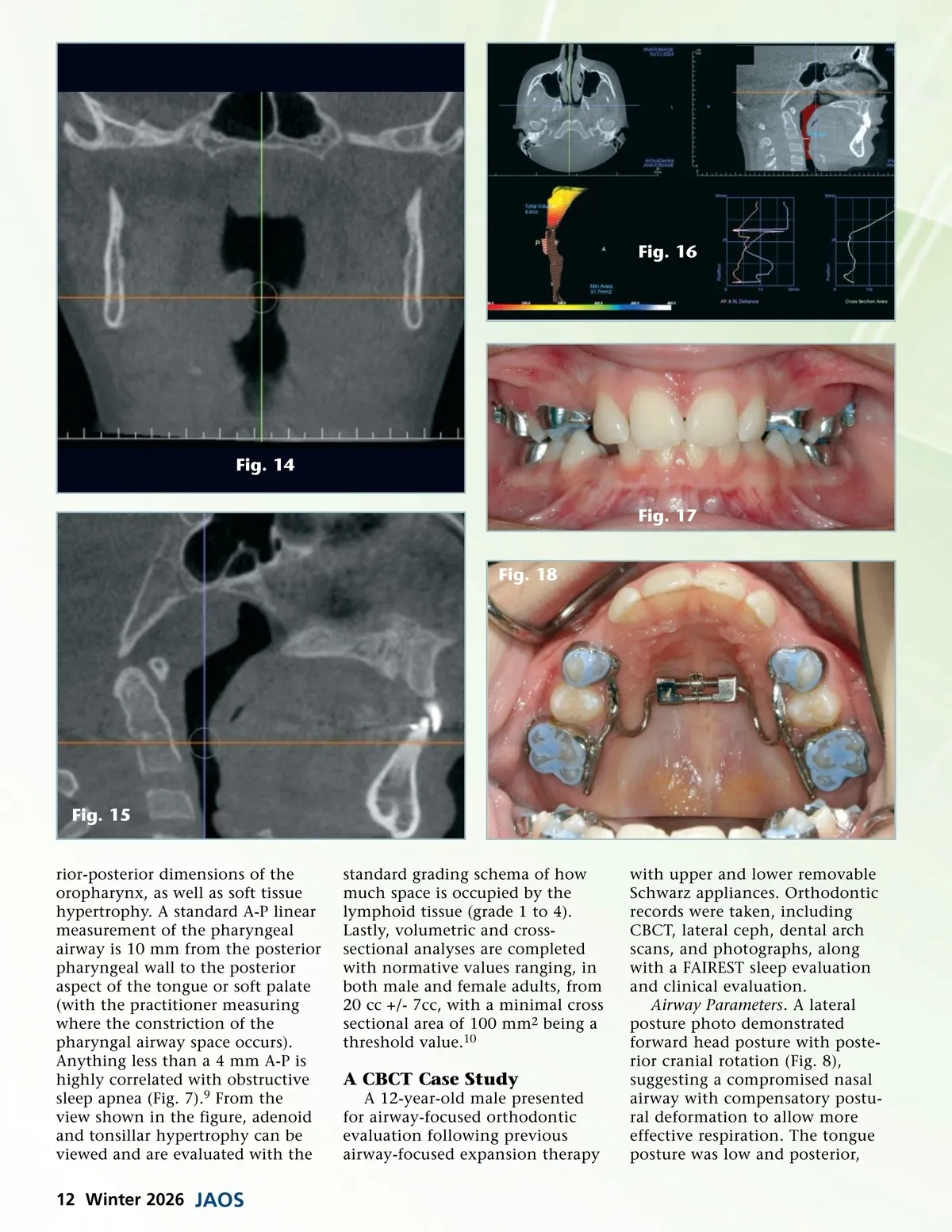
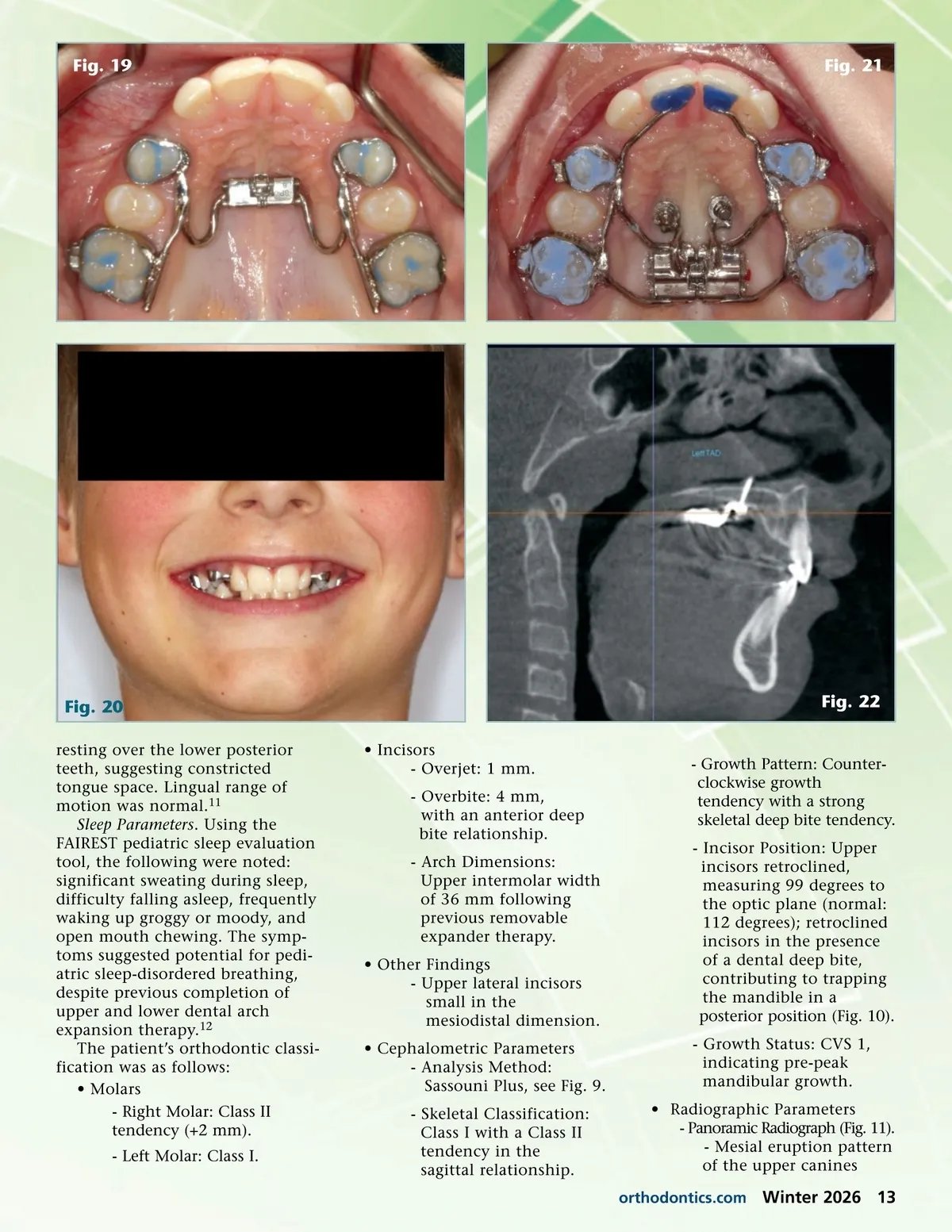
Fig. 19 Fig. 21 Fig. 20 resting over the lower posterior teeth, suggesting constricted tongue space. Lingual range of motion was normal. 11 Sleep Parameters . Using the FAIREST pediatric sleep evaluation tool, the following were noted: significant sweating during sleep, difficulty falling asleep, frequently waking up groggy or moody, and open mouth chewing. The symp-toms suggested potential for pedi-atric sleep-disordered breathing, despite previous completion of upper and lower dental arch expansion therapy. 12 The patient’s orthodontic classi-fication was as follows: • Molars -Right Molar: Class II tendency (+2 mm). -Left Molar: Class I. • Incisors -Overjet: 1 mm. -Overbite: 4 mm, with an anterior deep bite relationship. -Arch Dimensions: Upper intermolar width of 36 mm following previous removable expander therapy. • Other Findings -Upper lateral incisors small in the mesiodistal dimension. • Cephalometric Parameters -Analysis Method: Sassouni Plus, see Fig. 9. -Skeletal Classification: Class I with a Class II tendency in the sagittal relationship. Fig. 22 -Growth Pattern: Counter-clockwise growth tendency with a strong skeletal deep bite tendency. -Incisor Position: Upper incisors retroclined, measuring 99 degrees to the optic plane (normal: 112 degrees); retroclined incisors in the presence of a dental deep bite, contributing to trapping the mandible in a posterior position (Fig. 10). -Growth Status: CVS 1, indicating pre-peak mandibular growth. • Radiographic Parameters -Panoramic Radiograph (Fig. 11). -Mesial eruption pattern of the upper canines orthodontics.com Winter 2026 13
Journal of the American Orthodontic Society Winter 2026: Page 13