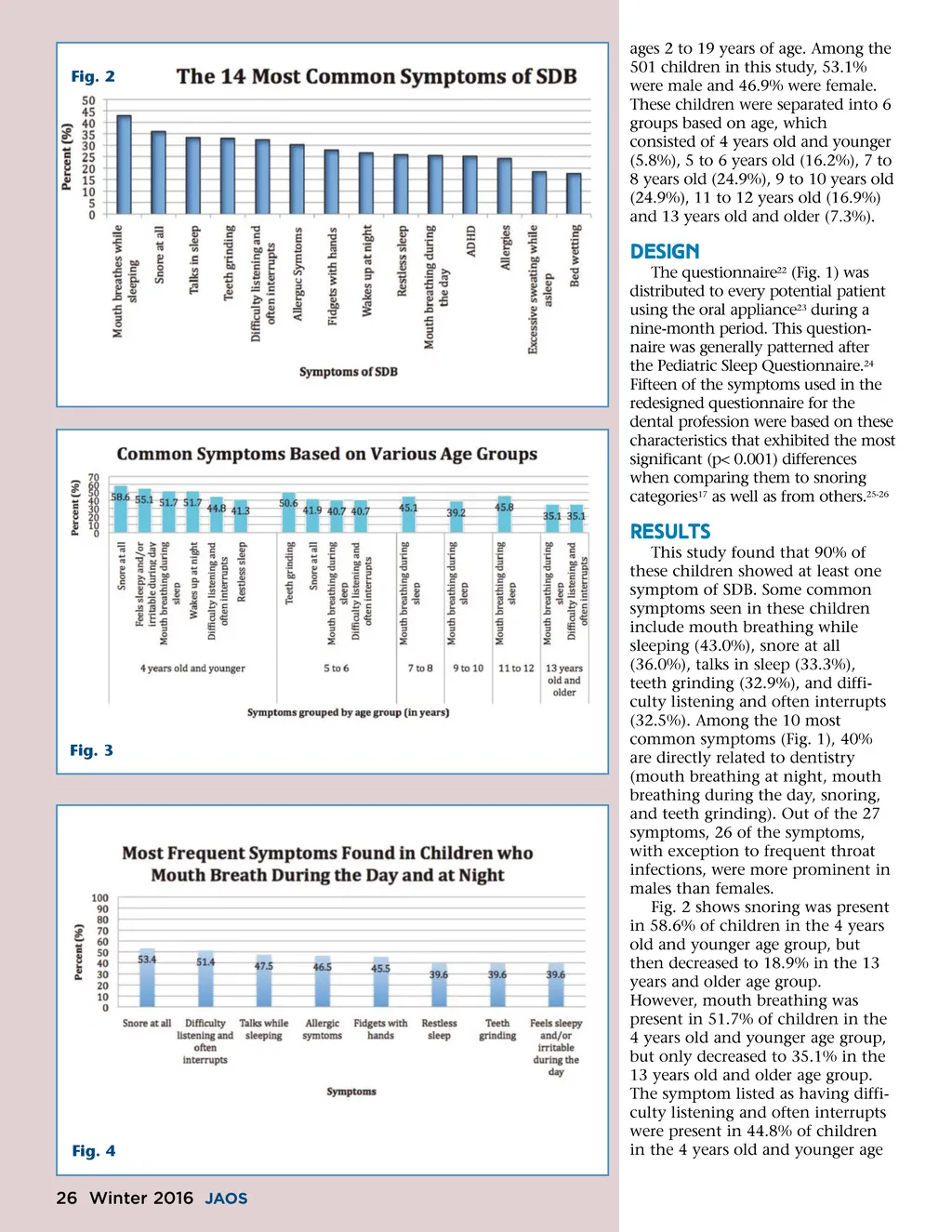
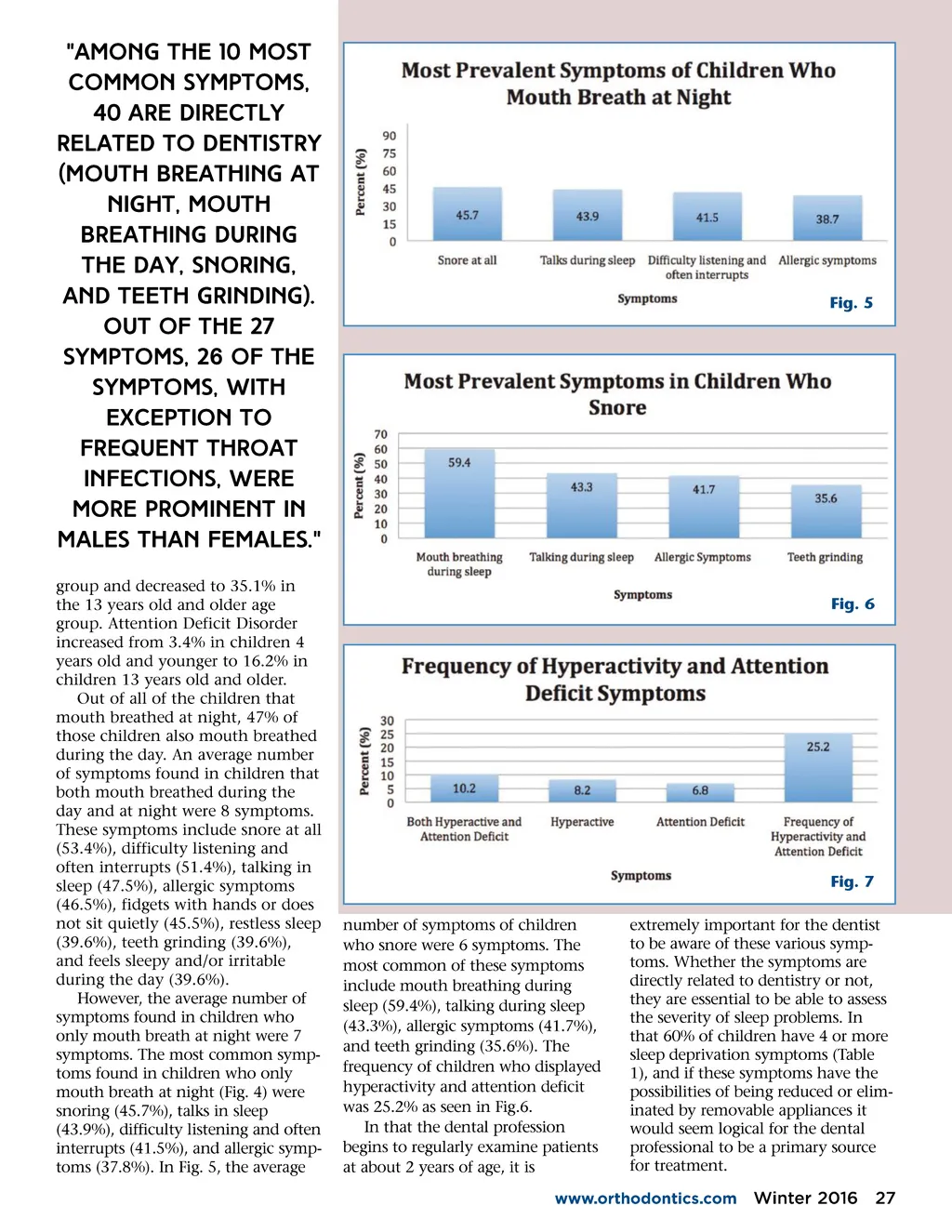
"Among the 10 most common symptoms, 40 are directly related to dentistry (mouth breathing at night, mouth breathing during the day, snoring, and teeth grinding). Out of the 27 symptoms, 26 of the symptoms, with exception to frequent throat infections, were more prominent in males than females." group and decreased to 35.1% in the 13 years old and older age group. Attention Deficit Disorder increased from 3.4% in children 4 years old and younger to 16.2% in children 13 years old and older. Out of all of the children that mouth breathed at night, 47% of those children also mouth breathed during the day. An average number of symptoms found in children that both mouth breathed during the day and at night were 8 symptoms. These symptoms include snore at all (53.4%), difficulty listening and often interrupts (51.4%), talking in sleep (47.5%), allergic symptoms (46.5%), fidgets with hands or does not sit quietly (45.5%), restless sleep (39.6%), teeth grinding (39.6%), and feels sleepy and/or irritable during the day (39.6%). However, the average number of symptoms found in children who only mouth breath at night were 7 symptoms. The most common symp-toms found in children who only mouth breath at night (Fig. 4) were snoring (45.7%), talks in sleep (43.9%), difficulty listening and often interrupts (41.5%), and allergic symp-toms (37.8%). In Fig. 5, the average Fig. 5 Fig. 6 Fig. 7 number of symptoms of children who snore were 6 symptoms. The most common of these symptoms include mouth breathing during sleep (59.4%), talking during sleep (43.3%), allergic symptoms (41.7%), and teeth grinding (35.6%). The frequency of children who displayed hyperactivity and attention deficit was 25.2% as seen in Fig.6. In that the dental profession begins to regularly examine patients at about 2 years of age, it is extremely important for the dentist to be aware of these various symp-toms. Whether the symptoms are directly related to dentistry or not, they are essential to be able to assess the severity of sleep problems. In that 60% of children have 4 or more sleep deprivation symptoms (Table 1), and if these symptoms have the possibilities of being reduced or elim-inated by removable appliances it would seem logical for the dental professional to be a primary source for treatment. www.orthodontics.com Winter 2016 27
Journal of the American Orthodontic Society Winter 2016: Page 27