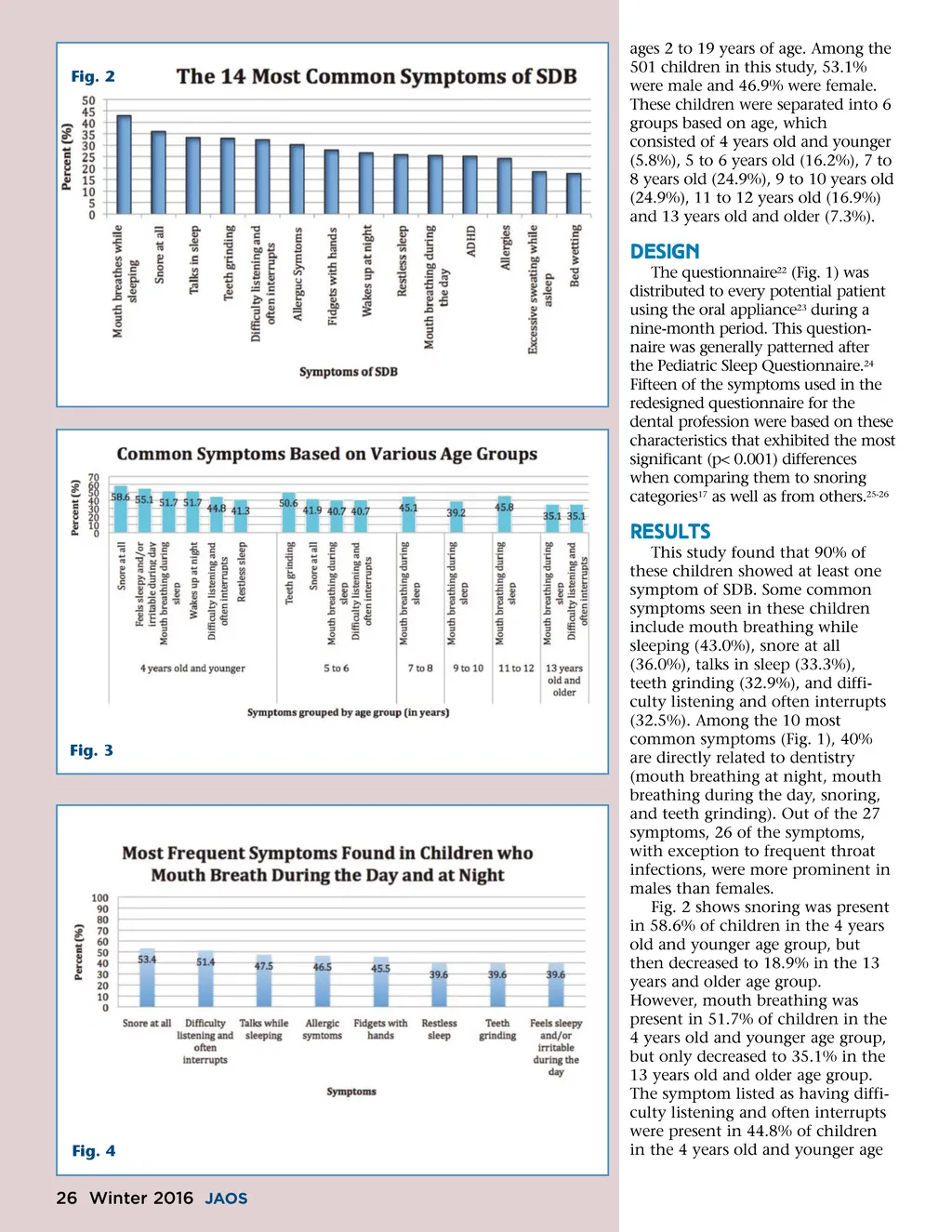
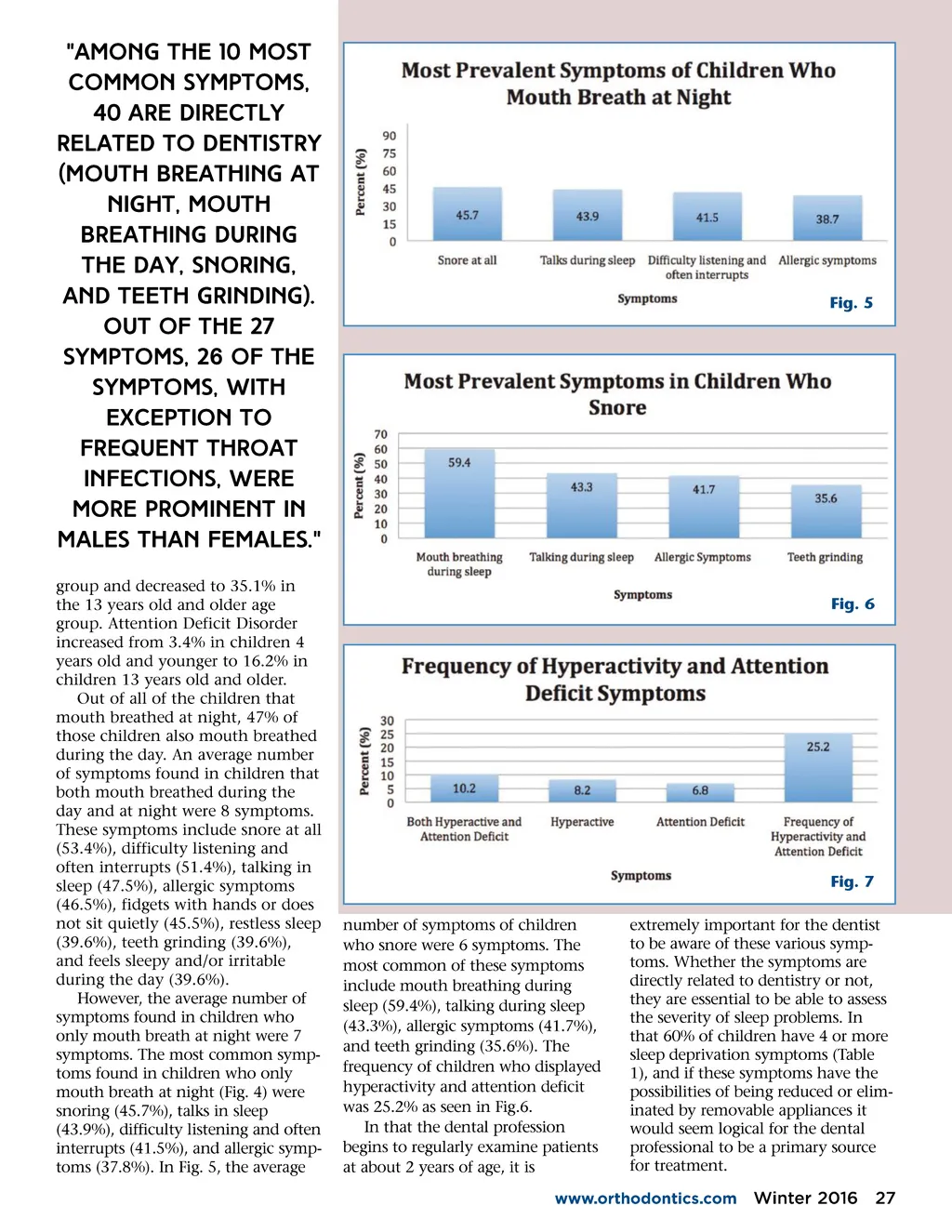
Fig. 2 ages 2 to 19 years of age. Among the 501 children in this study, 53.1% were male and 46.9% were female. These children were separated into 6 groups based on age, which consisted of 4 years old and younger (5.8%), 5 to 6 years old (16.2%), 7 to 8 years old (24.9%), 9 to 10 years old (24.9%), 11 to 12 years old (16.9%) and 13 years old and older (7.3%). DESIGN The questionnaire 22 (Fig. 1) was distributed to every potential patient using the oral appliance 23 during a nine-month period. This question-naire was generally patterned after the Pediatric Sleep Questionnaire. 24 Fifteen of the symptoms used in the redesigned questionnaire for the dental profession were based on these characteristics that exhibited the most significant (p< 0.001) differences when comparing them to snoring categories 17 as well as from others. 25-26 RESULTS This study found that 90% of these children showed at least one symptom of SDB. Some common symptoms seen in these children include mouth breathing while sleeping (43.0%), snore at all (36.0%), talks in sleep (33.3%), teeth grinding (32.9%), and diffi-culty listening and often interrupts (32.5%). Among the 10 most common symptoms (Fig. 1), 40% are directly related to dentistry (mouth breathing at night, mouth breathing during the day, snoring, and teeth grinding). Out of the 27 symptoms, 26 of the symptoms, with exception to frequent throat infections, were more prominent in males than females. Fig. 2 shows snoring was present in 58.6% of children in the 4 years old and younger age group, but then decreased to 18.9% in the 13 years and older age group. However, mouth breathing was present in 51.7% of children in the 4 years old and younger age group, but only decreased to 35.1% in the 13 years old and older age group. The symptom listed as having diffi-culty listening and often interrupts were present in 44.8% of children in the 4 years old and younger age Fig. 3 Fig. 4 26 Winter 2016 JAOS
Journal of the American Orthodontic Society Winter 2016: Page 26