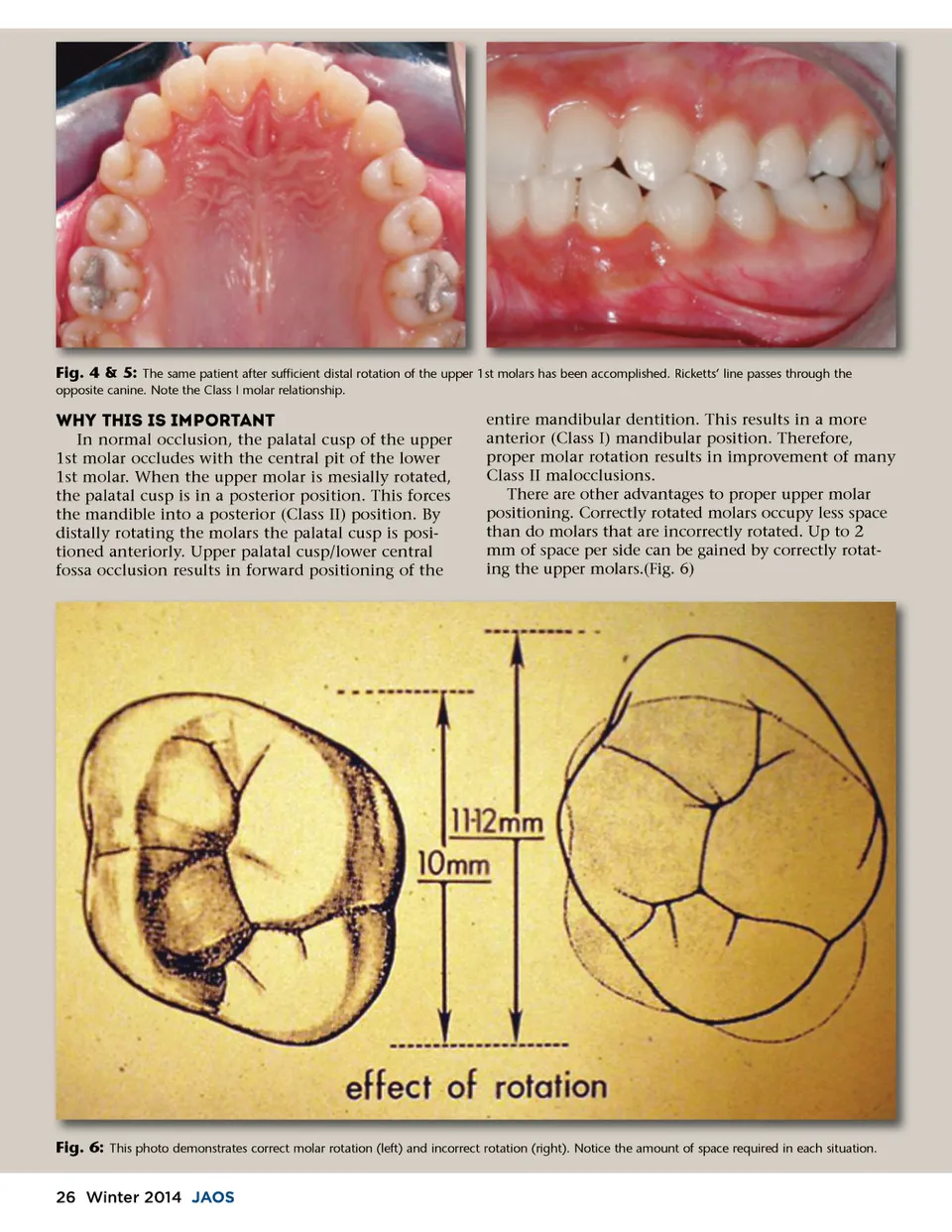
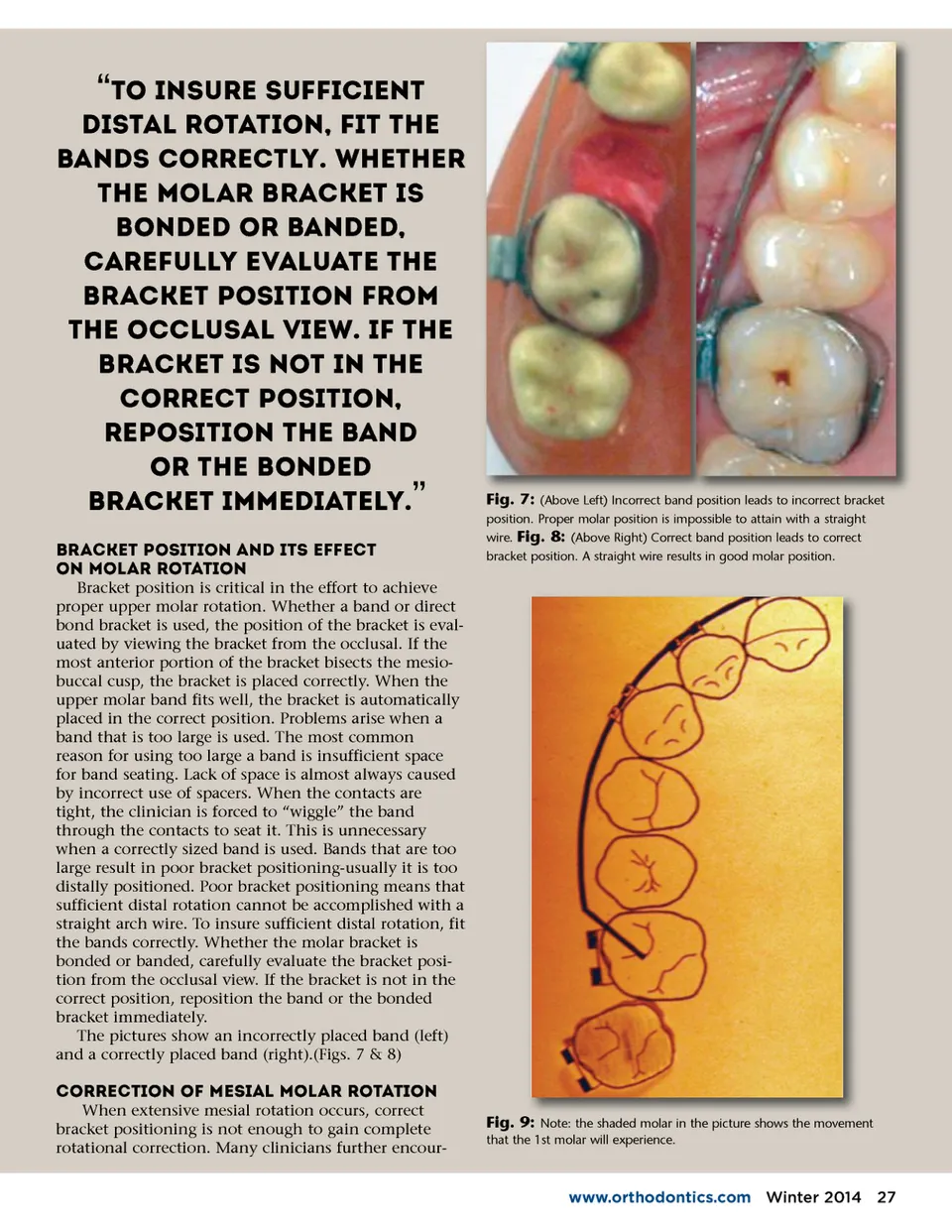
Fig. 4 & 5: The same patient after sufficient distal rotation of the upper 1st molars has been accomplished. Ricketts’ line passes through the opposite canine. Note the Class I molar relationship. Why This Is Important In normal occlusion, the palatal cusp of the upper 1st molar occludes with the central pit of the lower 1st molar. When the upper molar is mesially rotated, the palatal cusp is in a posterior position. This forces the mandible into a posterior (Class II) position. By distally rotating the molars the palatal cusp is posi-tioned anteriorly. Upper palatal cusp/lower central fossa occlusion results in forward positioning of the entire mandibular dentition. This results in a more anterior (Class I) mandibular position. Therefore, proper molar rotation results in improvement of many Class II malocclusions. There are other advantages to proper upper molar positioning. Correctly rotated molars occupy less space than do molars that are incorrectly rotated. Up to 2 mm of space per side can be gained by correctly rotat-ing the upper molars.(Fig. 6) Fig. 6: This photo demonstrates correct molar rotation (left) and incorrect rotation (right). Notice the amount of space required in each situation. 26 Winter 2014 JAOS
Journal of the American Orthodontic Society Winter 2014: Page 26