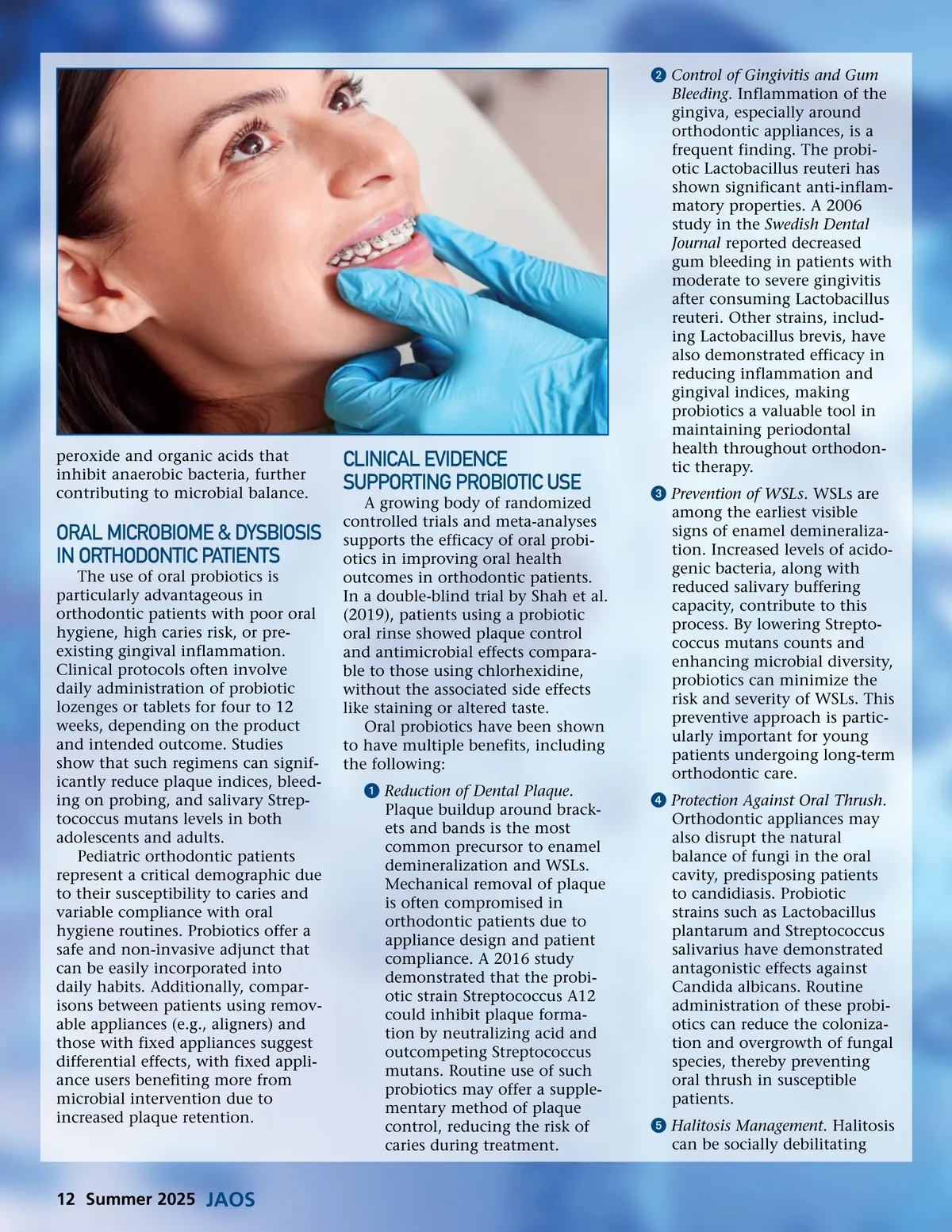
peroxide and organic acids that inhibit anaerobic bacteria, further contributing to microbial balance. CLINICAL EVIDENCE SUPPORTING PROBIOTIC USE A growing body of randomized controlled trials and meta-analyses supports the efficacy of oral probi-otics in improving oral health outcomes in orthodontic patients. In a double-blind trial by Shah et al. (2019), patients using a probiotic oral rinse showed plaque control and antimicrobial effects compara-ble to those using chlorhexidine, without the associated side effects like staining or altered taste. Oral probiotics have been shown to have multiple benefits, including the following: ᕡ Reduction of Dental Plaque . Plaque buildup around brack-ets and bands is the most common precursor to enamel demineralization and WSLs. Mechanical removal of plaque is often compromised in orthodontic patients due to appliance design and patient compliance. A 2016 study demonstrated that the probi-otic strain Streptococcus A12 could inhibit plaque forma-tion by neutralizing acid and outcompeting Streptococcus mutans. Routine use of such probiotics may offer a supple-mentary method of plaque control, reducing the risk of caries during treatment. ᕢ Control of Gingivitis and Gum Bleeding . Inflammation of the gingiva, especially around orthodontic appliances, is a frequent finding. The probi-otic Lactobacillus reuteri has shown significant anti-inflam-matory properties. A 2006 study in the Swedish Dental Journal reported decreased gum bleeding in patients with moderate to severe gingivitis after consuming Lactobacillus reuteri. Other strains, includ-ing Lactobacillus brevis, have also demonstrated efficacy in reducing inflammation and gingival indices, making probiotics a valuable tool in maintaining periodontal health throughout orthodon-tic therapy. ᕣ Prevention of WSLs . WSLs are among the earliest visible signs of enamel demineraliza-tion. Increased levels of acido-genic bacteria, along with reduced salivary buffering capacity, contribute to this process. By lowering Strepto-coccus mutans counts and enhancing microbial diversity, probiotics can minimize the risk and severity of WSLs. This preventive approach is partic-ularly important for young patients undergoing long-term orthodontic care. ᕤ Protection Against Oral Thrush . Orthodontic appliances may also disrupt the natural balance of fungi in the oral cavity, predisposing patients to candidiasis. Probiotic strains such as Lactobacillus plantarum and Streptococcus salivarius have demonstrated antagonistic effects against Candida albicans. Routine administration of these probi-otics can reduce the coloniza-tion and overgrowth of fungal species, thereby preventing oral thrush in susceptible patients. ᕥ Halitosis Management . Halitosis can be socially debilitating ORAL MICROBIOME & DYSBIOSIS IN ORTHODONTIC PATIENTS The use of oral probiotics is particularly advantageous in orthodontic patients with poor oral hygiene, high caries risk, or pre-existing gingival inflammation. Clinical protocols often involve daily administration of probiotic lozenges or tablets for four to 12 weeks, depending on the product and intended outcome. Studies show that such regimens can signif-icantly reduce plaque indices, bleed-ing on probing, and salivary Strep-tococcus mutans levels in both adolescents and adults. Pediatric orthodontic patients represent a critical demographic due to their susceptibility to caries and variable compliance with oral hygiene routines. Probiotics offer a safe and non-invasive adjunct that can be easily incorporated into daily habits. Additionally, compar-isons between patients using remov-able appliances (e.g., aligners) and those with fixed appliances suggest differential effects, with fixed appli-ance users benefiting more from microbial intervention due to increased plaque retention. 12 Summer 2025 JAOS
Journal of the American Orthodontic Society Summer 2025: Page 12