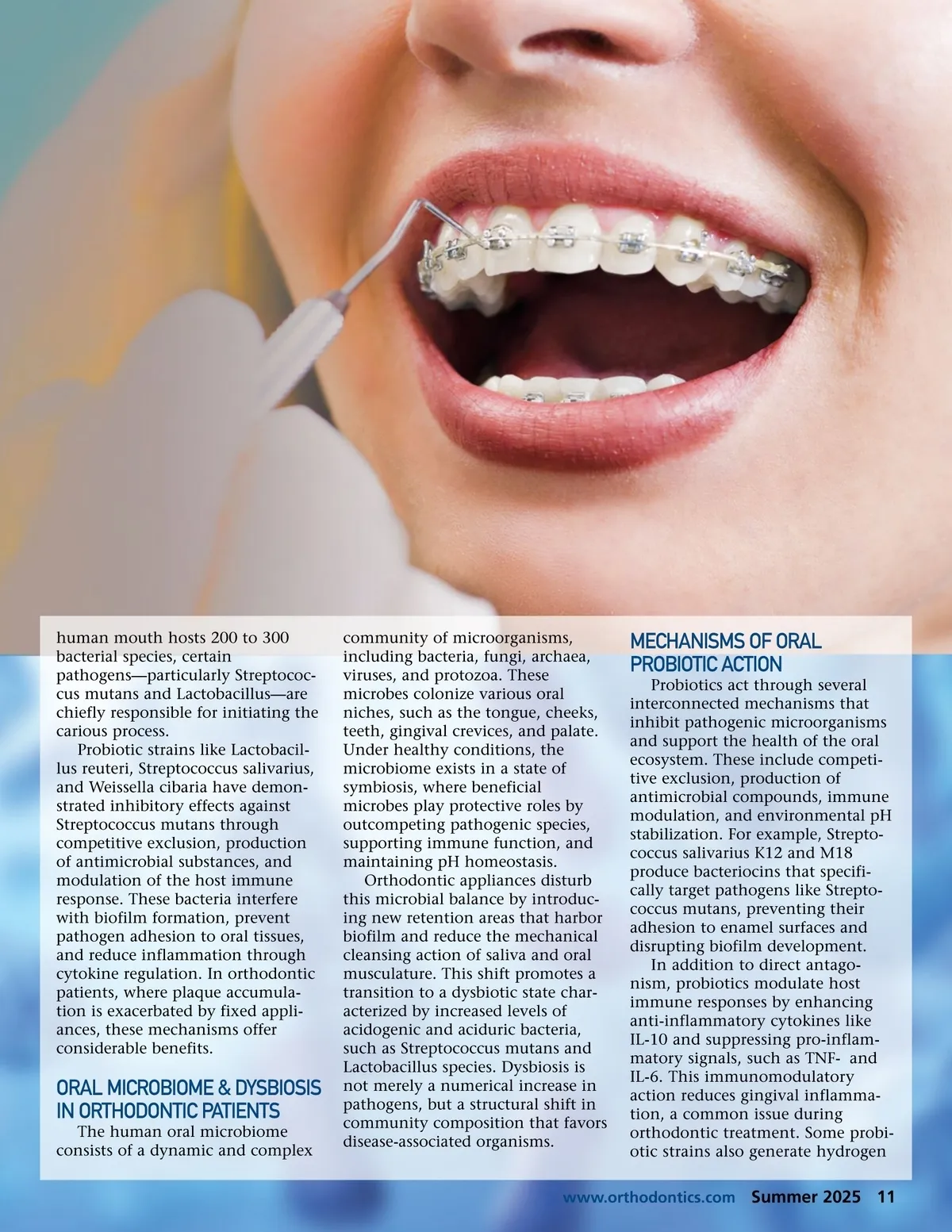
human mouth hosts 200 to 300 bacterial species, certain pathogens—particularly Streptococ-cus mutans and Lactobacillus—are chiefly responsible for initiating the carious process. Probiotic strains like Lactobacil-lus reuteri, Streptococcus salivarius, and Weissella cibaria have demon-strated inhibitory effects against Streptococcus mutans through competitive exclusion, production of antimicrobial substances, and modulation of the host immune response. These bacteria interfere with biofilm formation, prevent pathogen adhesion to oral tissues, and reduce inflammation through cytokine regulation. In orthodontic patients, where plaque accumula-tion is exacerbated by fixed appli-ances, these mechanisms offer considerable benefits. ORAL MICROBIOME & DYSBIOSIS IN ORTHODONTIC PATIENTS The human oral microbiome consists of a dynamic and complex community of microorganisms, including bacteria, fungi, archaea, viruses, and protozoa. These microbes colonize various oral niches, such as the tongue, cheeks, teeth, gingival crevices, and palate. Under healthy conditions, the microbiome exists in a state of symbiosis, where beneficial microbes play protective roles by outcompeting pathogenic species, supporting immune function, and maintaining pH homeostasis. Orthodontic appliances disturb this microbial balance by introduc-ing new retention areas that harbor biofilm and reduce the mechanical cleansing action of saliva and oral musculature. This shift promotes a transition to a dysbiotic state char-acterized by increased levels of acidogenic and aciduric bacteria, such as Streptococcus mutans and Lactobacillus species. Dysbiosis is not merely a numerical increase in pathogens, but a structural shift in community composition that favors disease-associated organisms. MECHANISMS OF ORAL PROBIOTIC ACTION Probiotics act through several interconnected mechanisms that inhibit pathogenic microorganisms and support the health of the oral ecosystem. These include competi-tive exclusion, production of antimicrobial compounds, immune modulation, and environmental pH stabilization. For example, Strepto-coccus salivarius K12 and M18 produce bacteriocins that specifi-cally target pathogens like Strepto-coccus mutans, preventing their adhesion to enamel surfaces and disrupting biofilm development. In addition to direct antago-nism, probiotics modulate host immune responses by enhancing anti-inflammatory cytokines like IL-10 and suppressing pro-inflam-matory signals, such as TNF-and IL-6. This immunomodulatory action reduces gingival inflamma-tion, a common issue during orthodontic treatment. Some probi-otic strains also generate hydrogen www.orthodontics.com Summer 2025 11
Journal of the American Orthodontic Society Summer 2025: Page 11