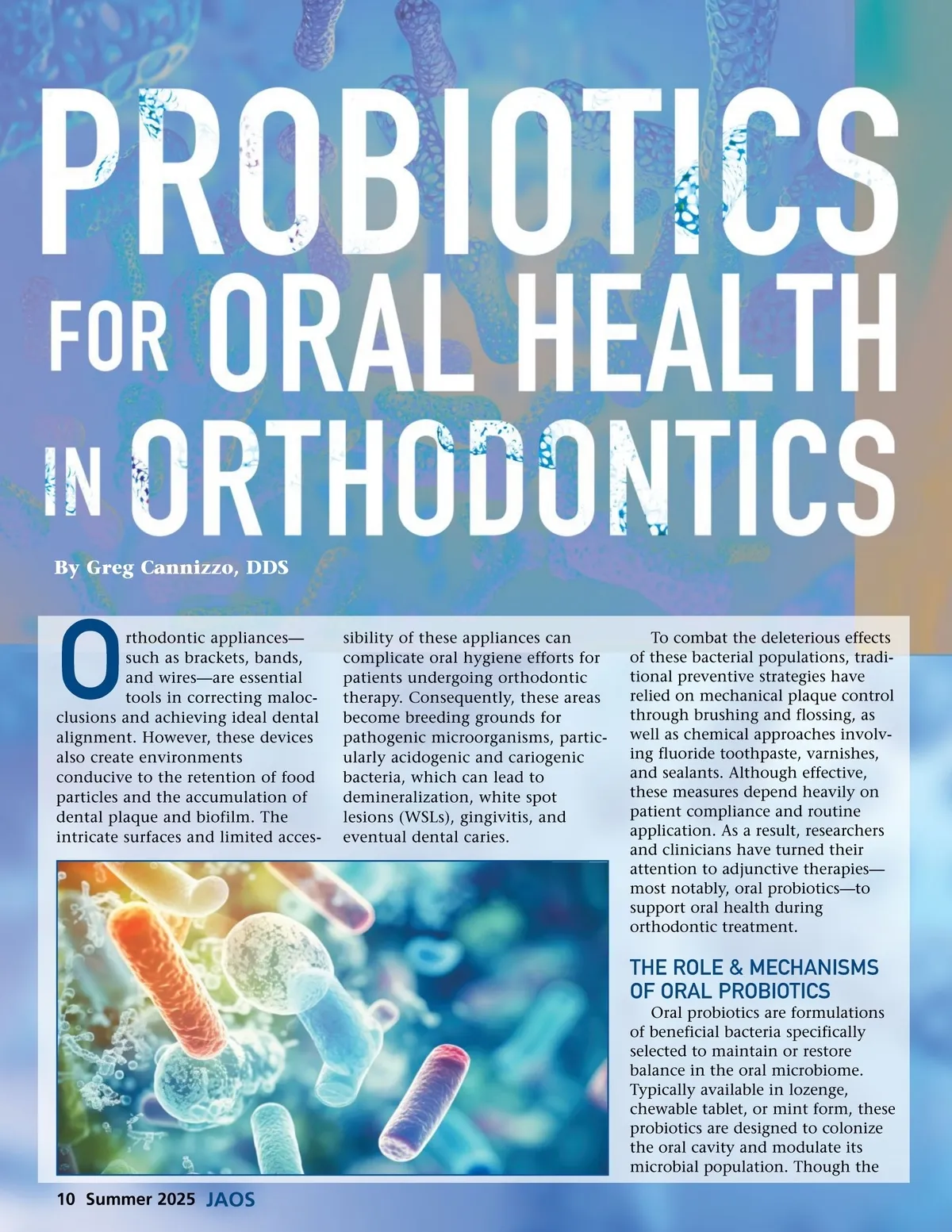
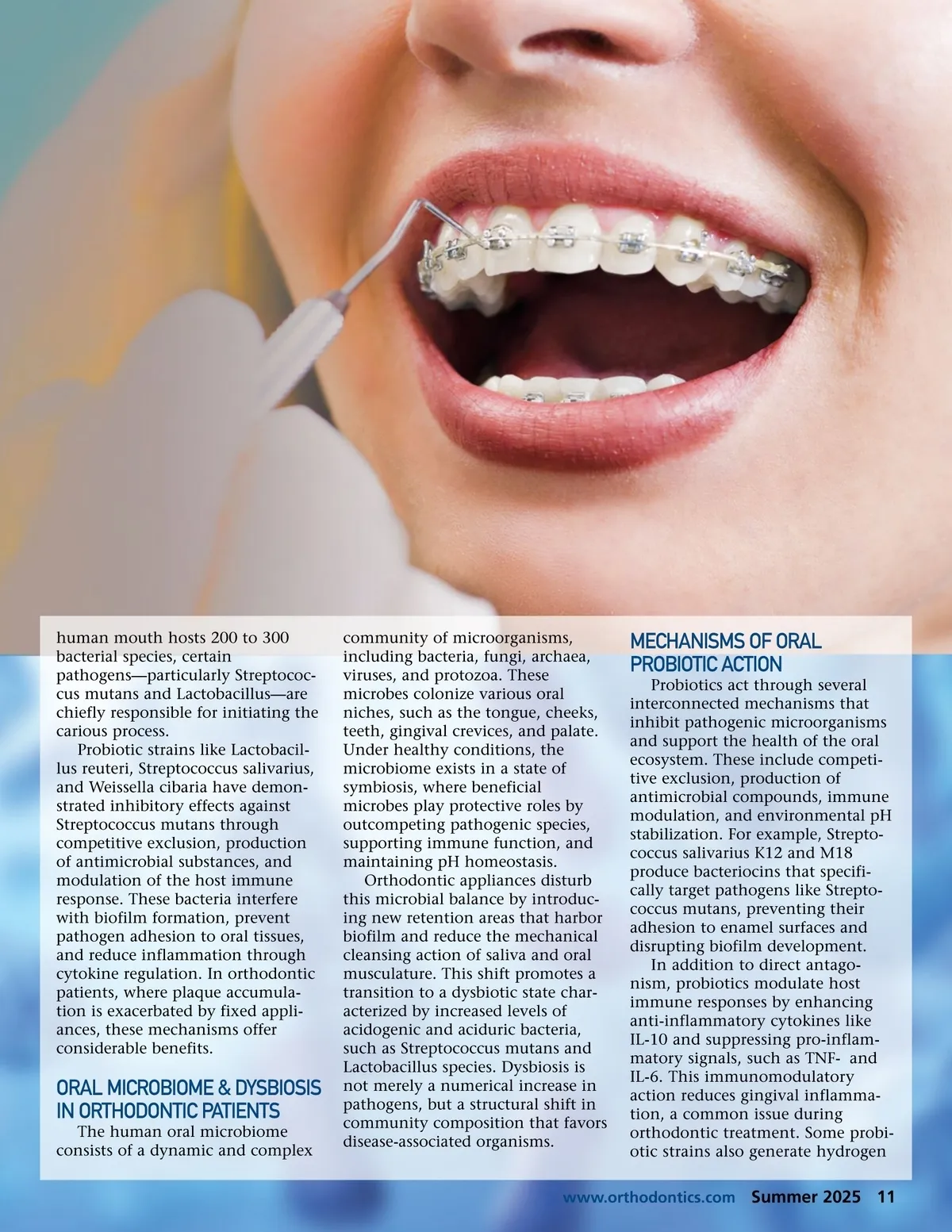
By Greg Cannizzo, DDS O rthodontic appliances— such as brackets, bands, and wires—are essential tools in correcting maloc-clusions and achieving ideal dental alignment. However, these devices also create environments conducive to the retention of food particles and the accumulation of dental plaque and biofilm. The intricate surfaces and limited acces-sibility of these appliances can complicate oral hygiene efforts for patients undergoing orthodontic therapy. Consequently, these areas become breeding grounds for pathogenic microorganisms, partic-ularly acidogenic and cariogenic bacteria, which can lead to demineralization, white spot lesions (WSLs), gingivitis, and eventual dental caries. To combat the deleterious effects of these bacterial populations, tradi-tional preventive strategies have relied on mechanical plaque control through brushing and flossing, as well as chemical approaches involv-ing fluoride toothpaste, varnishes, and sealants. Although effective, these measures depend heavily on patient compliance and routine application. As a result, researchers and clinicians have turned their attention to adjunctive therapies— most notably, oral probiotics—to support oral health during orthodontic treatment. THE ROLE & MECHANISMS OF ORAL PROBIOTICS Oral probiotics are formulations of beneficial bacteria specifically selected to maintain or restore balance in the oral microbiome. Typically available in lozenge, chewable tablet, or mint form, these probiotics are designed to colonize the oral cavity and modulate its microbial population. Though the 10 Summer 2025 JAOS
Journal of the American Orthodontic Society Summer 2025: Page 10