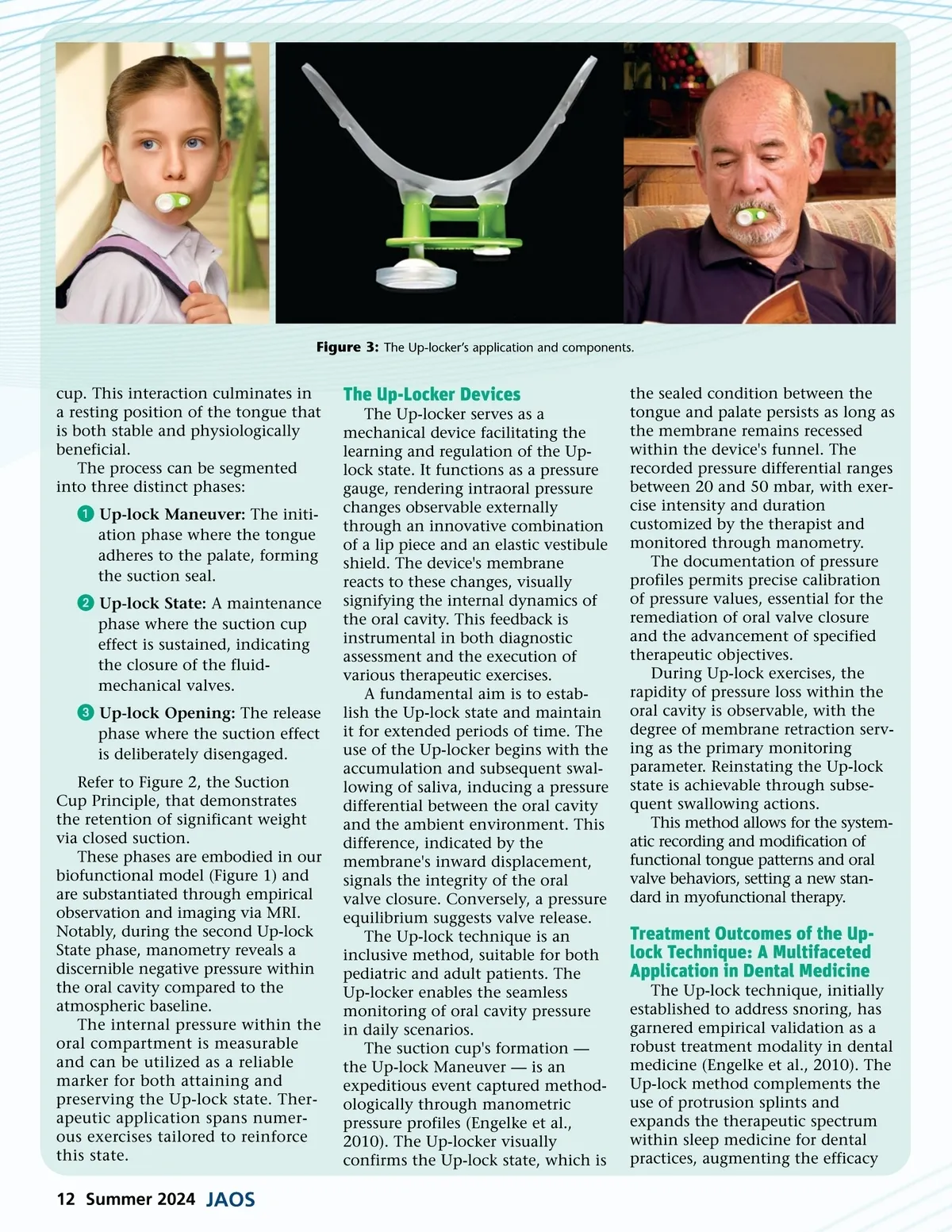
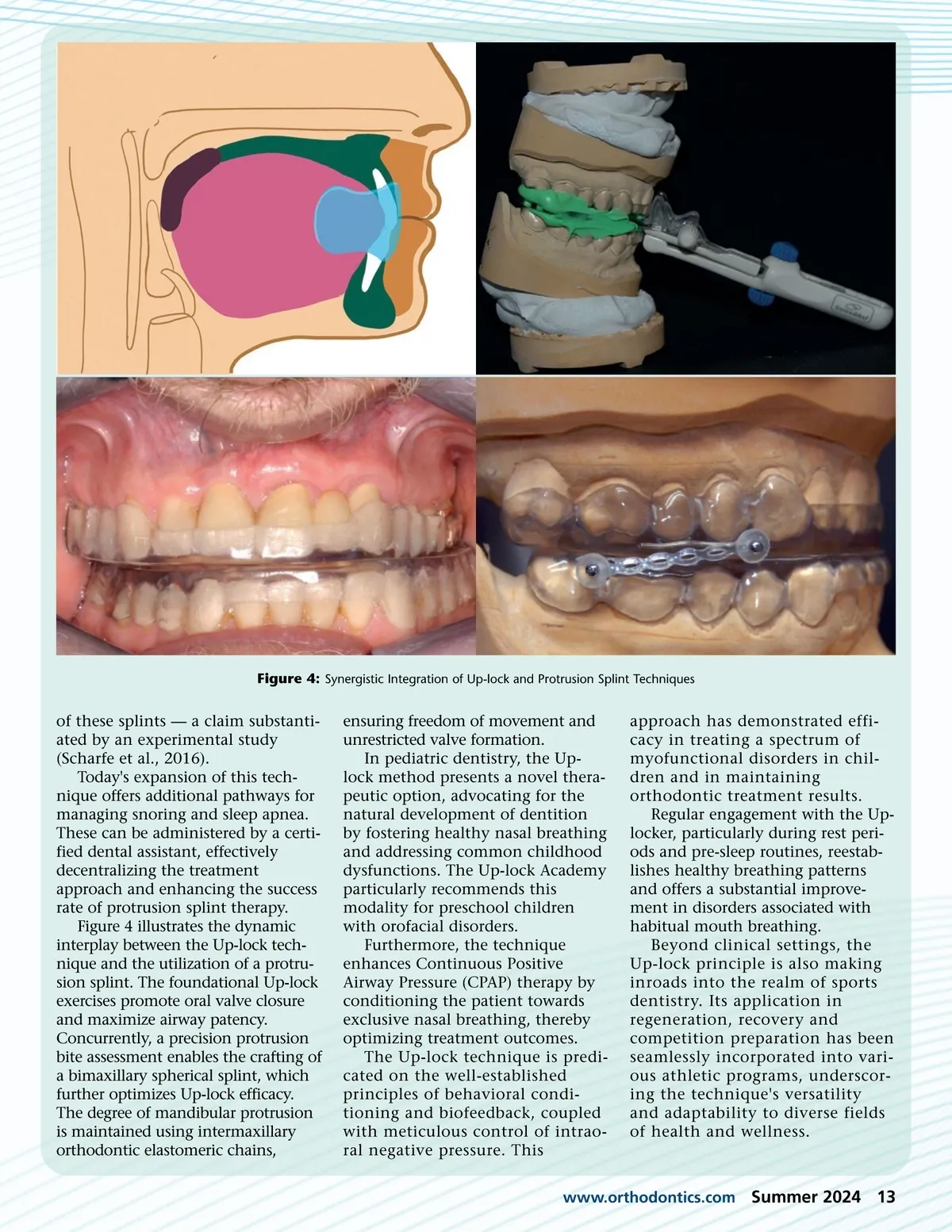
Figure 4: Synergistic Integration of Up-lock and Protrusion Splint Techniques of these splints — a claim substanti-ated by an experimental study (Scharfe et al., 2016). Today's expansion of this tech-nique offers additional pathways for managing snoring and sleep apnea. These can be administered by a certi-fied dental assistant, effectively decentralizing the treatment approach and enhancing the success rate of protrusion splint therapy. Figure 4 illustrates the dynamic interplay between the Up-lock tech-nique and the utilization of a protru-sion splint. The foundational Up-lock exercises promote oral valve closure and maximize airway patency. Concurrently, a precision protrusion bite assessment enables the crafting of a bimaxillary spherical splint, which further optimizes Up-lock efficacy. The degree of mandibular protrusion is maintained using intermaxillary orthodontic elastomeric chains, ensuring freedom of movement and unrestricted valve formation. In pediatric dentistry, the Up-lock method presents a novel thera-peutic option, advocating for the natural development of dentition by fostering healthy nasal breathing and addressing common childhood dysfunctions. The Up-lock Academy particularly recommends this modality for preschool children with orofacial disorders. Furthermore, the technique enhances Continuous Positive Airway Pressure (CPAP) therapy by conditioning the patient towards exclusive nasal breathing, thereby optimizing treatment outcomes. The Up-lock technique is predi-cated on the well-established principles of behavioral condi-tioning and biofeedback, coupled with meticulous control of intrao-ral negative pressure. This approach has demonstrated effi-cacy in treating a spectrum of myofunctional disorders in chil-dren and in maintaining orthodontic treatment results. Regular engagement with the Up-locker, particularly during rest peri-ods and pre-sleep routines, reestab-lishes healthy breathing patterns and offers a substantial improve-ment in disorders associated with habitual mouth breathing. Beyond clinical settings, the Up-lock principle is also making inroads into the realm of sports dentistry. Its application in regeneration, recovery and competition preparation has been seamlessly incorporated into vari-ous athletic programs, underscor-ing the technique's versatility and adaptability to diverse fields of health and wellness. www.orthodontics.com Summer 2024 13
Journal of the American Orthodontic Society Summer 2024: Page 13