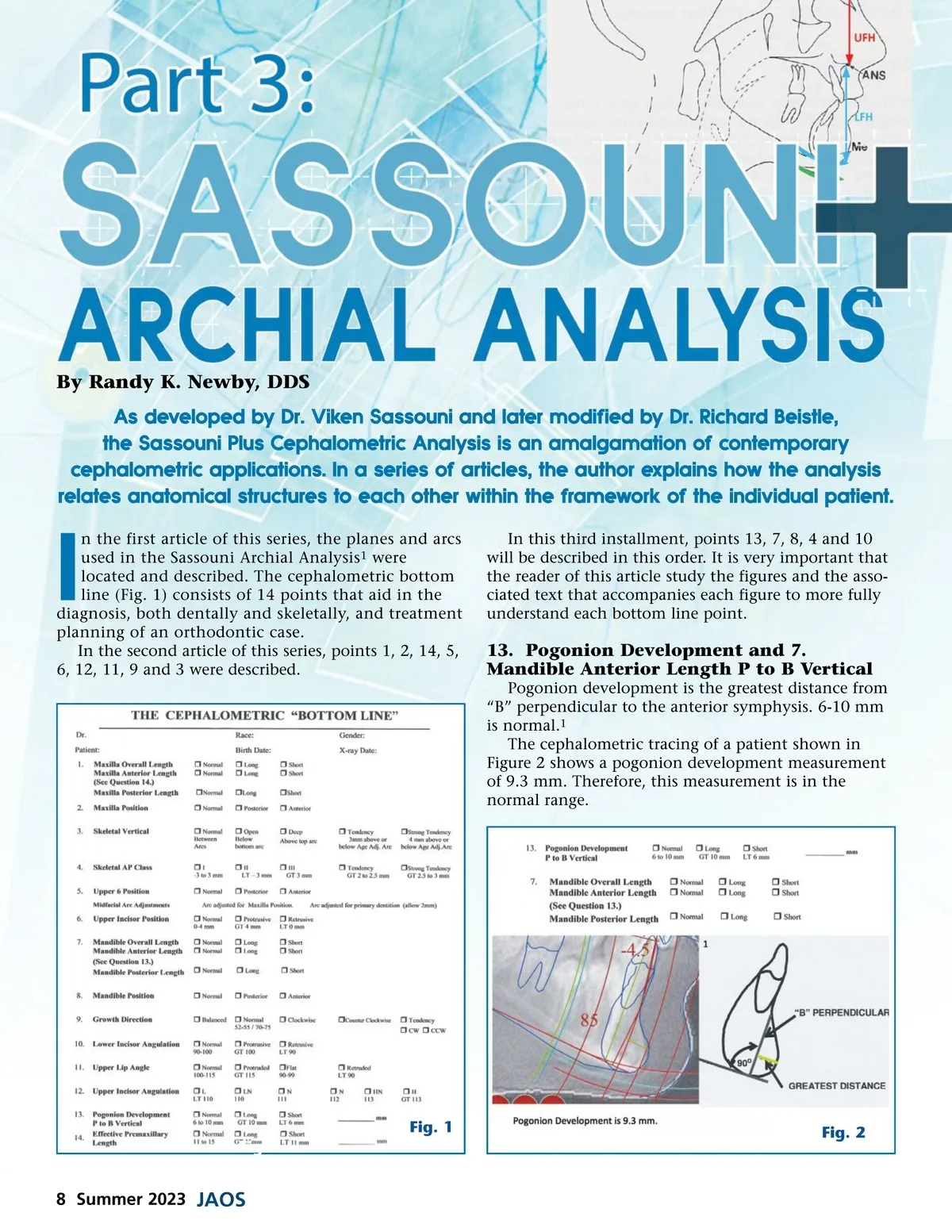
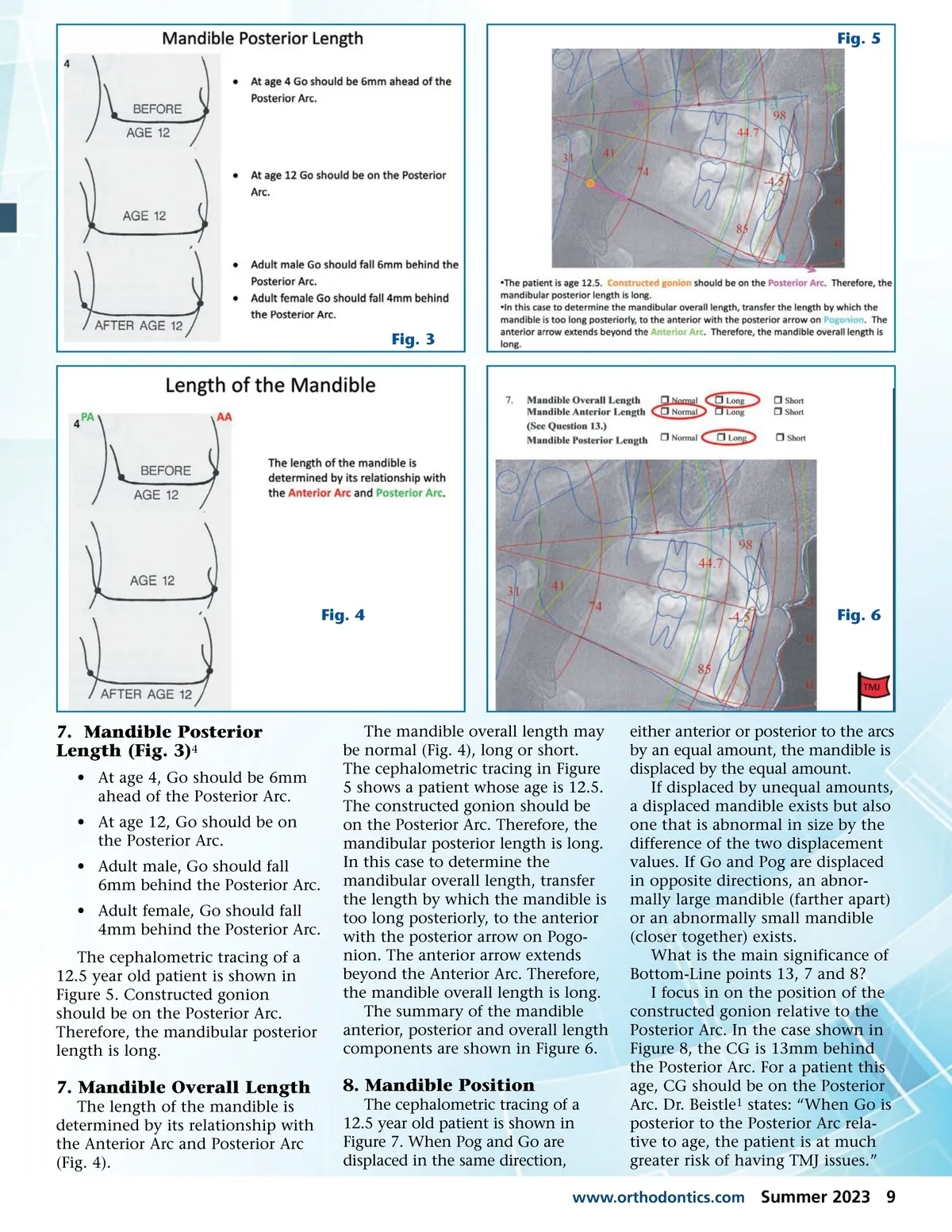
By Randy K. Newby, DDS As developed by Dr. Viken Sassouni and later modified by Dr. Richard Beistle, the Sassouni Plus Cephalometric Analysis is an amalgamation of contemporary cephalometric applications. In a series of articles, the author explains how the analysis relates anatomical structures to each other within the framework of the individual patient. n the first article of this series, the planes and arcs used in the Sassouni Archial Analysis 1 were located and described. The cephalometric bottom line (Fig. 1) consists of 14 points that aid in the diagnosis, both dentally and skeletally, and treatment planning of an orthodontic case. In the second article of this series, points 1, 2, 14, 5, 6, 12, 11, 9 and 3 were described. I In this third installment, points 13, 7, 8, 4 and 10 will be described in this order. It is very important that the reader of this article study the figures and the asso-ciated text that accompanies each figure to more fully understand each bottom line point. 13. Pogonion Development and 7. Mandible Anterior Length P to B Vertical Pogonion development is the greatest distance from “B” perpendicular to the anterior symphysis. 6-10 mm is normal. 1 The cephalometric tracing of a patient shown in Figure 2 shows a pogonion development measurement of 9.3 mm. Therefore, this measurement is in the normal range. Fig. 1 Fig. 1 Fig. 2 8 Summer 2023 JAOS
Journal of the American Orthodontic Society Summer 2023: Page 8