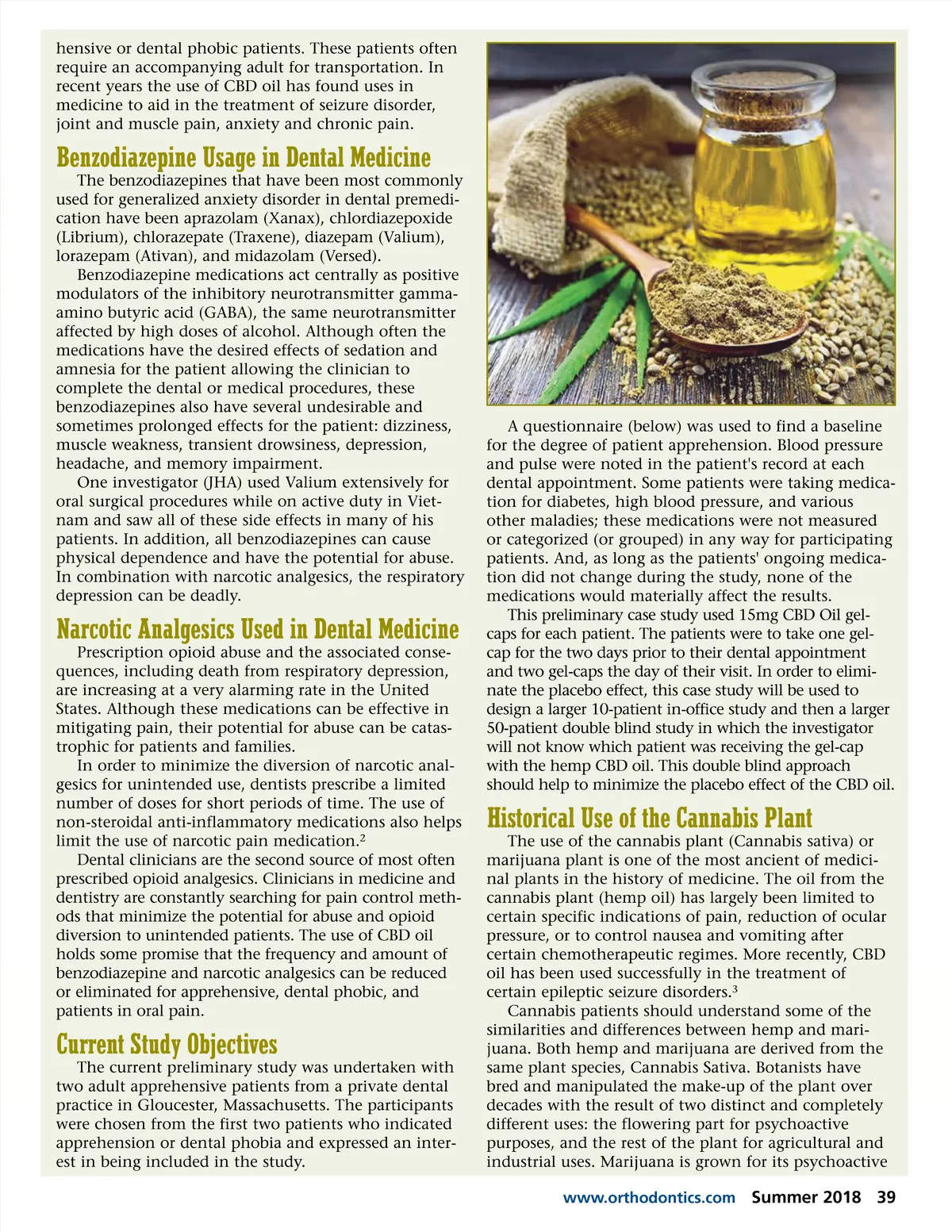
hensive or dental phobic patients. These patients often require an accompanying adult for transportation. In recent years the use of CBD oil has found uses in medicine to aid in the treatment of seizure disorder, joint and muscle pain, anxiety and chronic pain. Benzodiazepine Usage in Dental Medicine The benzodiazepines that have been most commonly used for generalized anxiety disorder in dental premedi-cation have been aprazolam (Xanax), chlordiazepoxide (Librium), chlorazepate (Traxene), diazepam (Valium), lorazepam (Ativan), and midazolam (Versed). Benzodiazepine medications act centrally as positive modulators of the inhibitory neurotransmitter gamma-amino butyric acid (GABA), the same neurotransmitter affected by high doses of alcohol. Although often the medications have the desired effects of sedation and amnesia for the patient allowing the clinician to complete the dental or medical procedures, these benzodiazepines also have several undesirable and sometimes prolonged effects for the patient: dizziness, muscle weakness, transient drowsiness, depression, headache, and memory impairment. One investigator (JHA) used Valium extensively for oral surgical procedures while on active duty in Viet-nam and saw all of these side effects in many of his patients. In addition, all benzodiazepines can cause physical dependence and have the potential for abuse. In combination with narcotic analgesics, the respiratory depression can be deadly. Narcotic Analgesics Used in Dental Medicine Prescription opioid abuse and the associated conse-quences, including death from respiratory depression, are increasing at a very alarming rate in the United States. Although these medications can be effective in mitigating pain, their potential for abuse can be catas-trophic for patients and families. In order to minimize the diversion of narcotic anal-gesics for unintended use, dentists prescribe a limited number of doses for short periods of time. The use of non-steroidal anti-inflammatory medications also helps limit the use of narcotic pain medication. 2 Dental clinicians are the second source of most often prescribed opioid analgesics. Clinicians in medicine and dentistry are constantly searching for pain control meth-ods that minimize the potential for abuse and opioid diversion to unintended patients. The use of CBD oil holds some promise that the frequency and amount of benzodiazepine and narcotic analgesics can be reduced or eliminated for apprehensive, dental phobic, and patients in oral pain. A questionnaire (below) was used to find a baseline for the degree of patient apprehension. Blood pressure and pulse were noted in the patient's record at each dental appointment. Some patients were taking medica-tion for diabetes, high blood pressure, and various other maladies; these medications were not measured or categorized (or grouped) in any way for participating patients. And, as long as the patients' ongoing medica-tion did not change during the study, none of the medications would materially affect the results. This preliminary case study used 15mg CBD Oil gel-caps for each patient. The patients were to take one gel-cap for the two days prior to their dental appointment and two gel-caps the day of their visit. In order to elimi-nate the placebo effect, this case study will be used to design a larger 10-patient in-office study and then a larger 50-patient double blind study in which the investigator will not know which patient was receiving the gel-cap with the hemp CBD oil. This double blind approach should help to minimize the placebo effect of the CBD oil. Historical Use of the Cannabis Plant The use of the cannabis plant (Cannabis sativa) or marijuana plant is one of the most ancient of medici-nal plants in the history of medicine. The oil from the cannabis plant (hemp oil) has largely been limited to certain specific indications of pain, reduction of ocular pressure, or to control nausea and vomiting after certain chemotherapeutic regimes. More recently, CBD oil has been used successfully in the treatment of certain epileptic seizure disorders. 3 Cannabis patients should understand some of the similarities and differences between hemp and mari-juana. Both hemp and marijuana are derived from the same plant species, Cannabis Sativa. Botanists have bred and manipulated the make-up of the plant over decades with the result of two distinct and completely different uses: the flowering part for psychoactive purposes, and the rest of the plant for agricultural and industrial uses. Marijuana is grown for its psychoactive www.orthodontics.com Current Study Objectives The current preliminary study was undertaken with two adult apprehensive patients from a private dental practice in Gloucester, Massachusetts. The participants were chosen from the first two patients who indicated apprehension or dental phobia and expressed an inter-est in being included in the study. Summer 2018 39
Journal of the American Orthodontic Society Summer 2018/Buyer's Guide: Page 39