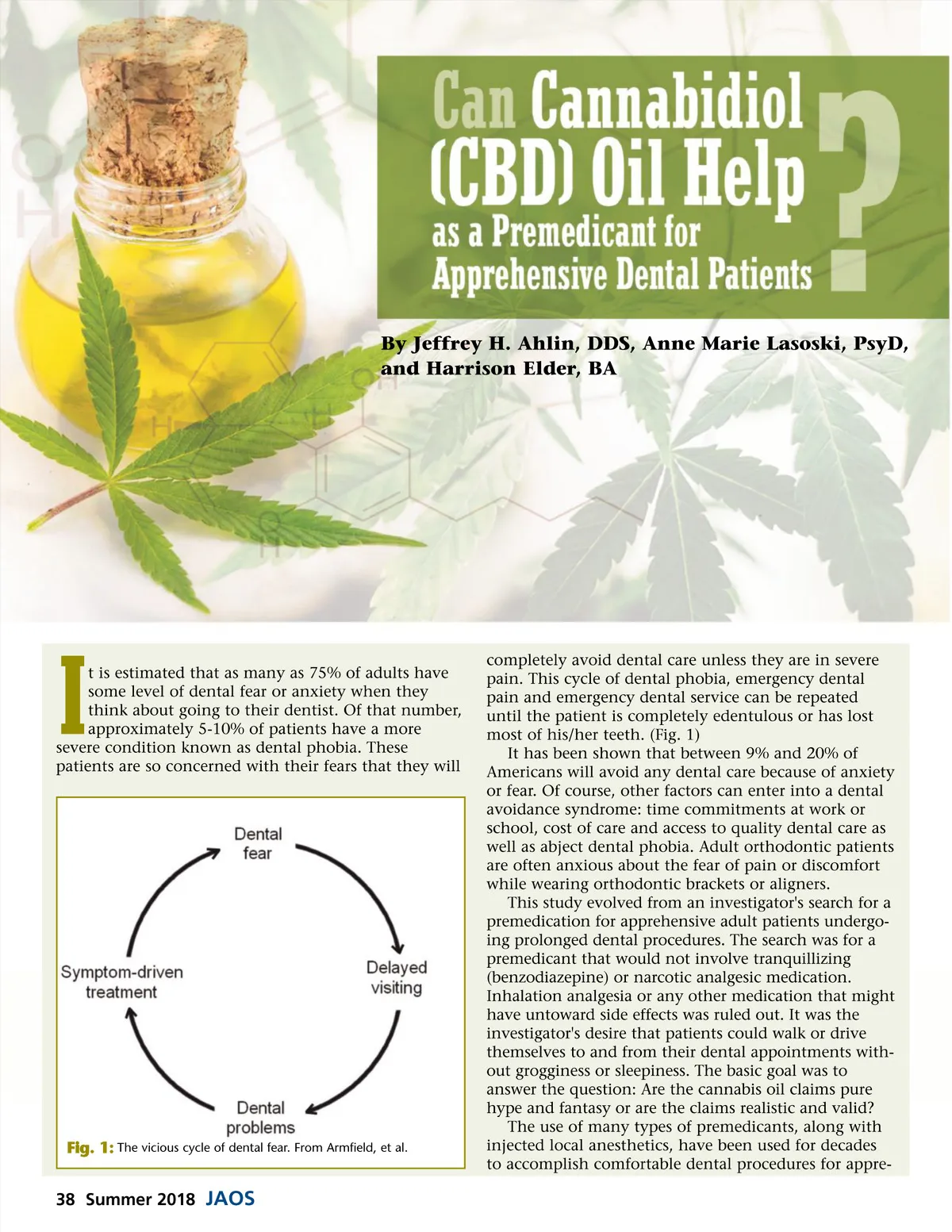
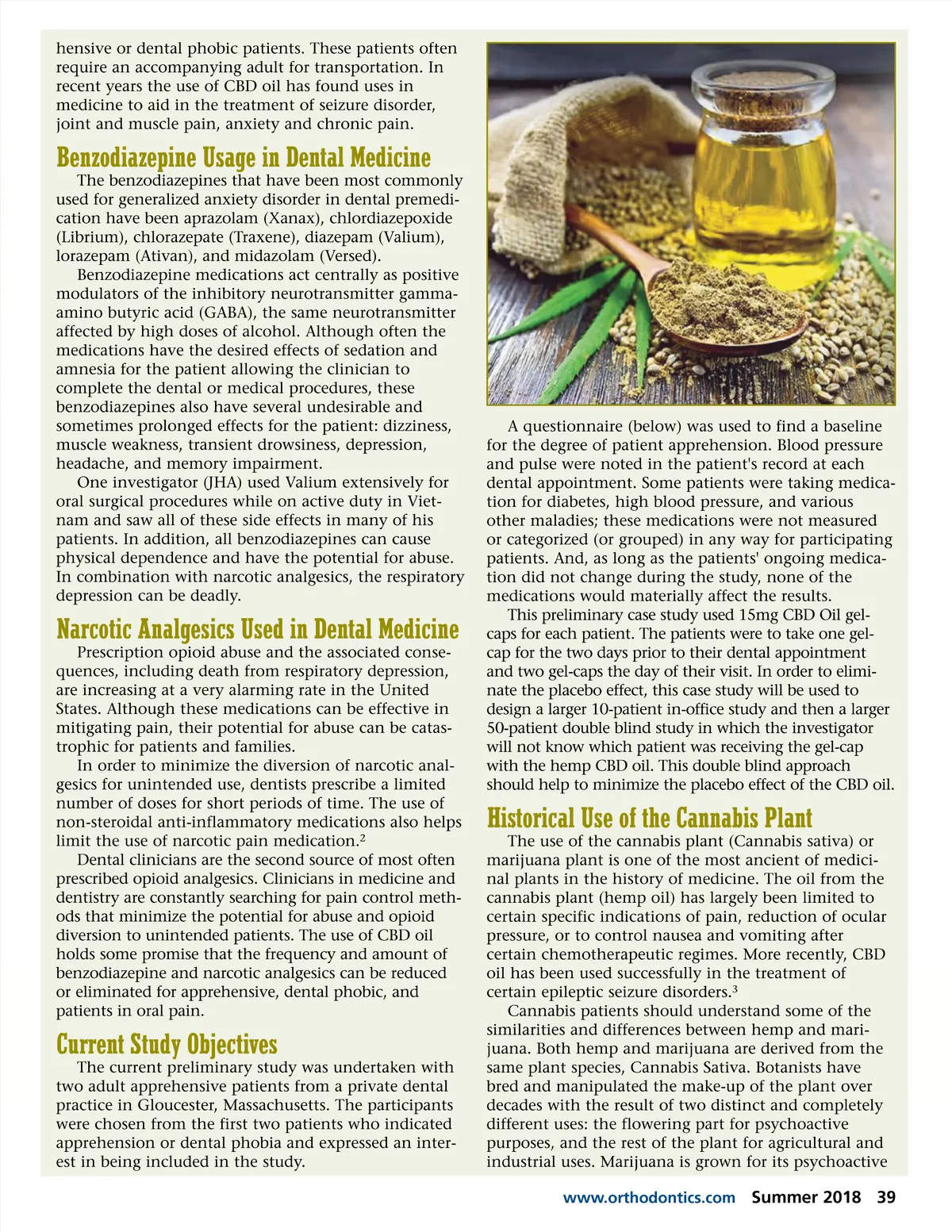
By Jeffrey H. Ahlin, DDS, Anne Marie Lasoski, PsyD, and Harrison Elder, BA t is estimated that as many as 75% of adults have some level of dental fear or anxiety when they think about going to their dentist. Of that number, approximately 5-10% of patients have a more severe condition known as dental phobia. These patients are so concerned with their fears that they will I Fig. 1: The vicious cycle of dental fear. From Armfield, et al. completely avoid dental care unless they are in severe pain. This cycle of dental phobia, emergency dental pain and emergency dental service can be repeated until the patient is completely edentulous or has lost most of his/her teeth. (Fig. 1) It has been shown that between 9% and 20% of Americans will avoid any dental care because of anxiety or fear. Of course, other factors can enter into a dental avoidance syndrome: time commitments at work or school, cost of care and access to quality dental care as well as abject dental phobia. Adult orthodontic patients are often anxious about the fear of pain or discomfort while wearing orthodontic brackets or aligners. This study evolved from an investigator's search for a premedication for apprehensive adult patients undergo-ing prolonged dental procedures. The search was for a premedicant that would not involve tranquillizing (benzodiazepine) or narcotic analgesic medication. Inhalation analgesia or any other medication that might have untoward side effects was ruled out. It was the investigator's desire that patients could walk or drive themselves to and from their dental appointments with-out grogginess or sleepiness. The basic goal was to answer the question: Are the cannabis oil claims pure hype and fantasy or are the claims realistic and valid? The use of many types of premedicants, along with injected local anesthetics, have been used for decades to accomplish comfortable dental procedures for appre-38 Summer 2018 JAOS
Journal of the American Orthodontic Society Summer 2018/Buyer's Guide: Page 38