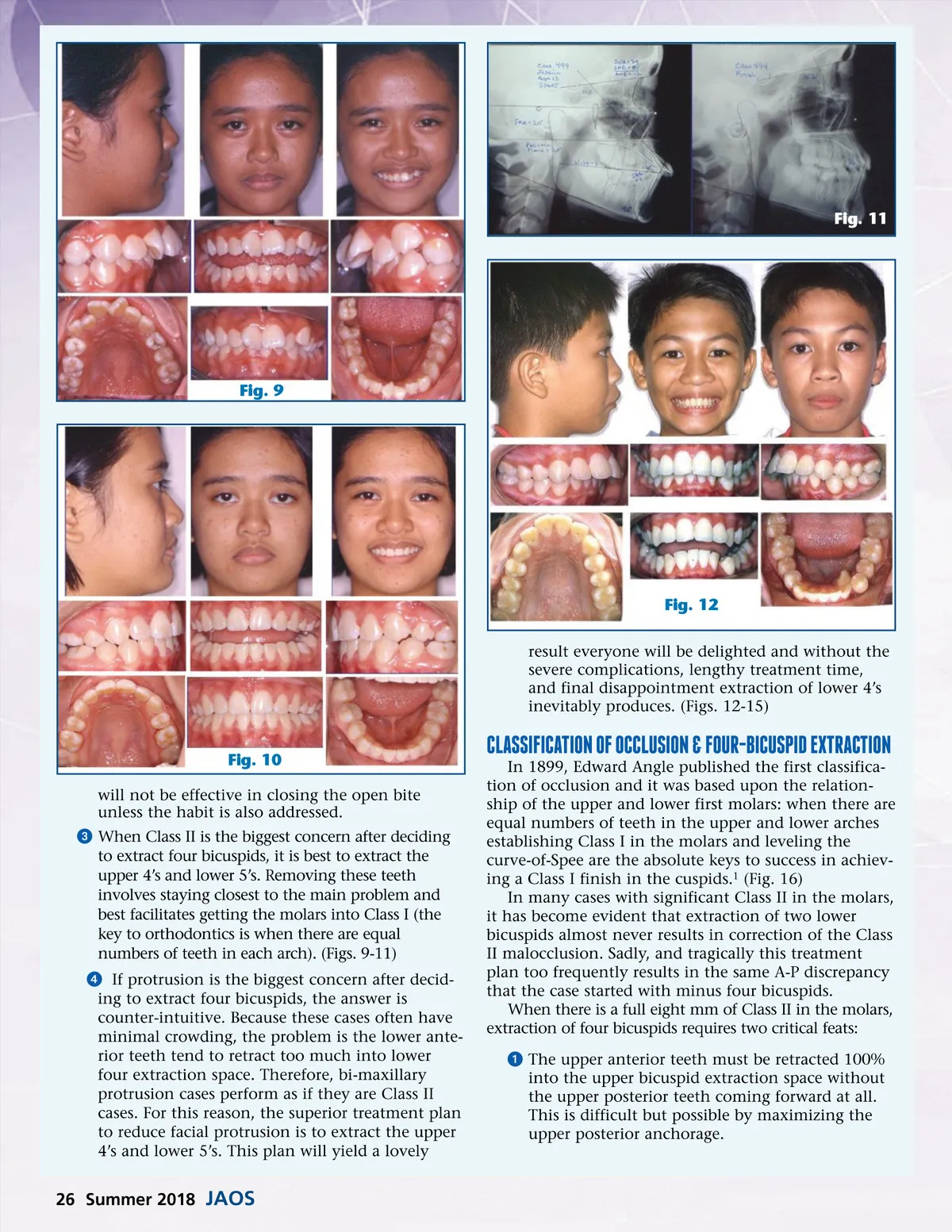
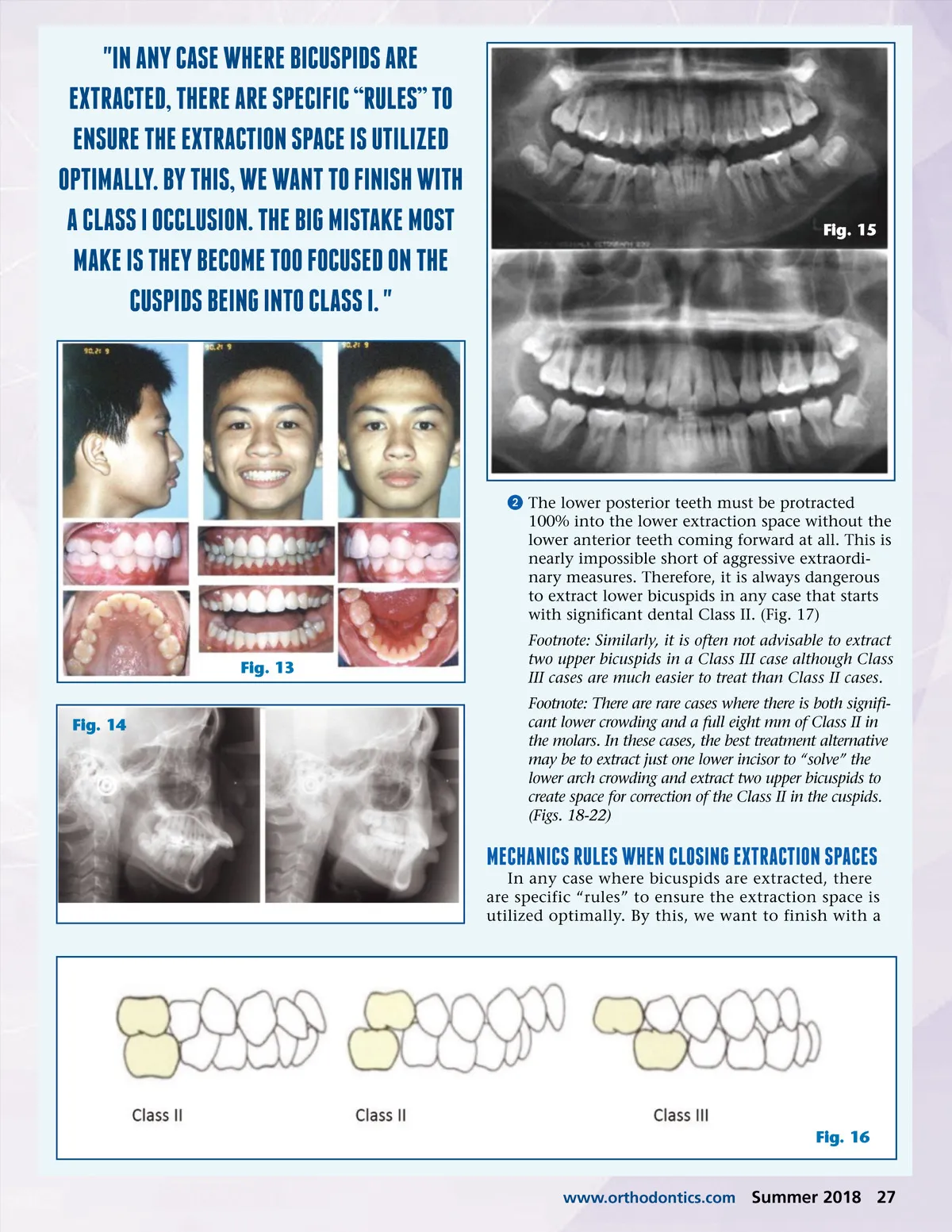
"in any case WheRe Bicuspids aRe extRacted, theRe aRe speciFic “Rules” to ensuRe the extRaction space is utilized optimally. By this, We Want to Finish With a class i occlusion. the Big mistaKe most maKe is they Become too Focused on the cuspids Being into class i. " Fig. 15 ᕢ The lower posterior teeth must be protracted 100% into the lower extraction space without the lower anterior teeth coming forward at all. This is nearly impossible short of aggressive extraordi-nary measures. Therefore, it is always dangerous to extract lower bicuspids in any case that starts with significant dental Class II. (Fig. 17) Fig. 13 Footnote: Similarly, it is often not advisable to extract two upper bicuspids in a Class III case although Class III cases are much easier to treat than Class II cases. Footnote: There are rare cases where there is both signifi-cant lower crowding and a full eight mm of Class II in the molars. In these cases, the best treatment alternative may be to extract just one lower incisor to “solve” the lower arch crowding and extract two upper bicuspids to create space for correction of the Class II in the cuspids. (Figs. 18-22) Fig. 14 mechanics Rules When closing extRaction spaces In any case where bicuspids are extracted, there are specific “rules” to ensure the extraction space is utilized optimally. By this, we want to finish with a Fig. 16 www.orthodontics.com Summer 2018 27
Journal of the American Orthodontic Society Summer 2018/Buyer's Guide: Page 27