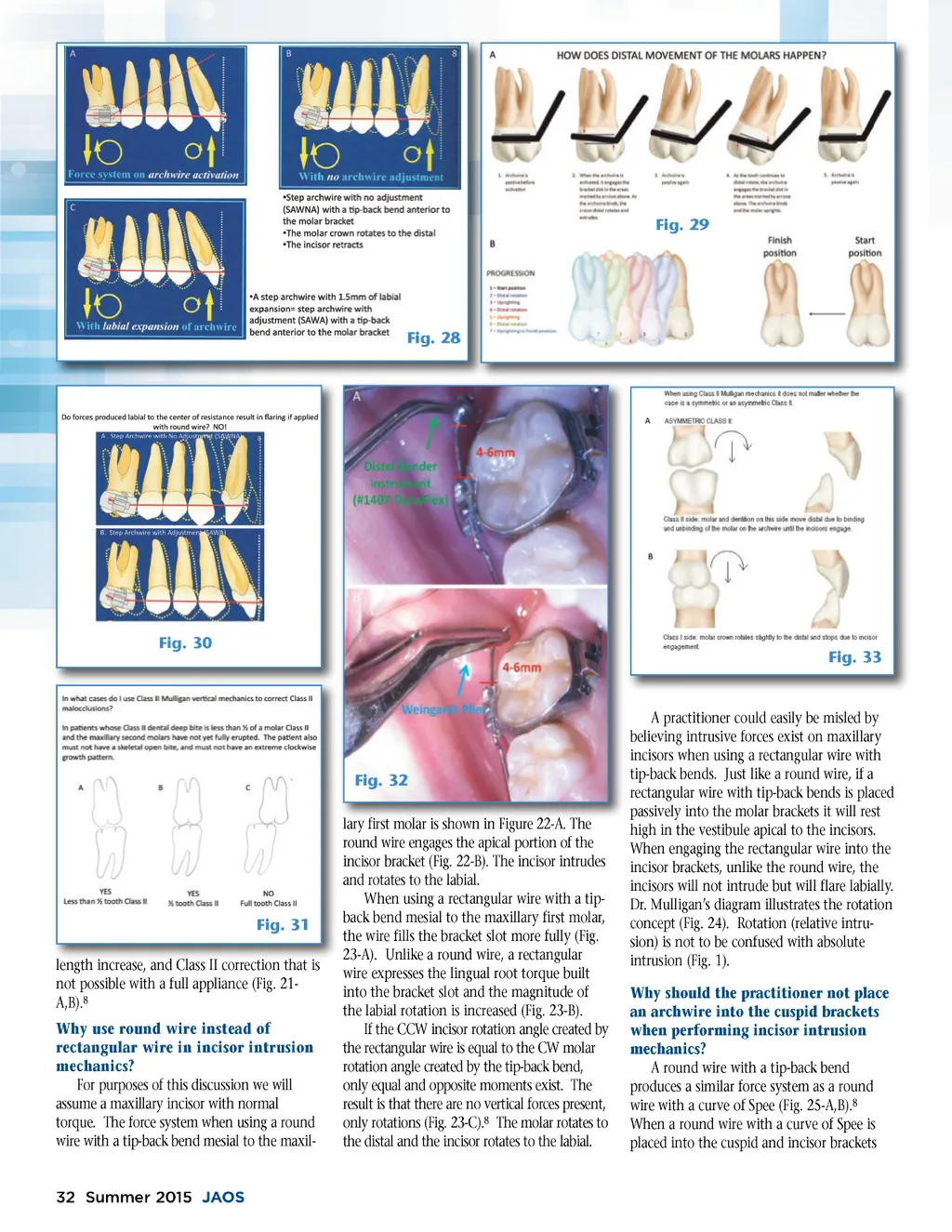
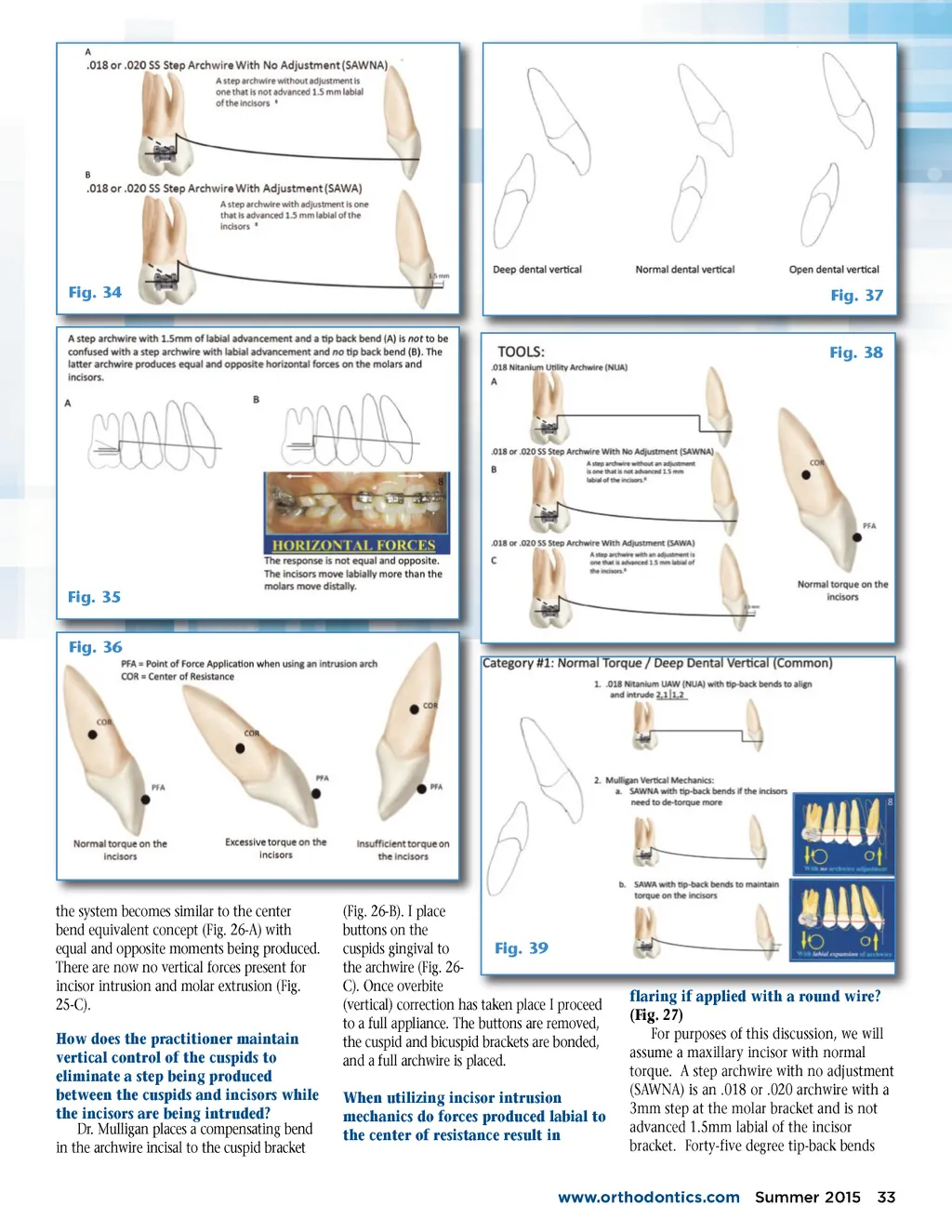
Fig. 34 Fig. 37 Fig. 38 Fig. 35 Fig. 36 the system becomes similar to the center bend equivalent concept (Fig. 26-A) with equal and opposite moments being produced. There are now no vertical forces present for incisor intrusion and molar extrusion (Fig. 25-C). How does the practitioner maintain vertical control of the cuspids to eliminate a step being produced between the cuspids and incisors while the incisors are being intruded? Dr. Mulligan places a compensating bend in the archwire incisal to the cuspid bracket (Fig. 26-B). I place buttons on the Fig. 39 cuspids gingival to the archwire (Fig. 26-C). Once overbite (vertical) correction has taken place I proceed to a full appliance. The buttons are removed, the cuspid and bicuspid brackets are bonded, and a full archwire is placed. When utilizing incisor intrusion mechanics do forces produced labial to the center of resistance result in flaring if applied with a round wire? (Fig. 27) For purposes of this discussion, we will assume a maxillary incisor with normal torque. A step archwire with no adjustment (SAWNA) is an .018 or .020 archwire with a 3mm step at the molar bracket and is not advanced 1.5mm labial of the incisor bracket. Forty-five degree tip-back bends www.orthodontics.com Summer 2015 33
Journal of the American Orthodontic Society Summer 2015-Buyer's Guide: Page 33