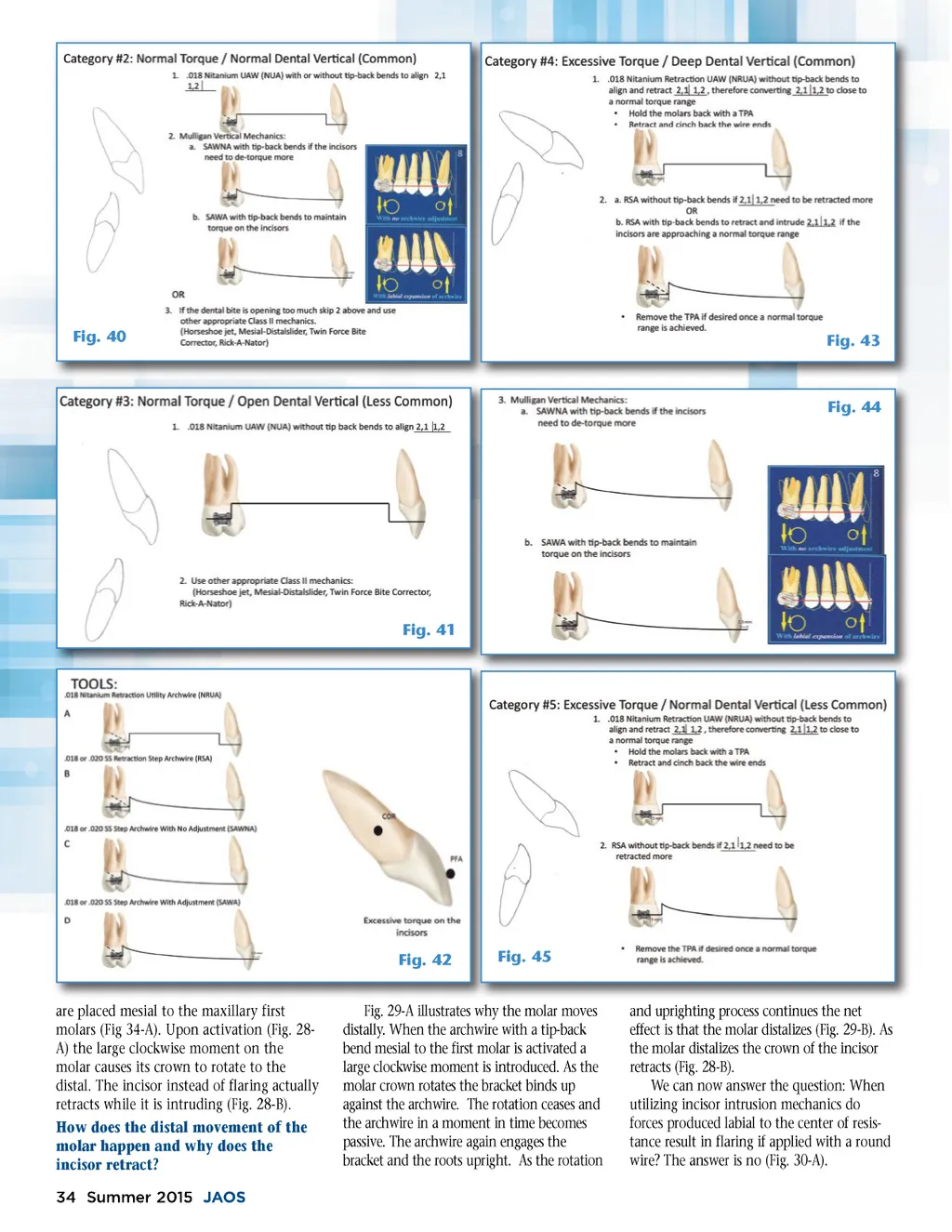
Fig. 40 Fig. 43 Fig. 44 Fig. 41 Fig. 42 are placed mesial to the maxillary first molars (Fig 34-A). Upon activation (Fig. 28-A) the large clockwise moment on the molar causes its crown to rotate to the distal. The incisor instead of flaring actually retracts while it is intruding (Fig. 28-B). How does the distal movement of the molar happen and why does the incisor retract? 34 Summer 2015 JAOS Fig. 45 and uprighting process continues the net effect is that the molar distalizes (Fig. 29-B). As the molar distalizes the crown of the incisor retracts (Fig. 28-B). We can now answer the question: When utilizing incisor intrusion mechanics do forces produced labial to the center of resis-tance result in flaring if applied with a round wire? The answer is no (Fig. 30-A). Fig. 29-A illustrates why the molar moves distally. When the archwire with a tip-back bend mesial to the first molar is activated a large clockwise moment is introduced. As the molar crown rotates the bracket binds up against the archwire. The rotation ceases and the archwire in a moment in time becomes passive. The archwire again engages the bracket and the roots upright. As the rotation
Journal of the American Orthodontic Society Summer 2015-Buyer's Guide: Page 34