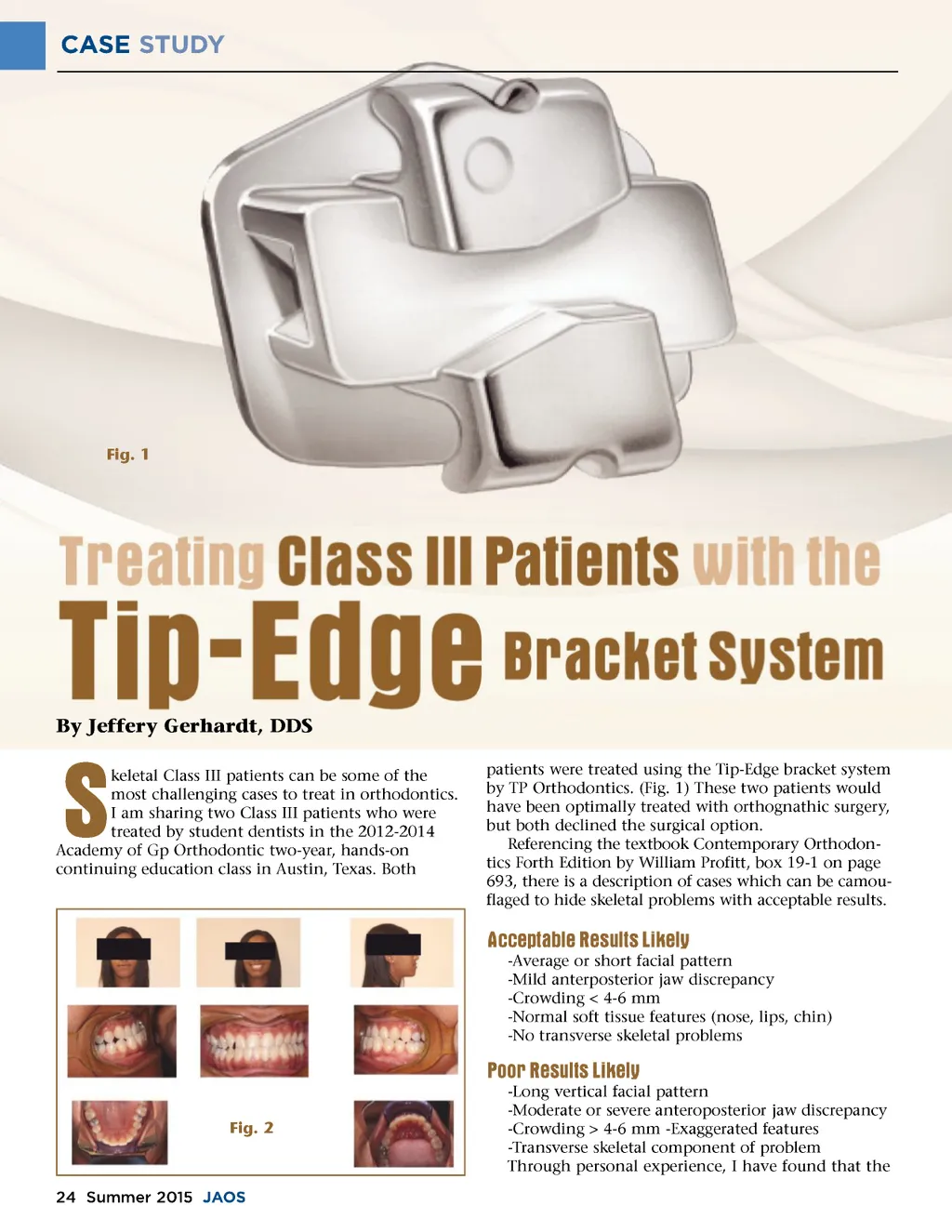
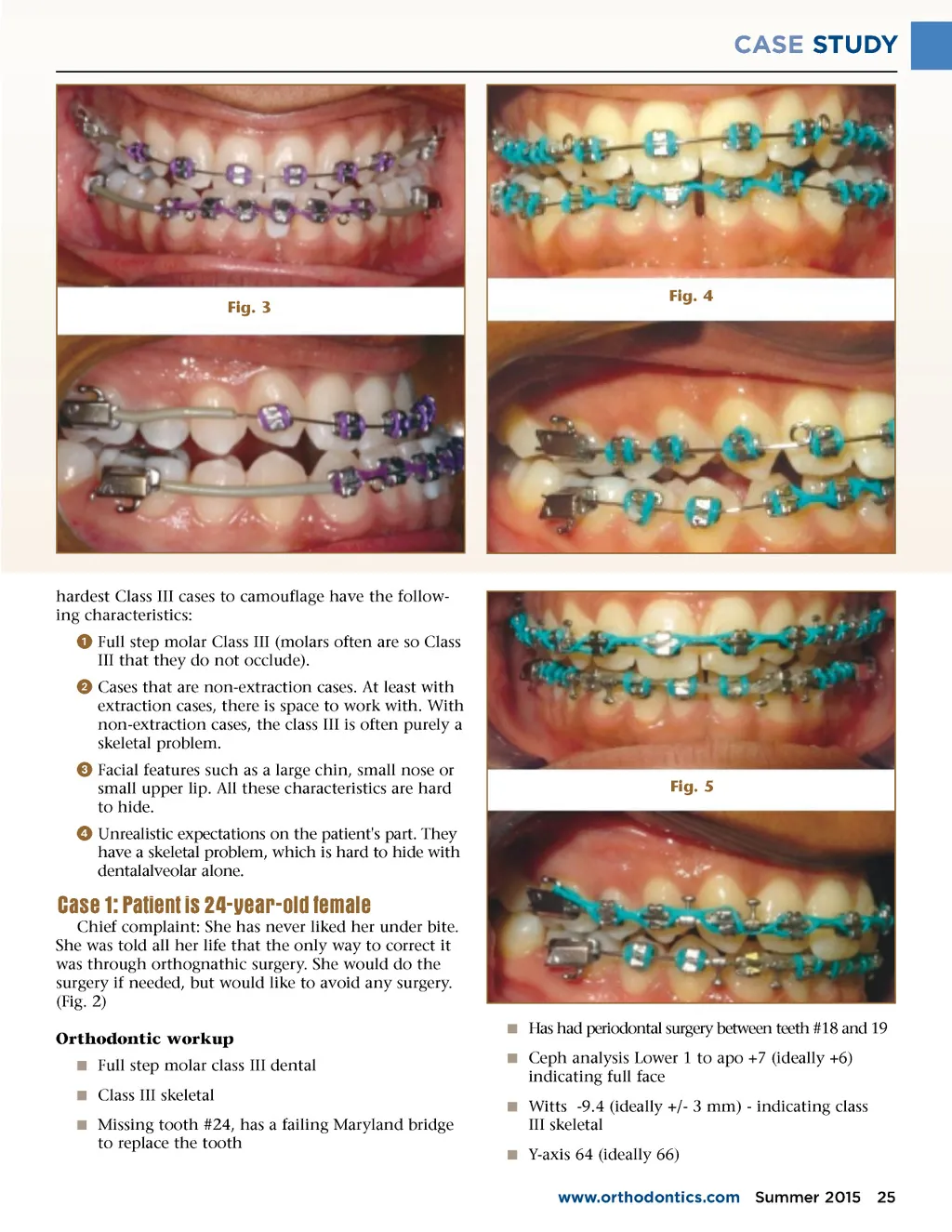
CASE STUDY Fig. 1 By Jeffery Gerhardt, DDS keletal Class III patients can be some of the most challenging cases to treat in orthodontics. I am sharing two Class III patients who were treated by student dentists in the 2012-2014 Academy of Gp Orthodontic two-year, hands-on continuing education class in Austin, Texas. Both S patients were treated using the Tip-Edge bracket system by TP Orthodontics. (Fig. 1) These two patients would have been optimally treated with orthognathic surgery, but both declined the surgical option. Referencing the textbook Contemporary Orthodon-tics Forth Edition by William Profitt, box 19-1 on page 693, there is a description of cases which can be camou-flaged to hide skeletal problems with acceptable results. Acceptable Results Likely -Average or short facial pattern -Mild anterposterior jaw discrepancy -Crowding < 4-6 mm -Normal soft tissue features (nose, lips, chin) -No transverse skeletal problems Poor Results Likely -Long vertical facial pattern -Moderate or severe anteroposterior jaw discrepancy -Crowding > 4-6 mm -Exaggerated features -Transverse skeletal component of problem Through personal experience, I have found that the Fig. 2 24 Summer 2015 JAOS
Journal of the American Orthodontic Society Summer 2015-Buyer's Guide: Page 24