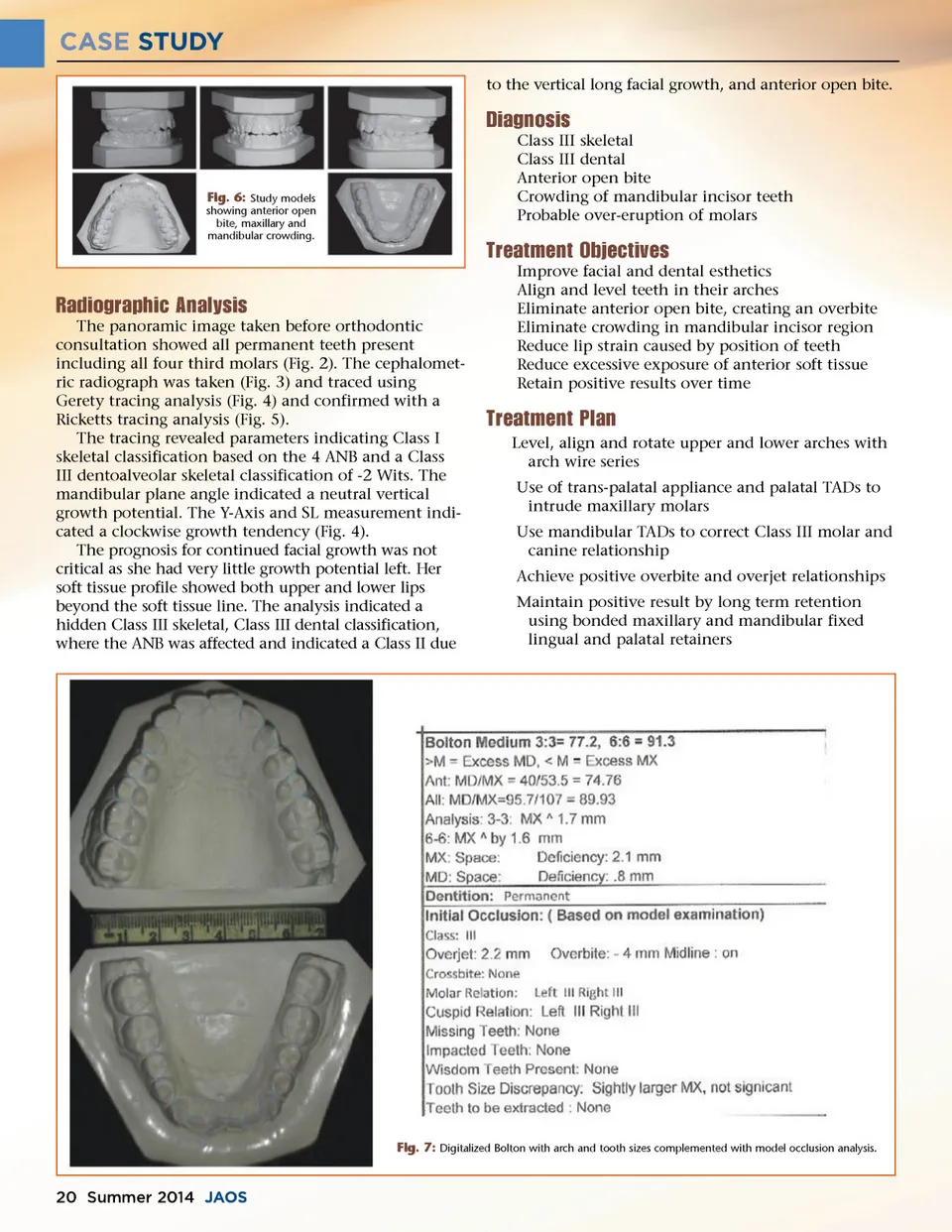
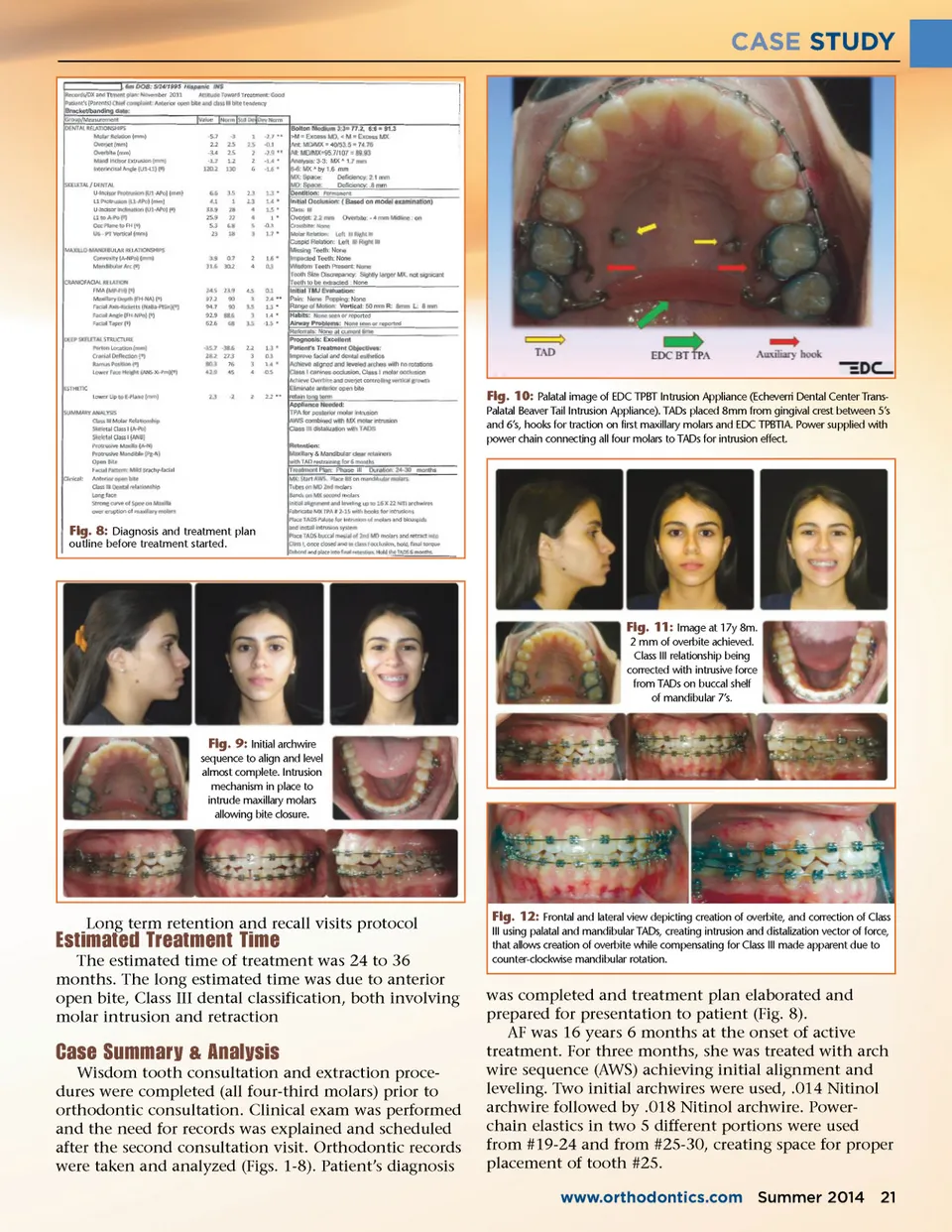
CASE STUDY to the vertical long facial growth, and anterior open bite. Diagnosis Class III skeletal Class III dental Anterior open bite Crowding of mandibular incisor teeth Probable over-eruption of molars Fig. 6: Study models showing anterior open bite, maxillary and mandibular crowding. Treatment Objectives Radiographic Analysis The panoramic image taken before orthodontic consultation showed all permanent teeth present including all four third molars (Fig. 2). The cephalomet-ric radiograph was taken (Fig. 3) and traced using Gerety tracing analysis (Fig. 4) and confirmed with a Ricketts tracing analysis (Fig. 5). The tracing revealed parameters indicating Class I skeletal classification based on the 4 ANB and a Class III dentoalveolar skeletal classification of -2 Wits. The mandibular plane angle indicated a neutral vertical growth potential. The Y-Axis and SL measurement indi-cated a clockwise growth tendency (Fig. 4). The prognosis for continued facial growth was not critical as she had very little growth potential left. Her soft tissue profile showed both upper and lower lips beyond the soft tissue line. The analysis indicated a hidden Class III skeletal, Class III dental classification, where the ANB was affected and indicated a Class II due Improve facial and dental esthetics Align and level teeth in their arches Eliminate anterior open bite, creating an overbite Eliminate crowding in mandibular incisor region Reduce lip strain caused by position of teeth Reduce excessive exposure of anterior soft tissue Retain positive results over time Treatment Plan Level, align and rotate upper and lower arches with arch wire series Use of trans-palatal appliance and palatal TADs to intrude maxillary molars Use mandibular TADs to correct Class III molar and canine relationship Achieve positive overbite and overjet relationships Maintain positive result by long term retention using bonded maxillary and mandibular fixed lingual and palatal retainers Fig. 7: Digitalized Bolton with arch and tooth sizes complemented with model occlusion analysis. 20 Summer 2014 JAOS
Journal of the American Orthodontic Society Summer 2014 / Buyer's Guide: Page 20