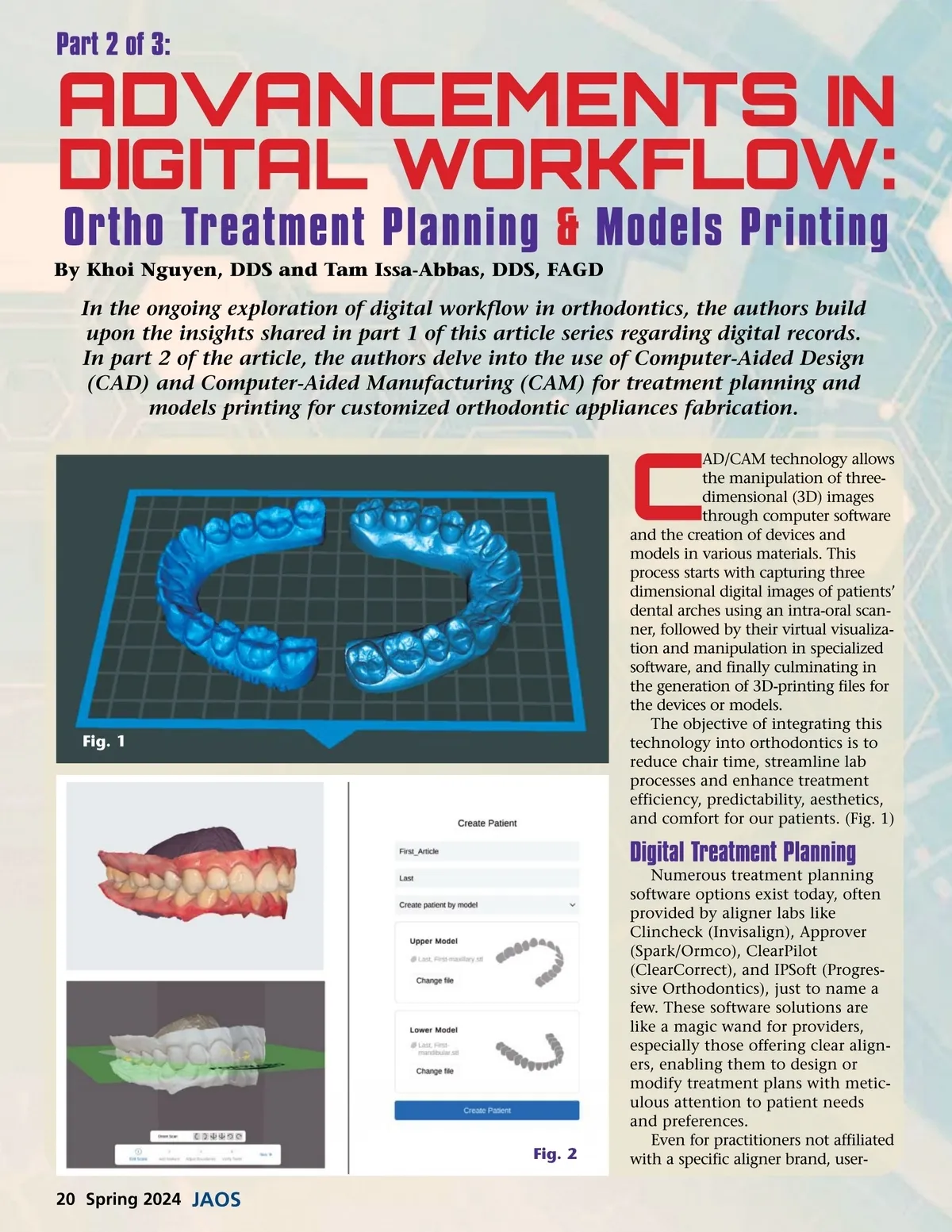
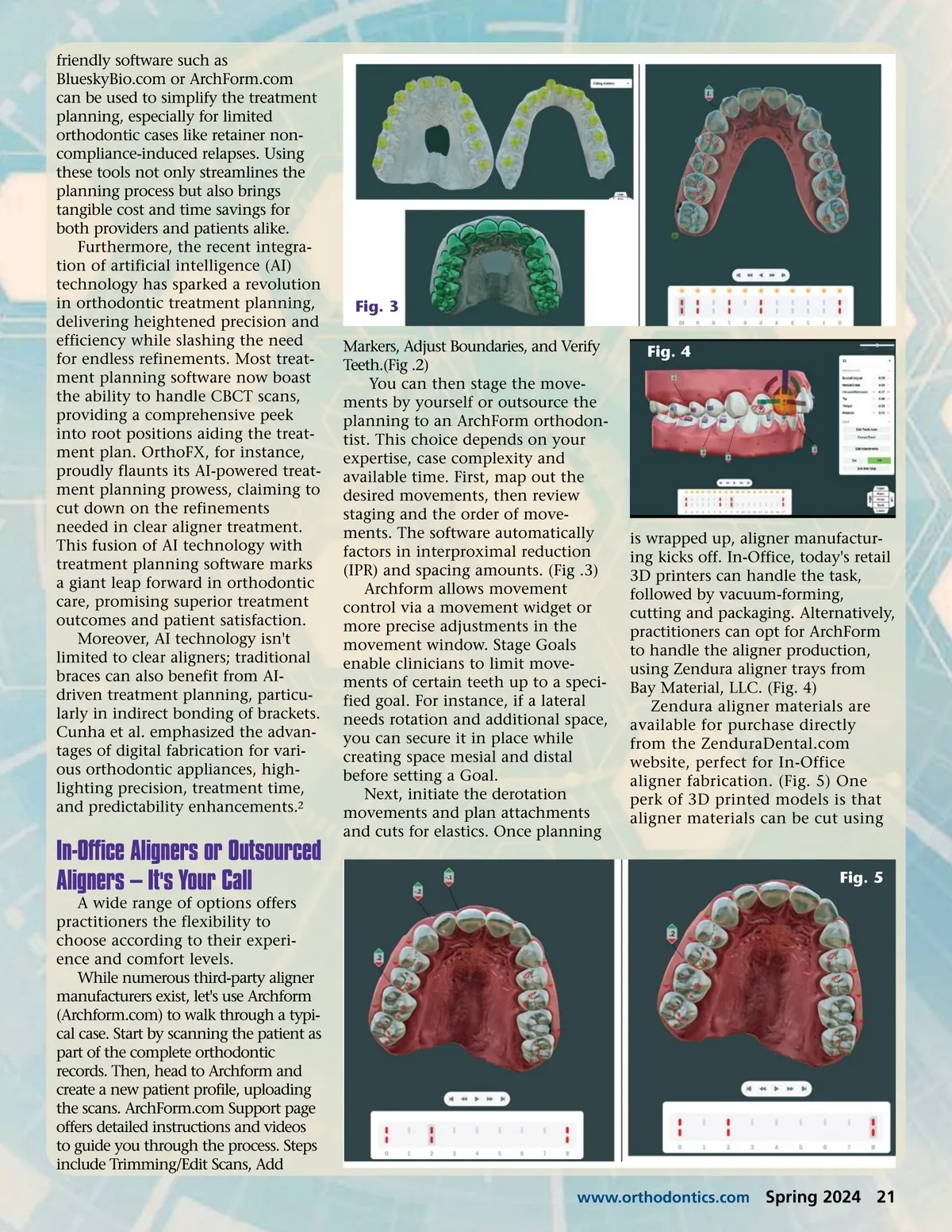
Part 2 of 3: ADVANCEMENTS iN Ortho Treatment Planning & Models Printing By Khoi Nguyen, DDS and Tam Issa-Abbas, DDS, FAGD DigiTAl WorkfloW: In the ongoing exploration of digital workflow in orthodontics, the authors build upon the insights shared in part 1 of this article series regarding digital records. In part 2 of the article, the authors delve into the use of Computer-Aided Design (CAD) and Computer-Aided Manufacturing (CAM) for treatment planning and models printing for customized orthodontic appliances fabrication. C Fig. 1 AD/CAM technology allows the manipulation of three-dimensional (3D) images through computer software and the creation of devices and models in various materials. This process starts with capturing three dimensional digital images of patients’ dental arches using an intra-oral scan-ner, followed by their virtual visualiza-tion and manipulation in specialized software, and finally culminating in the generation of 3D-printing files for the devices or models. The objective of integrating this technology into orthodontics is to reduce chair time, streamline lab processes and enhance treatment efficiency, predictability, aesthetics, and comfort for our patients. (Fig. 1) Digital Treatment Planning Numerous treatment planning software options exist today, often provided by aligner labs like Clincheck (Invisalign), Approver (Spark/Ormco), ClearPilot (ClearCorrect), and IPSoft (Progres-sive Orthodontics), just to name a few. These software solutions are like a magic wand for providers, especially those offering clear align-ers, enabling them to design or modify treatment plans with metic-ulous attention to patient needs and preferences. Even for practitioners not affiliated with a specific aligner brand, user-Fig. 2 20 Spring 2024 JAOS
Journal of the American Orthodontic Society Spring 2024: Page 20