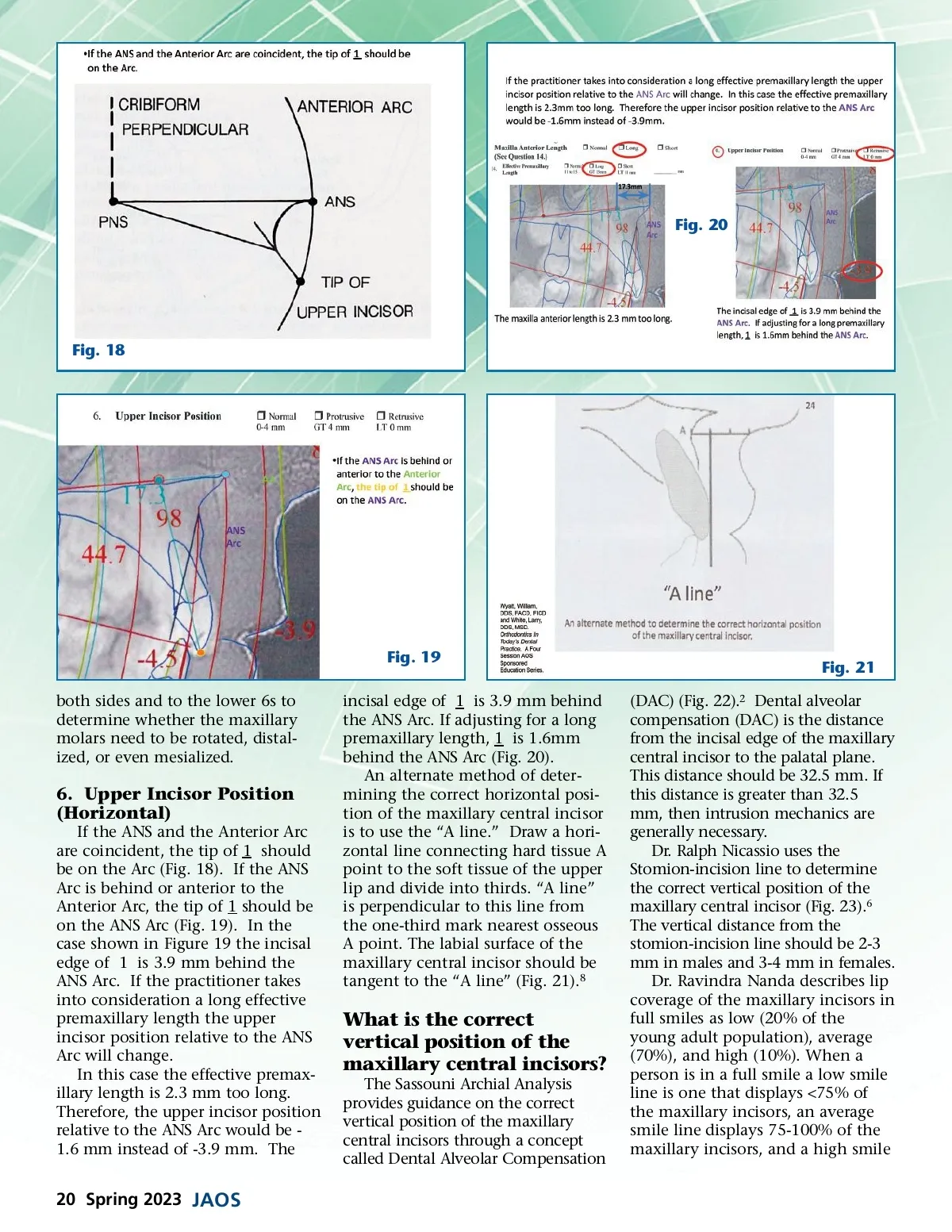
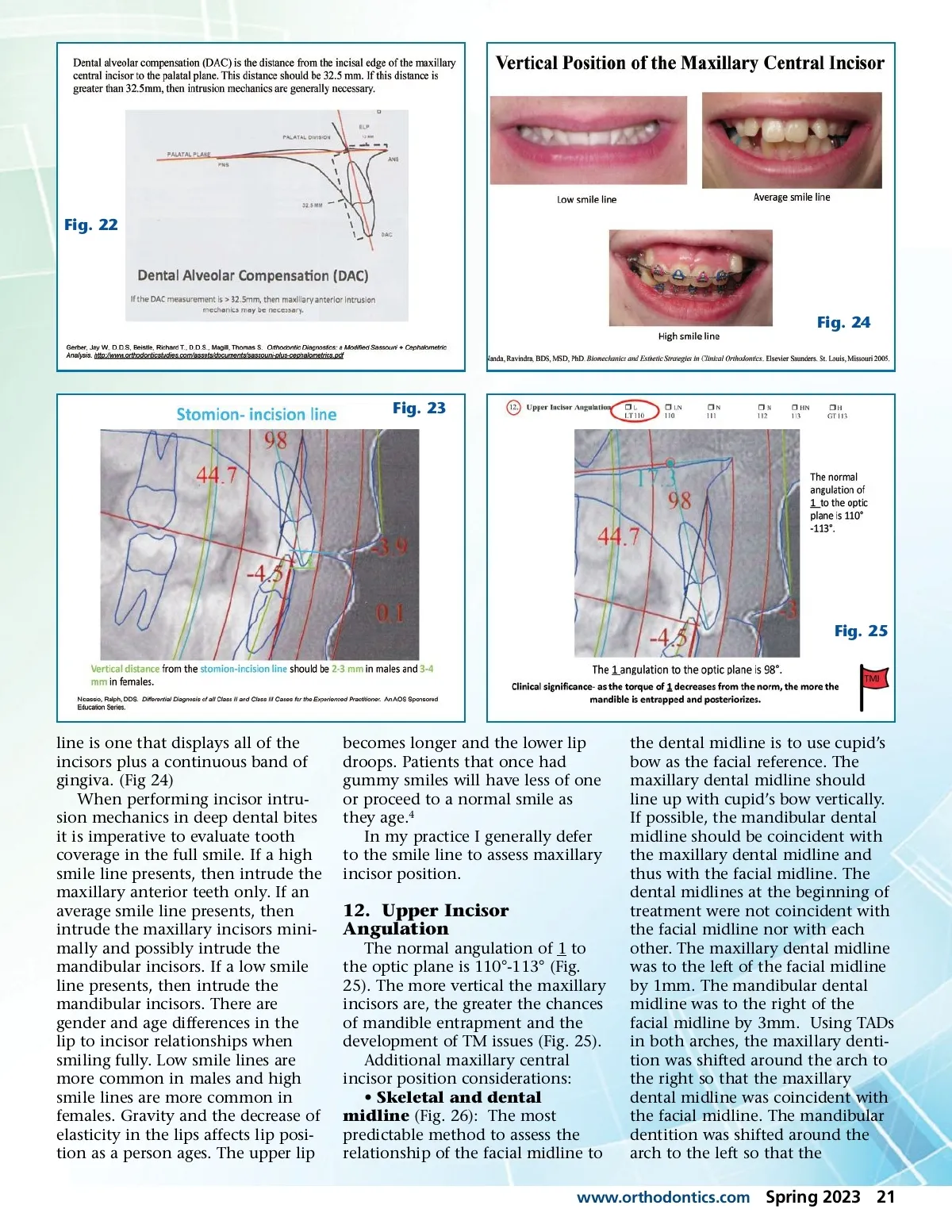
Fig. 22 Fig. 24 Fig. 23 Fig. 25 line is one that displays all of the incisors plus a continuous band of gingiva. (Fig 24) When performing incisor intru-sion mechanics in deep dental bites it is imperative to evaluate tooth coverage in the full smile. If a high smile line presents, then intrude the maxillary anterior teeth only. If an average smile line presents, then intrude the maxillary incisors mini-mally and possibly intrude the mandibular incisors. If a low smile line presents, then intrude the mandibular incisors. There are gender and age differences in the lip to incisor relationships when smiling fully. Low smile lines are more common in males and high smile lines are more common in females. Gravity and the decrease of elasticity in the lips affects lip posi-tion as a person ages. The upper lip becomes longer and the lower lip droops. Patients that once had gummy smiles will have less of one or proceed to a normal smile as they age. 4 In my practice I generally defer to the smile line to assess maxillary incisor position. 12. Upper Incisor Angulation The normal angulation of 1 to the optic plane is 110°-113° (Fig. 25). The more vertical the maxillary incisors are, the greater the chances of mandible entrapment and the development of TM issues (Fig. 25). Additional maxillary central incisor position considerations: • Skeletal and dental midline (Fig. 26): The most predictable method to assess the relationship of the facial midline to the dental midline is to use cupid’s bow as the facial reference. The maxillary dental midline should line up with cupid’s bow vertically. If possible, the mandibular dental midline should be coincident with the maxillary dental midline and thus with the facial midline. The dental midlines at the beginning of treatment were not coincident with the facial midline nor with each other. The maxillary dental midline was to the left of the facial midline by 1mm. The mandibular dental midline was to the right of the facial midline by 3mm. Using TADs in both arches, the maxillary denti-tion was shifted around the arch to the right so that the maxillary dental midline was coincident with the facial midline. The mandibular dentition was shifted around the arch to the left so that the www.orthodontics.com Spring 2023 21
Journal of the American Orthodontic Society Spring 2023: Page 21