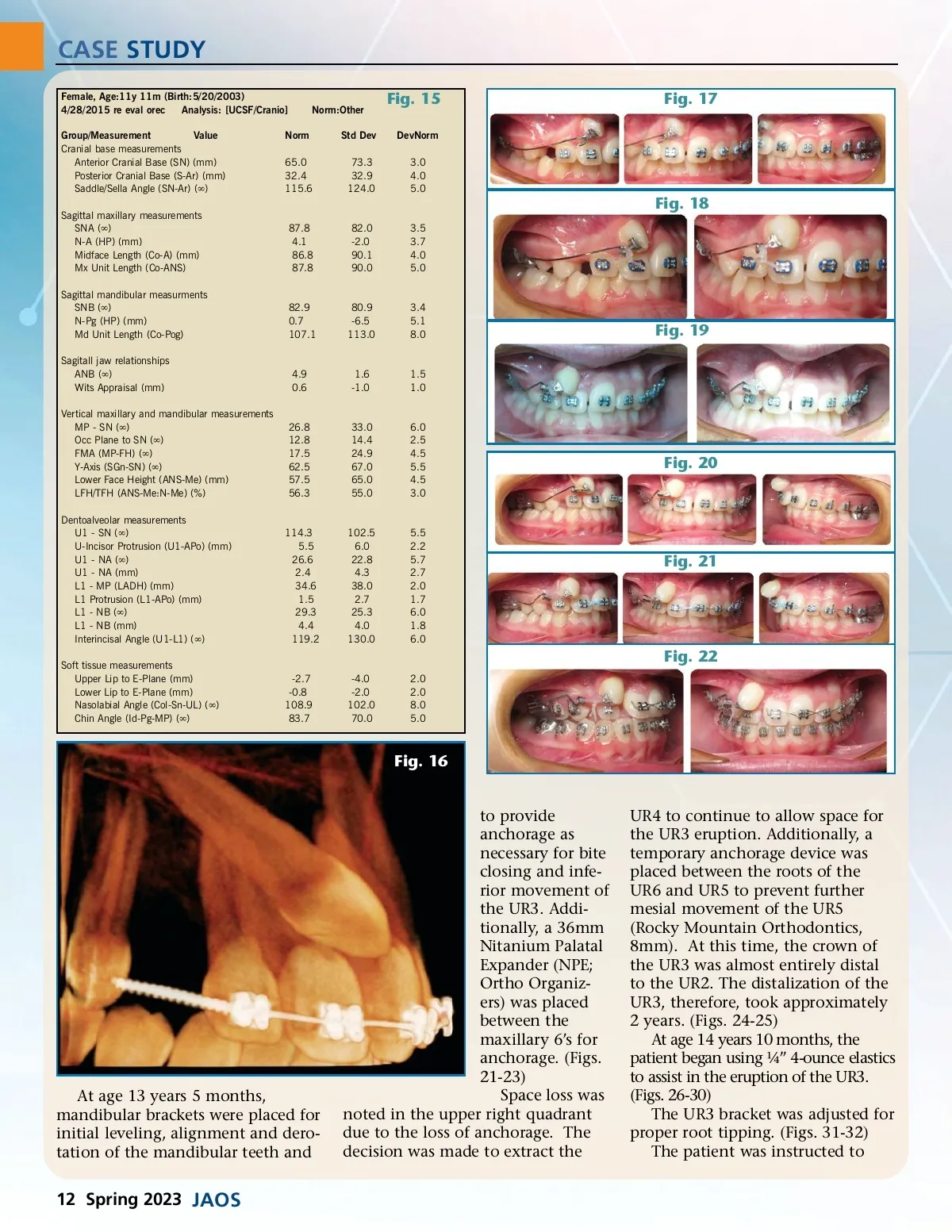
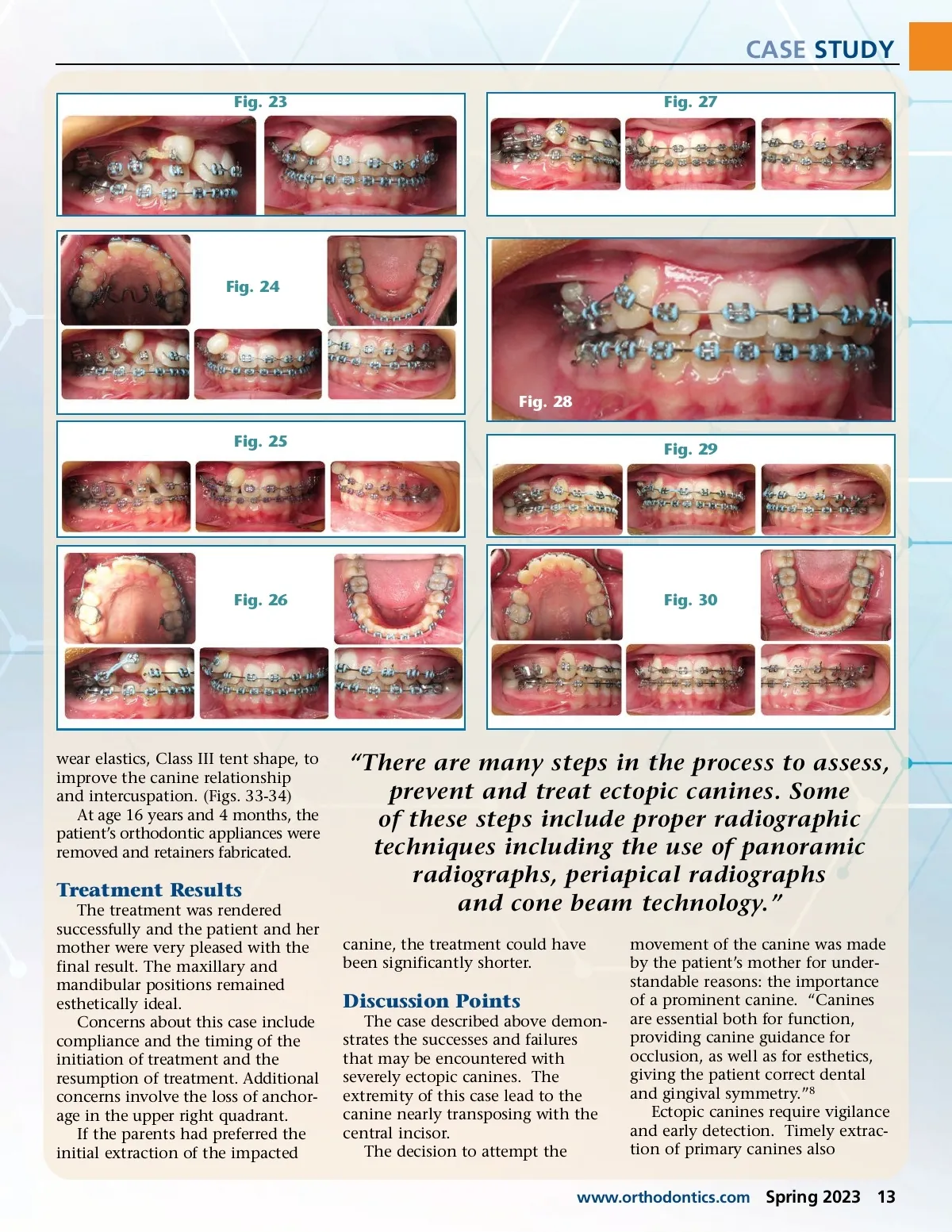
CASE STUDY Fig. 23 Fig. 27 Fig. 24 Fig. 28 Fig. 25 Fig. 29 Fig. 26 Fig. 30 wear elastics, Class III tent shape, to improve the canine relationship and intercuspation. (Figs. 33-34) At age 16 years and 4 months, the patient’s orthodontic appliances were removed and retainers fabricated. Treatment Results The treatment was rendered successfully and the patient and her mother were very pleased with the final result. The maxillary and mandibular positions remained esthetically ideal. Concerns about this case include compliance and the timing of the initiation of treatment and the resumption of treatment. Additional concerns involve the loss of anchor-age in the upper right quadrant. If the parents had preferred the initial extraction of the impacted “There are many steps in the process to assess, prevent and treat ectopic canines. Some of these steps include proper radiographic techniques including the use of panoramic radiographs, periapical radiographs and cone beam technology.” canine, the treatment could have been significantly shorter. movement of the canine was made by the patient’s mother for under-standable reasons: the importance of a prominent canine. “Canines are essential both for function, providing canine guidance for occlusion, as well as for esthetics, giving the patient correct dental and gingival symmetry.” 8 Ectopic canines require vigilance and early detection. Timely extrac-tion of primary canines also Discussion Points The case described above demon-strates the successes and failures that may be encountered with severely ectopic canines. The extremity of this case lead to the canine nearly transposing with the central incisor. The decision to attempt the www.orthodontics.com Spring 2023 13
Journal of the American Orthodontic Society Spring 2023: Page 13