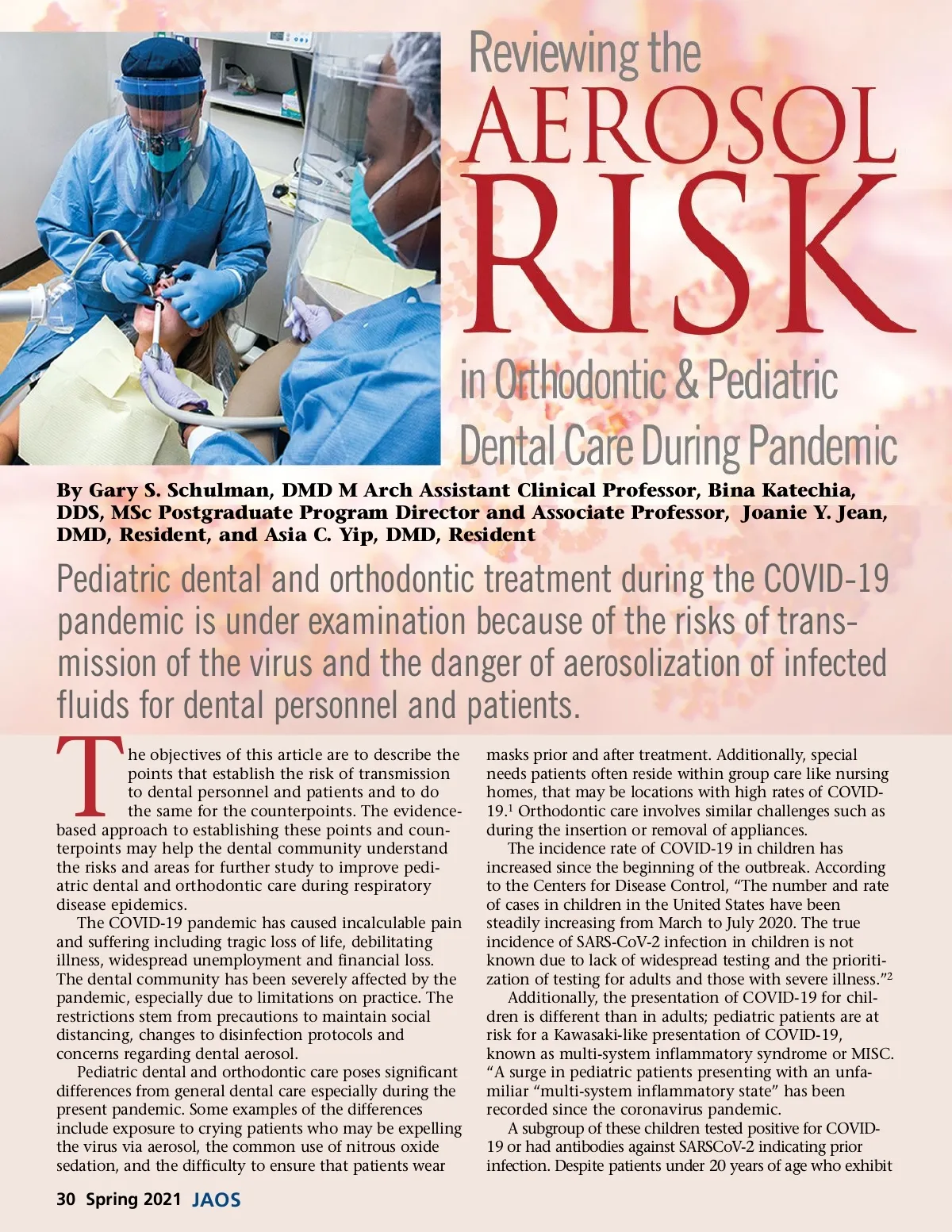
By Gary S. Schulman, DMD M Arch Assistant Clinical Professor, Bina Katechia, DDS, MSc Postgraduate Program Director and Associate Professor, Joanie Y. Jean, DMD, Resident, and Asia C. Yip, DMD, Resident Pediatric dental and orthodontic treatment during the COVID-19 pandemic is under examination because of the risks of trans-mission of the virus and the danger of aerosolization of infected fluids for dental personnel and patients. T he objectives of this article are to describe the points that establish the risk of transmission to dental personnel and patients and to do the same for the counterpoints. The evidence-based approach to establishing these points and coun-terpoints may help the dental community understand the risks and areas for further study to improve pedi-atric dental and orthodontic care during respiratory disease epidemics. The COVID-19 pandemic has caused incalculable pain and suffering including tragic loss of life, debilitating illness, widespread unemployment and financial loss. The dental community has been severely affected by the pandemic, especially due to limitations on practice. The restrictions stem from precautions to maintain social distancing, changes to disinfection protocols and concerns regarding dental aerosol. Pediatric dental and orthodontic care poses significant differences from general dental care especially during the present pandemic. Some examples of the differences include exposure to crying patients who may be expelling the virus via aerosol, the common use of nitrous oxide sedation, and the difficulty to ensure that patients wear masks prior and after treatment. Additionally, special needs patients often reside within group care like nursing homes, that may be locations with high rates of COVID-19. 1 Orthodontic care involves similar challenges such as during the insertion or removal of appliances. The incidence rate of COVID-19 in children has increased since the beginning of the outbreak. According to the Centers for Disease Control, “The number and rate of cases in children in the United States have been steadily increasing from March to July 2020. The true incidence of SARS-CoV-2 infection in children is not known due to lack of widespread testing and the prioriti-zation of testing for adults and those with severe illness.” 2 Additionally, the presentation of COVID-19 for chil-dren is different than in adults; pediatric patients are at risk for a Kawasaki-like presentation of COVID-19, known as multi-system inflammatory syndrome or MISC. “A surge in pediatric patients presenting with an unfa-miliar “multi-system inflammatory state” has been recorded since the coronavirus pandemic. A subgroup of these children tested positive for COVID-19 or had antibodies against SARSCoV-2 indicating prior infection. Despite patients under 20 years of age who exhibit 30 Spring 2021 JAOS
Journal of the American Orthodontic Society Spring 2021: Page 30