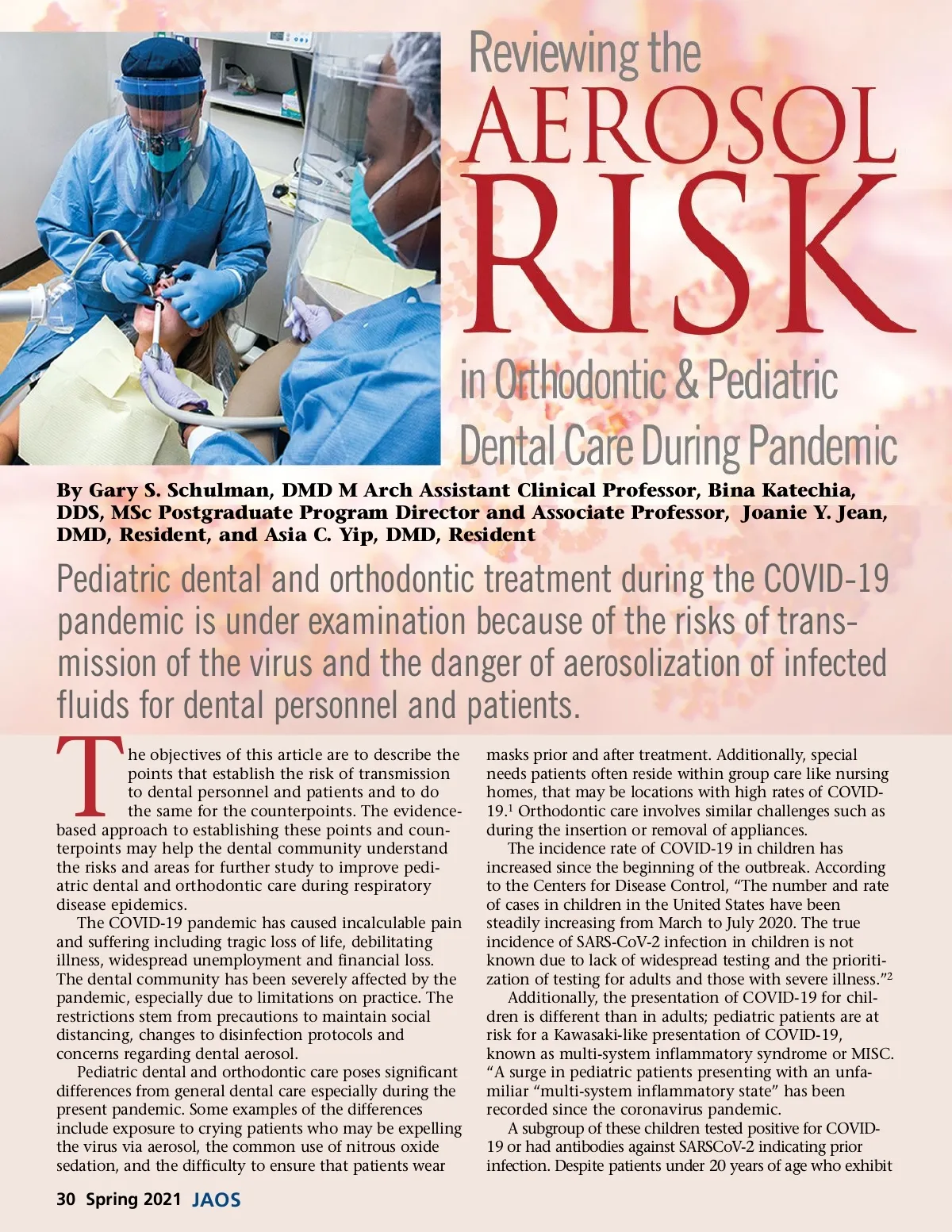
mild symptoms, comprise no more than two percent of COVID-19 cases, recent fatalities due to a pediatric hyper-inflammatory state suggests an unexplored bigger picture. 3 Dental aerosol has been implicated in placing dental personnel and patients at increased risk for SARS-CoV-2 infection. During the early phase of the pandemic, for instance, Meng et al stated: “Due to the unique characteris-tics of dental procedures where a large number of droplets and aerosols could be generated, the standard protective measures in daily clinical work are not effective enough to prevent the spread of COVID-19, especially when patients are in the incubation period, are unaware they are infected, or choose to conceal their infection.” 4 In another article, Peng stated: “Dental care settings invariably carry the risk of 2019-nCoV infection due to the specificity of [its] procedures, which involve[s] face-to-face communication with patients, and frequent exposure to saliva, blood and other body fluids, and the handling of sharp instruments. The pathogenic microorganisms can be transmitted in dental settings through inhalation of airborne microorganisms that can remain suspended in the air for long periods, direct contact with blood, oral fluids, or other patient materials, contact of conjunctival, nasal, or oral mucosa with droplets and aerosols containing microor-ganisms generated from an infected individual and propelled a short distance by coughing and talking without a mask, and indirect contact with contaminated instru-ments and/or environmental surfaces.” 5 The following summary is presented to evaluate the danger of dental treatment and dental aerosol during the COVID-19 pandemic. At the start of the pandemic, dental aerosol was not differentiated from aerosol generated during certain medical procedures, including intubation. The CDC treated all aerosol similarly. We acknowledge and thank Drs. Mair and Korne for their letter, Decoding Dental Aerosols, which began to summarize for the dental community the challenges to equating dental aerosol with aerosol generated during certain medical procedures. 6 A search of the literature was performed using the keywords pediatric dentistry, aerosol, droplets, COVID-19, ventilation, transmission and risk in databases such as PubMed. Sources such as the Centers for Disease Control, the American Dental Association and the Ameri-can Academy of Pediatric Dentistry were used. Reputable studies and sources were included. Thus, we arrive at the following points and counter-points to try to answer the question: Does dental treat-ment and dental aerosol put pediatric and orthodontic patients and personnel at a higher risk for infection from COVID-19 than community-based transmission when using standard and additional controls? ᕣ COVID-19 infected persons without symptoms may also transmit the disease; ᕤ COVID-19 may be spread by airborne transmission; ᕥ Aerosol is a concern for the spread of respiratory infectious diseases; ᕦ Children and special needs adults may expel the virus when crying or yelling and may not adhere to prevention protocols such as mask wearing; ᕧ Expelled droplets from patients with COVID-19 may remain in the air and on surfaces after dental treatment; ᕨ Dental aerosol may travel and remain airborne in the operatory for up to 30 minutes after a procedure; ᕩ Nitrous oxide use may further the risk of transmis-sion in a pediatric dental setting. Counterpoints That May Limit Dental Risk During COVID-19 ᕡ Using routine dental suction equipment may effec-tively reduce transmission of COVID19 and the introduction of additional methods to reduce the viral load may further reduce airborne contamina-tion; ᕢ Aerosol versus droplet transmission remains unclear – perhaps droplet transmission poses the greater risk; ᕣ The shedding of virus during a typical dental appointment remains unclear and may be low; ᕤ Dentists have taken steps such as full PPE, air disin-fection and added equipment sterilization to limit the risk of transmission; ᕥ There are no reports of COVID-19 transmission ascribed to dental treatment; ᕦ Aerosol generated by dental treatment has been confused with aerosol generated during intubation of ill patients who may be shedding a higher viral load; ᕧ Iodine pre-rinses may inactivate COVID-19; ᕨ Iodine or silver in dental waterlines may inactivate COVID-19. The following summarizes the literature and web-based evidence and observations that support the points and counterpoints listed above. Points That May Establish Dental Risk During COVID-19 ᕡ Studies have documented the presence of COVID-19 in saliva; Points that establish the risk to dental personnel and patients during the COVID-19 pandemic Documented Presence of COVID-19 in Saliva The presence of a salivary viral load is the primary source of infectious material in dental aerosol. Evidence has shown that the COVID-19 virus is found in salivary fluid and may be infectious. In one study by Azzi et al, in which the authors examined the use of saliva as a diagnos-www.orthodontics.com ᕢ COVID-19 infected persons who have symptoms may transmit the disease through droplets and close contact; Spring 2021 31
Journal of the American Orthodontic Society Spring 2021: Page 31