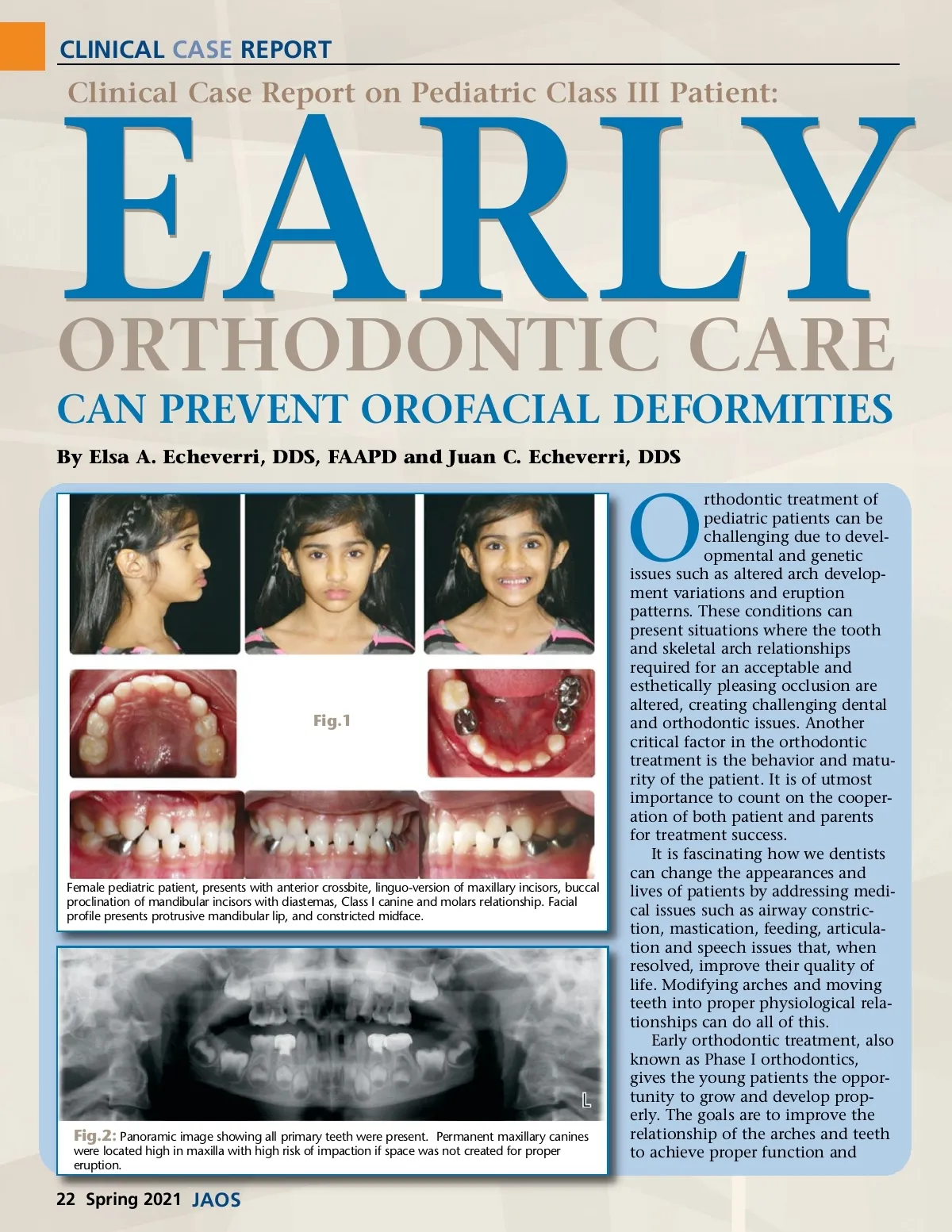
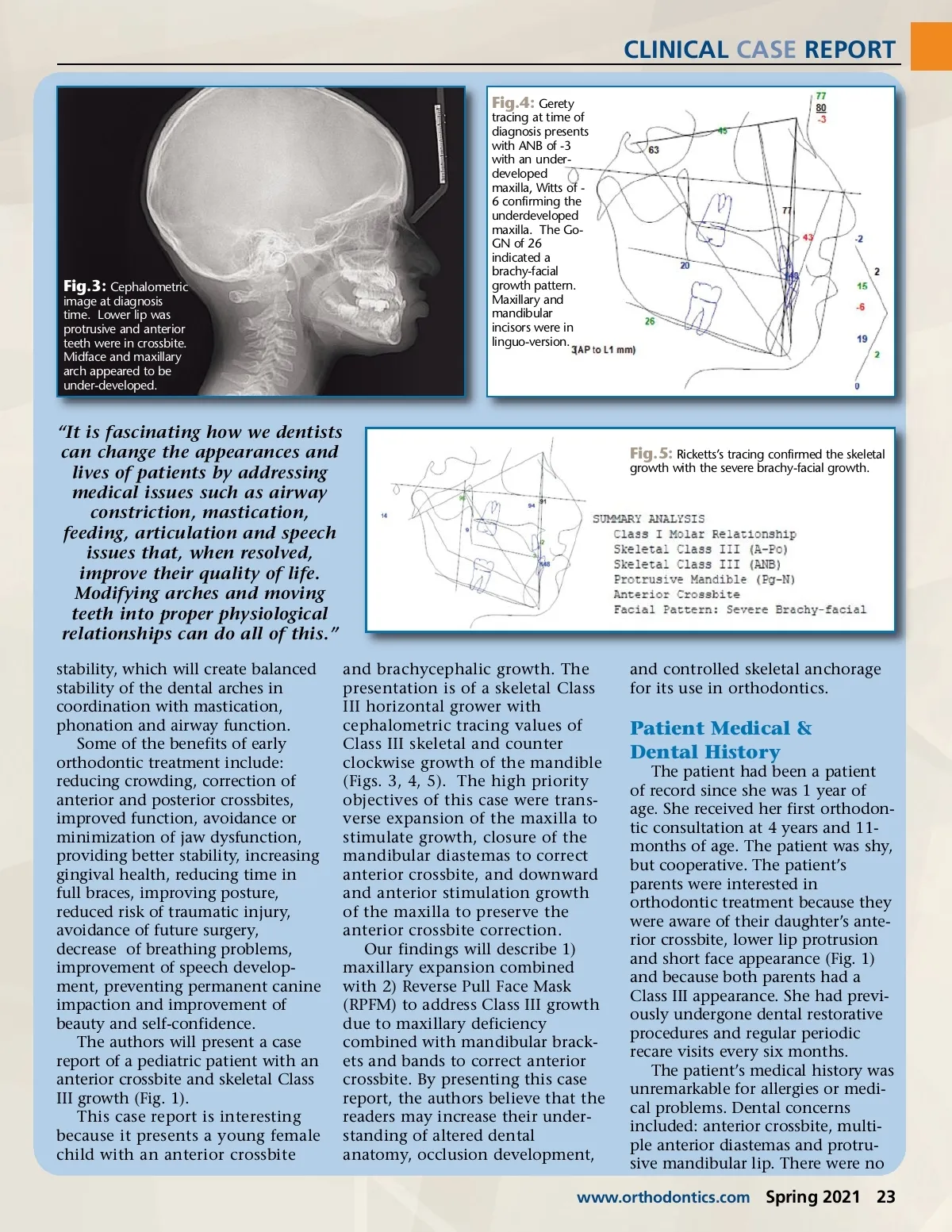
CLINICAL CASE REPORT EARLY ORTHODONTIC CARE CAN PREVENT OROFACIAL DEFORMITIES By Elsa A. Echeverri, DDS, FAAPD and Juan C. Echeverri, DDS Clinical Case Report on Pediatric Class III Patient: O Fig.1 Female pediatric patient, presents with anterior crossbite, linguo-version of maxillary incisors, buccal proclination of mandibular incisors with diastemas, Class I canine and molars relationship. Facial profile presents protrusive mandibular lip, and constricted midface. Fig.2: Panoramic image showing all primary teeth were present. Permanent maxillary canines were located high in maxilla with high risk of impaction if space was not created for proper eruption. rthodontic treatment of pediatric patients can be challenging due to devel-opmental and genetic issues such as altered arch develop-ment variations and eruption patterns. These conditions can present situations where the tooth and skeletal arch relationships required for an acceptable and esthetically pleasing occlusion are altered, creating challenging dental and orthodontic issues. Another critical factor in the orthodontic treatment is the behavior and matu-rity of the patient. It is of utmost importance to count on the cooper-ation of both patient and parents for treatment success. It is fascinating how we dentists can change the appearances and lives of patients by addressing medi-cal issues such as airway constric-tion, mastication, feeding, articula-tion and speech issues that, when resolved, improve their quality of life. Modifying arches and moving teeth into proper physiological rela-tionships can do all of this. Early orthodontic treatment, also known as Phase I orthodontics, gives the young patients the oppor-tunity to grow and develop prop-erly. The goals are to improve the relationship of the arches and teeth to achieve proper function and 22 Spring 2021 JAOS
Journal of the American Orthodontic Society Spring 2021: Page 22