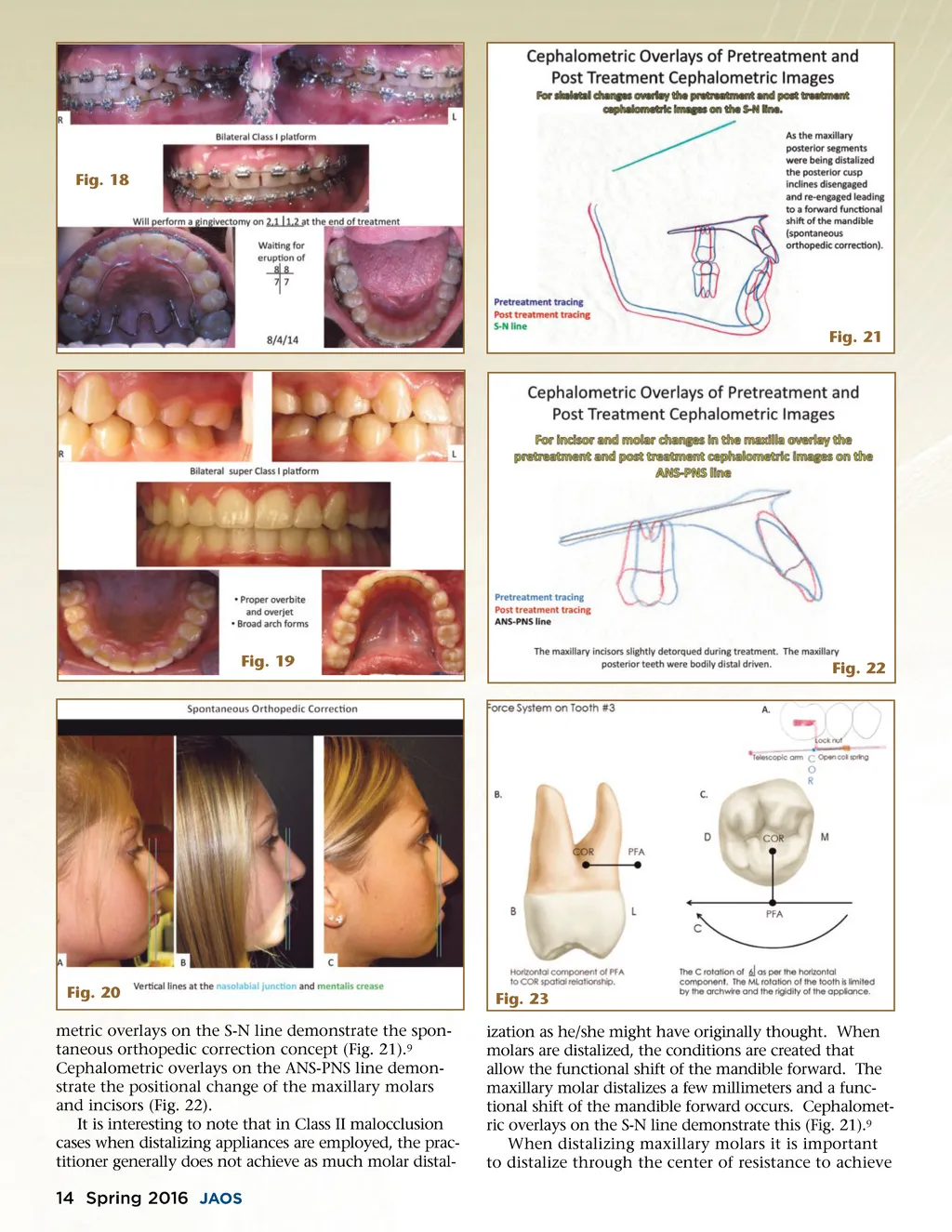
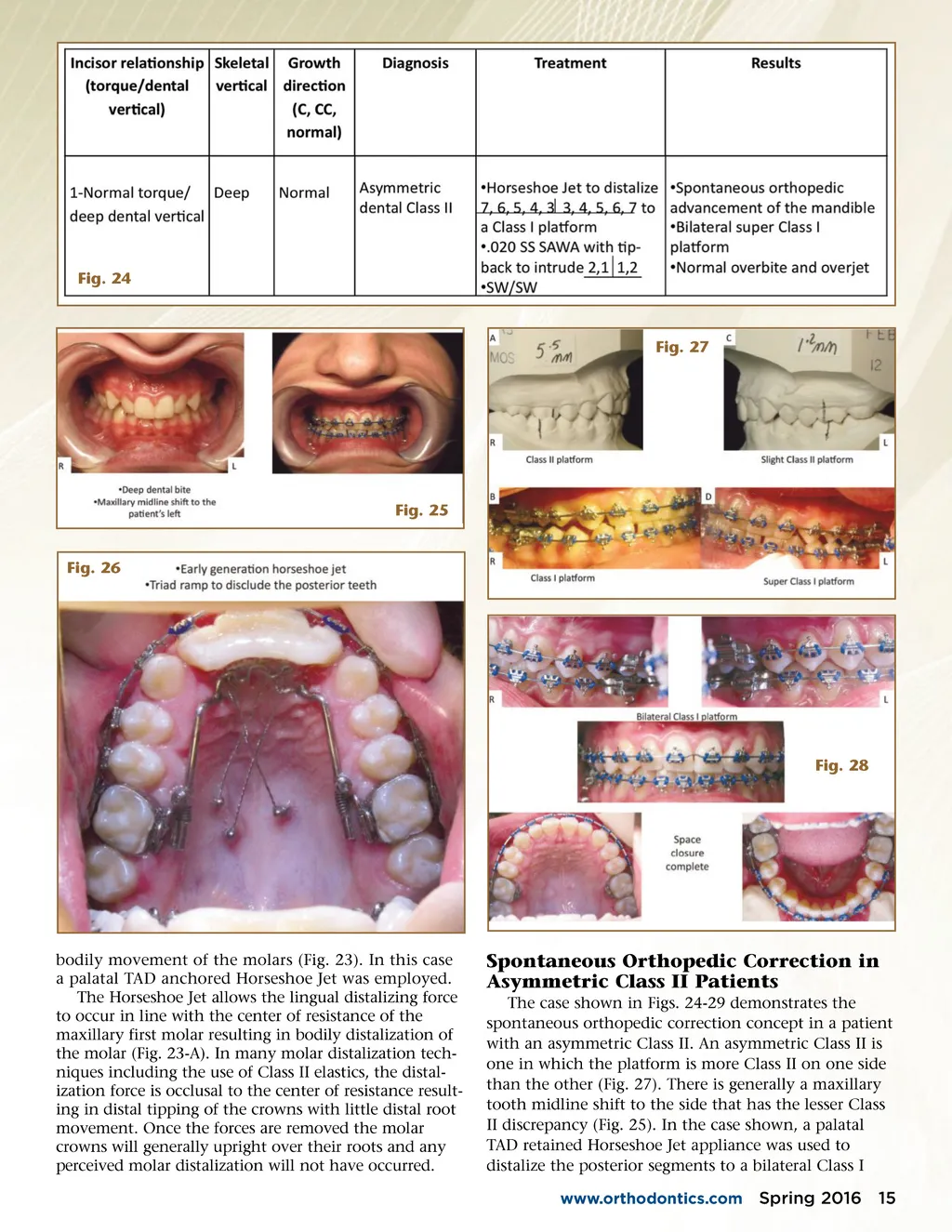
Fig. 18 Fig. 21 Fig. 19 Fig. 22 Fig. 20 metric overlays on the S-N line demonstrate the spon-taneous orthopedic correction concept (Fig. 21). 9 Cephalometric overlays on the ANS-PNS line demon-strate the positional change of the maxillary molars and incisors (Fig. 22). It is interesting to note that in Class II malocclusion cases when distalizing appliances are employed, the prac-titioner generally does not achieve as much molar distal-Fig. 23 ization as he/she might have originally thought. When molars are distalized, the conditions are created that allow the functional shift of the mandible forward. The maxillary molar distalizes a few millimeters and a func-tional shift of the mandible forward occurs. Cephalomet-ric overlays on the S-N line demonstrate this (Fig. 21). 9 When distalizing maxillary molars it is important to distalize through the center of resistance to achieve 14 Spring 2016 JAOS
Journal of the American Orthodontic Society Spring 2016: Page 14