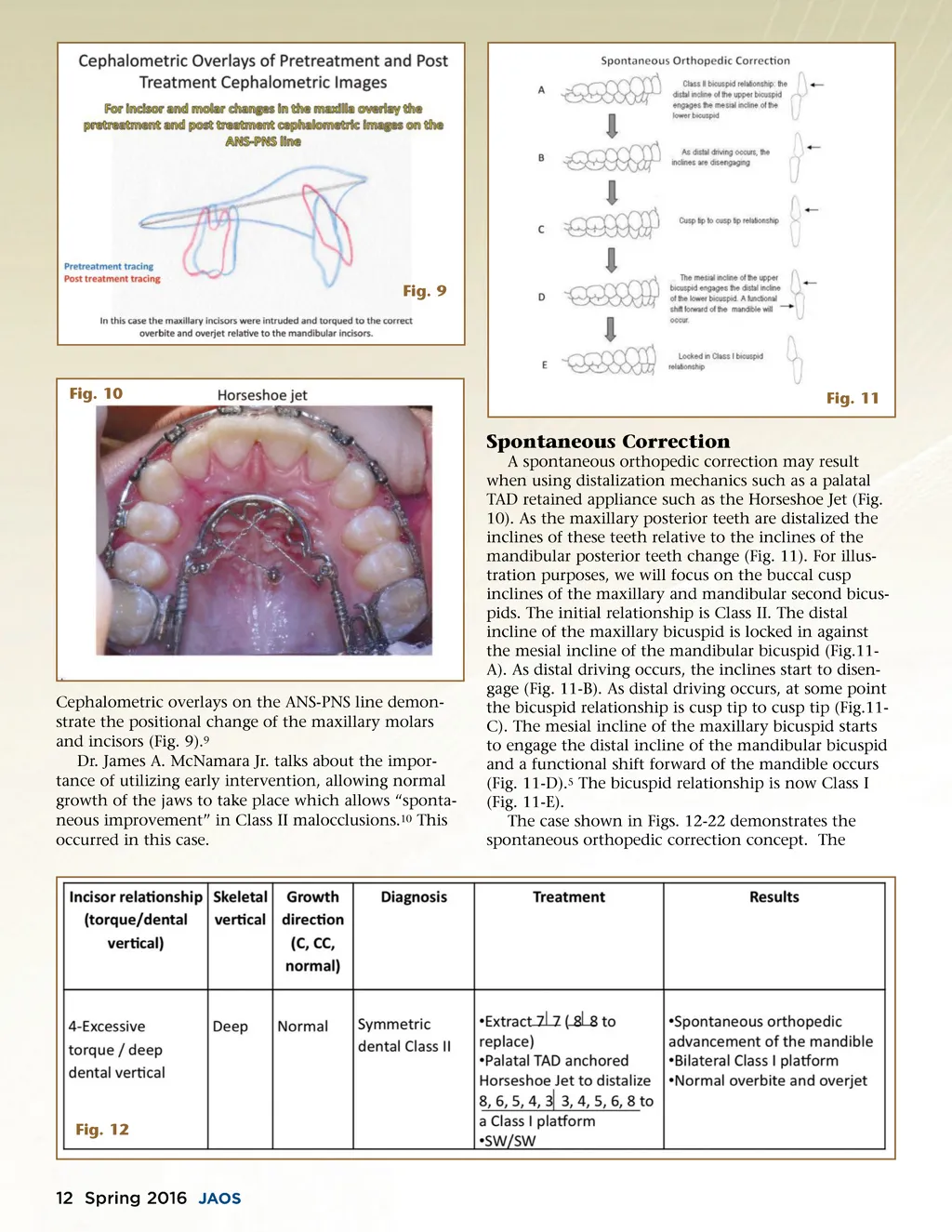
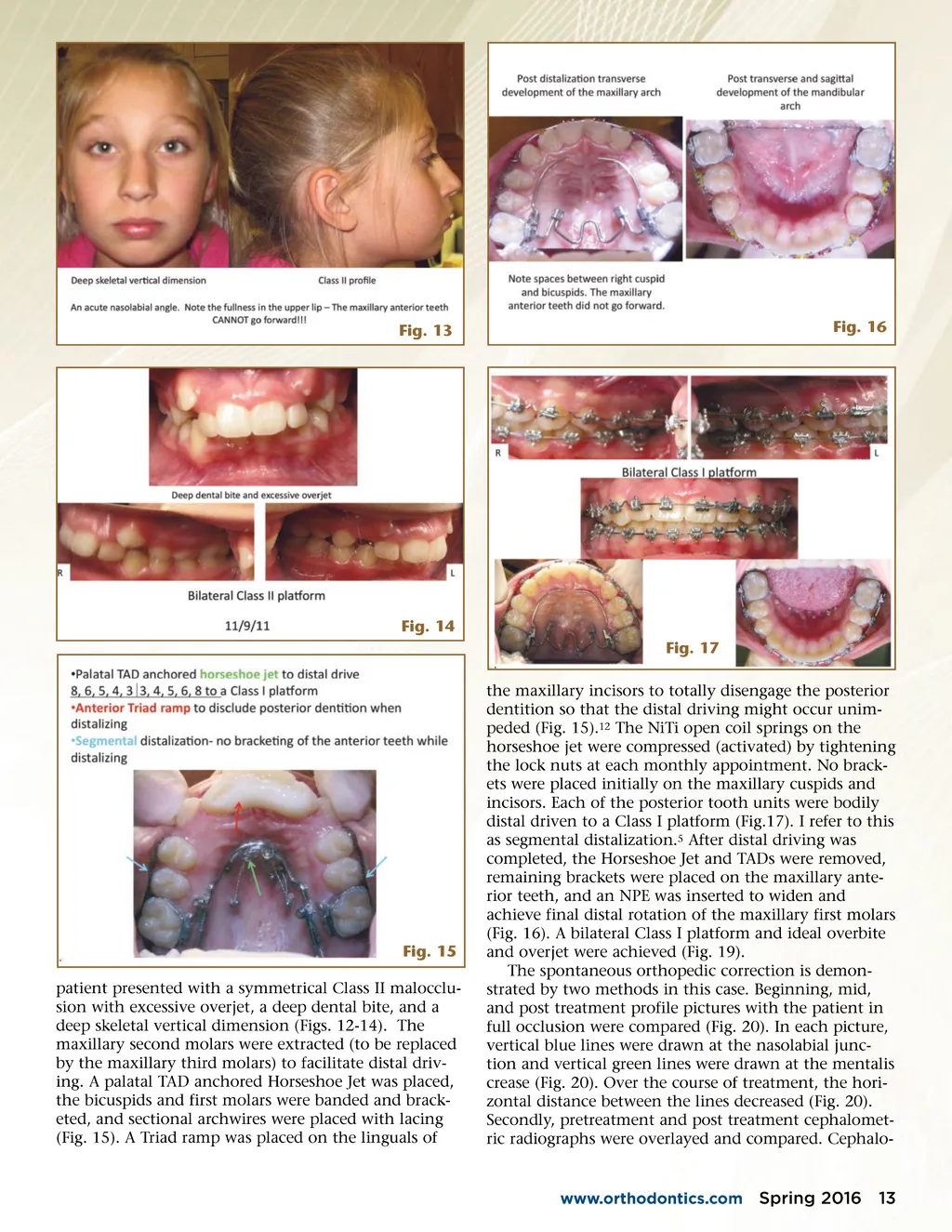
Fig. 9 Fig. 10 Fig. 11 Spontaneous Correction A spontaneous orthopedic correction may result when using distalization mechanics such as a palatal TAD retained appliance such as the Horseshoe Jet (Fig. 10). As the maxillary posterior teeth are distalized the inclines of these teeth relative to the inclines of the mandibular posterior teeth change (Fig. 11). For illus-tration purposes, we will focus on the buccal cusp inclines of the maxillary and mandibular second bicus-pids. The initial relationship is Class II. The distal incline of the maxillary bicuspid is locked in against the mesial incline of the mandibular bicuspid (Fig.11-A). As distal driving occurs, the inclines start to disen-gage (Fig. 11-B). As distal driving occurs, at some point the bicuspid relationship is cusp tip to cusp tip (Fig.11-C). The mesial incline of the maxillary bicuspid starts to engage the distal incline of the mandibular bicuspid and a functional shift forward of the mandible occurs (Fig. 11-D). 5 The bicuspid relationship is now Class I (Fig. 11-E). The case shown in Figs. 12-22 demonstrates the spontaneous orthopedic correction concept. The Cephalometric overlays on the ANS-PNS line demon-strate the positional change of the maxillary molars and incisors (Fig. 9). 9 Dr. James A. McNamara Jr. talks about the impor-tance of utilizing early intervention, allowing normal growth of the jaws to take place which allows “sponta-neous improvement” in Class II malocclusions. 10 This occurred in this case. Fig. 12 12 Spring 2016 JAOS
Journal of the American Orthodontic Society Spring 2016: Page 12