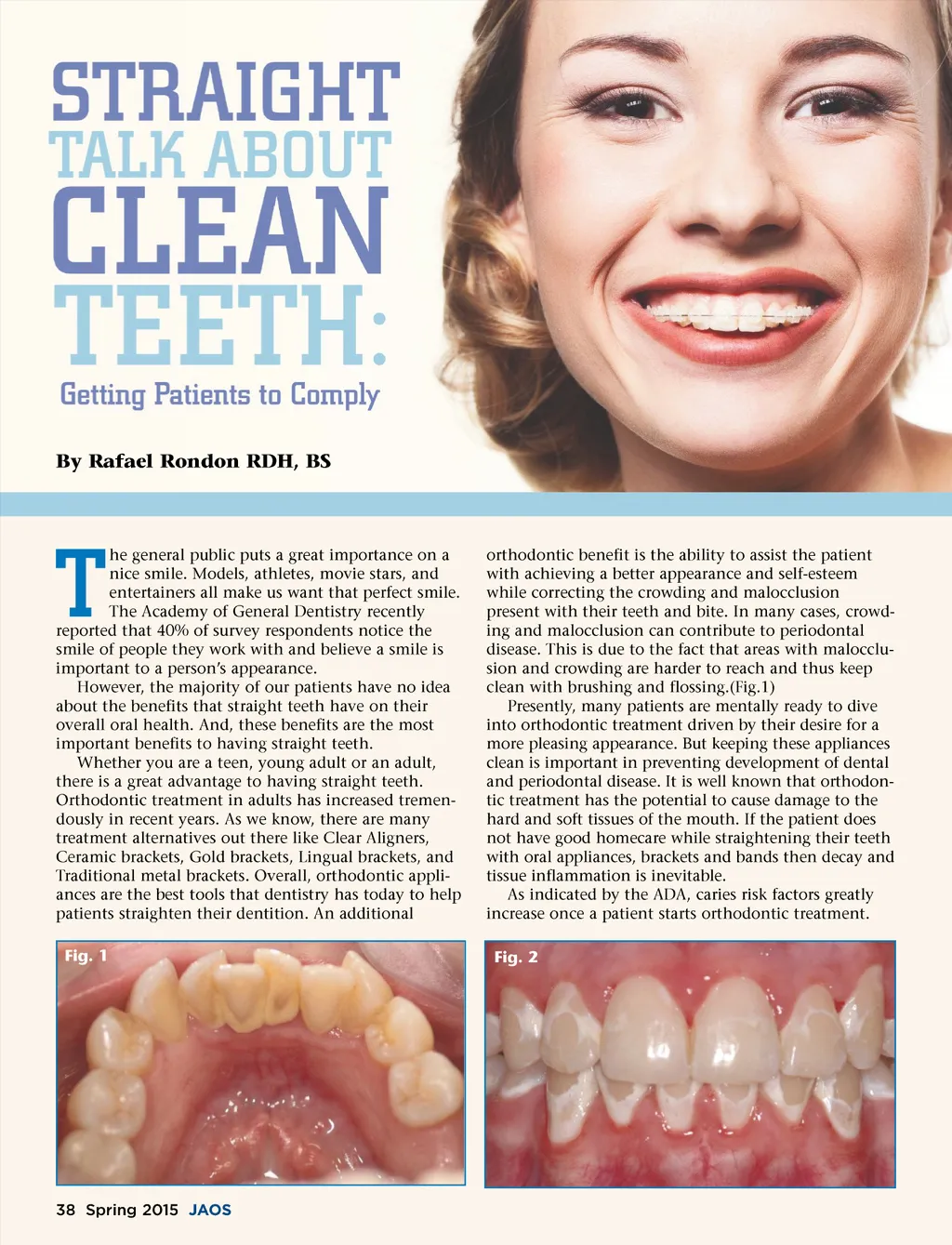
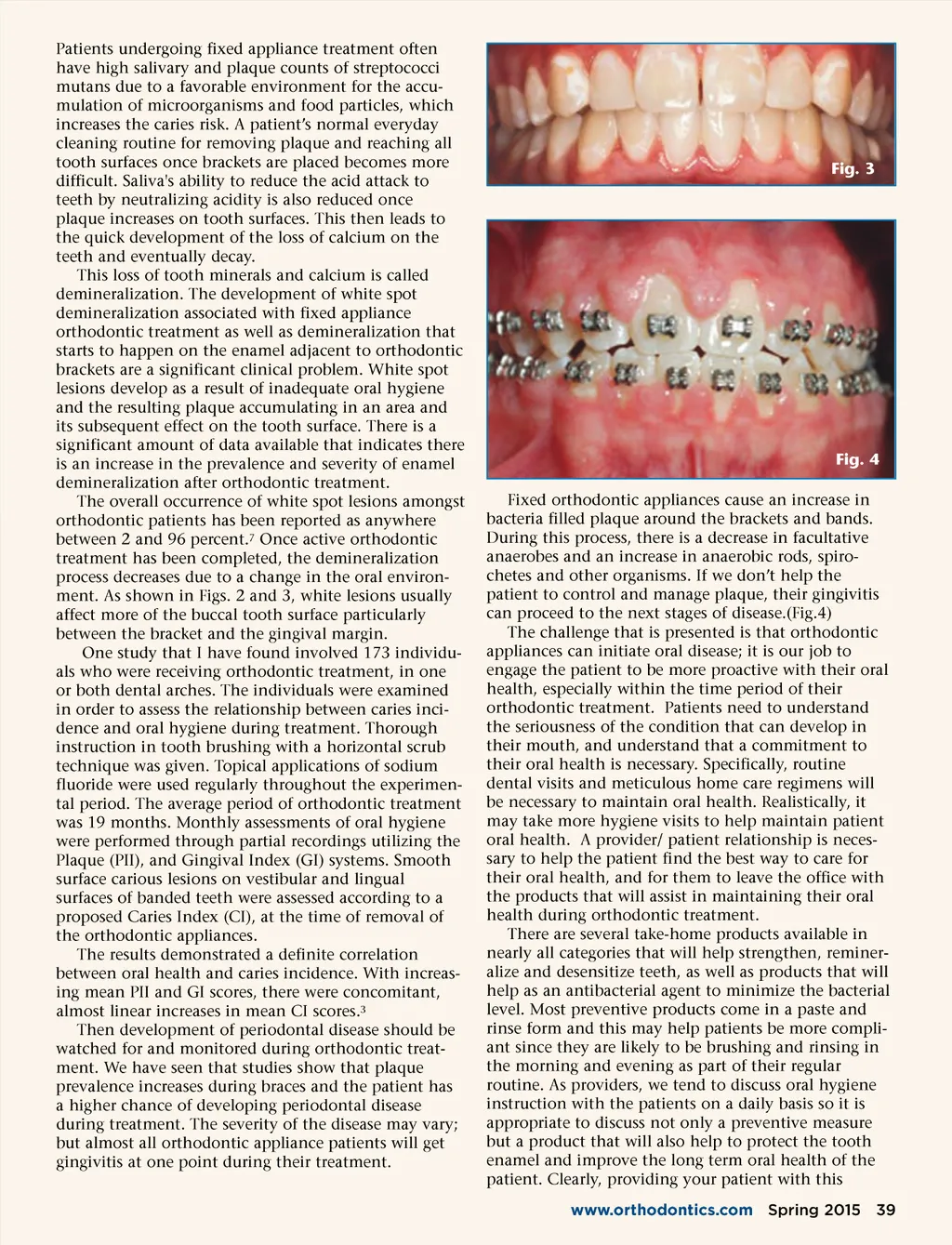
Patients undergoing fixed appliance treatment often have high salivary and plaque counts of streptococci mutans due to a favorable environment for the accu-mulation of microorganisms and food particles, which increases the caries risk. A patient’s normal everyday cleaning routine for removing plaque and reaching all tooth surfaces once brackets are placed becomes more difficult. Saliva's ability to reduce the acid attack to teeth by neutralizing acidity is also reduced once plaque increases on tooth surfaces. This then leads to the quick development of the loss of calcium on the teeth and eventually decay. This loss of tooth minerals and calcium is called demineralization. The development of white spot demineralization associated with fixed appliance orthodontic treatment as well as demineralization that starts to happen on the enamel adjacent to orthodontic brackets are a significant clinical problem. White spot lesions develop as a result of inadequate oral hygiene and the resulting plaque accumulating in an area and its subsequent effect on the tooth surface. There is a significant amount of data available that indicates there is an increase in the prevalence and severity of enamel demineralization after orthodontic treatment. The overall occurrence of white spot lesions amongst orthodontic patients has been reported as anywhere between 2 and 96 percent. 7 Once active orthodontic treatment has been completed, the demineralization process decreases due to a change in the oral environ-ment. As shown in Figs. 2 and 3, white lesions usually affect more of the buccal tooth surface particularly between the bracket and the gingival margin. One study that I have found involved 173 individu-als who were receiving orthodontic treatment, in one or both dental arches. The individuals were examined in order to assess the relationship between caries inci-dence and oral hygiene during treatment. Thorough instruction in tooth brushing with a horizontal scrub technique was given. Topical applications of sodium fluoride were used regularly throughout the experimen-tal period. The average period of orthodontic treatment was 19 months. Monthly assessments of oral hygiene were performed through partial recordings utilizing the Plaque (PII), and Gingival Index (GI) systems. Smooth surface carious lesions on vestibular and lingual surfaces of banded teeth were assessed according to a proposed Caries Index (CI), at the time of removal of the orthodontic appliances. The results demonstrated a definite correlation between oral health and caries incidence. With increas-ing mean PII and GI scores, there were concomitant, almost linear increases in mean CI scores. 3 Then development of periodontal disease should be watched for and monitored during orthodontic treat-ment. We have seen that studies show that plaque prevalence increases during braces and the patient has a higher chance of developing periodontal disease during treatment. The severity of the disease may vary; but almost all orthodontic appliance patients will get gingivitis at one point during their treatment. Fig. 3 Fig. 4 Fixed orthodontic appliances cause an increase in bacteria filled plaque around the brackets and bands. During this process, there is a decrease in facultative anaerobes and an increase in anaerobic rods, spiro-chetes and other organisms. If we don’t help the patient to control and manage plaque, their gingivitis can proceed to the next stages of disease.(Fig.4) The challenge that is presented is that orthodontic appliances can initiate oral disease; it is our job to engage the patient to be more proactive with their oral health, especially within the time period of their orthodontic treatment. Patients need to understand the seriousness of the condition that can develop in their mouth, and understand that a commitment to their oral health is necessary. Specifically, routine dental visits and meticulous home care regimens will be necessary to maintain oral health. Realistically, it may take more hygiene visits to help maintain patient oral health. A provider/ patient relationship is neces-sary to help the patient find the best way to care for their oral health, and for them to leave the office with the products that will assist in maintaining their oral health during orthodontic treatment. There are several take-home products available in nearly all categories that will help strengthen, reminer-alize and desensitize teeth, as well as products that will help as an antibacterial agent to minimize the bacterial level. Most preventive products come in a paste and rinse form and this may help patients be more compli-ant since they are likely to be brushing and rinsing in the morning and evening as part of their regular routine. As providers, we tend to discuss oral hygiene instruction with the patients on a daily basis so it is appropriate to discuss not only a preventive measure but a product that will also help to protect the tooth enamel and improve the long term oral health of the patient. Clearly, providing your patient with this www.orthodontics.com Spring 2015 39
Journal of the American Orthodontic Society Spring 2015: Page 39