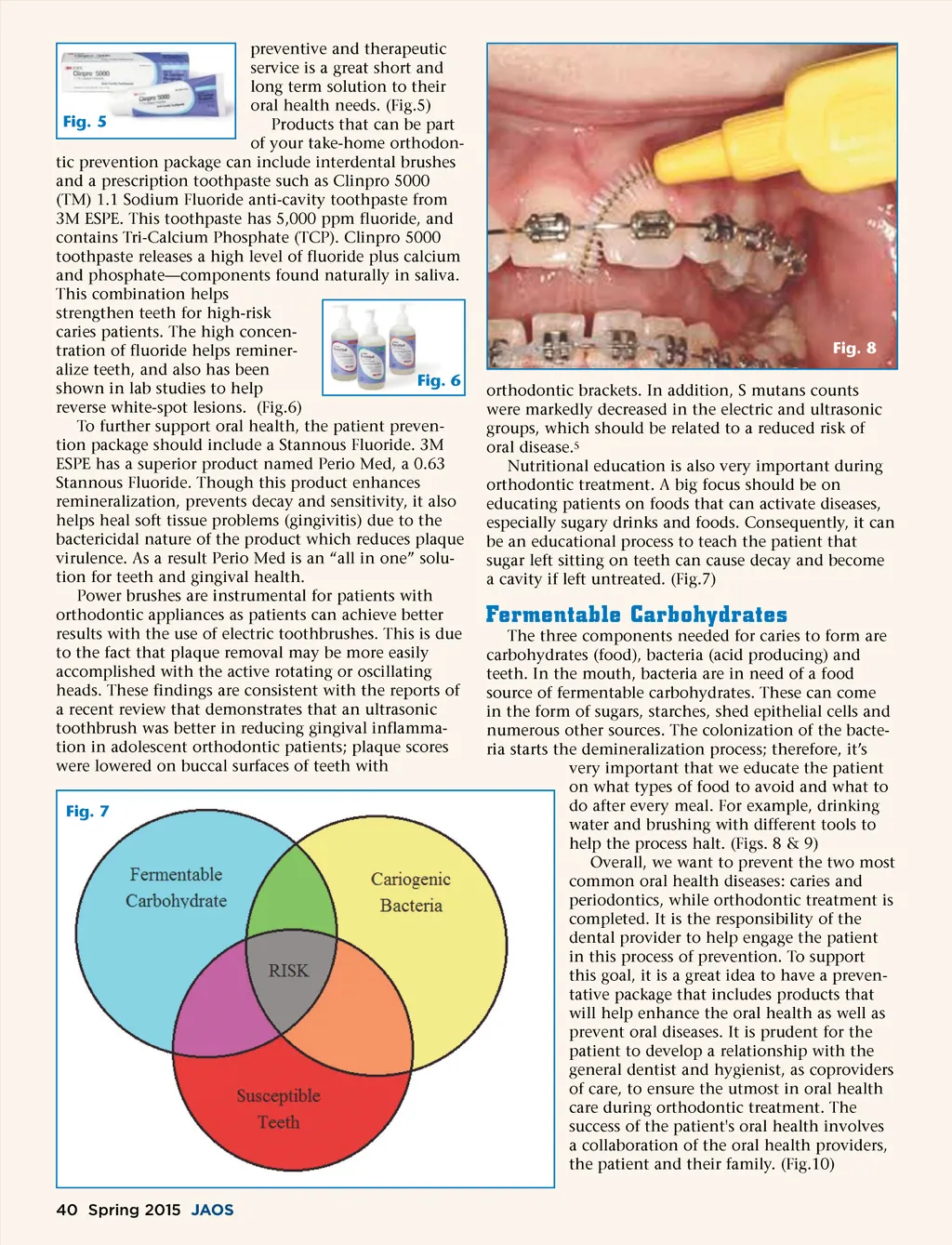
preventive and therapeutic service is a great short and long term solution to their oral health needs. (Fig.5) Fig. 5 Products that can be part of your take-home orthodon-tic prevention package can include interdental brushes and a prescription toothpaste such as Clinpro 5000 (TM) 1.1 Sodium Fluoride anti-cavity toothpaste from 3M ESPE. This toothpaste has 5,000 ppm fluoride, and contains Tri-Calcium Phosphate (TCP). Clinpro 5000 toothpaste releases a high level of fluoride plus calcium and phosphate—components found naturally in saliva. This combination helps strengthen teeth for high-risk caries patients. The high concen-tration of fluoride helps reminer-alize teeth, and also has been Fig. 6 shown in lab studies to help reverse white-spot lesions. (Fig.6) To further support oral health, the patient preven-tion package should include a Stannous Fluoride. 3M ESPE has a superior product named Perio Med, a 0.63 Stannous Fluoride. Though this product enhances remineralization, prevents decay and sensitivity, it also helps heal soft tissue problems (gingivitis) due to the bactericidal nature of the product which reduces plaque virulence. As a result Perio Med is an “all in one” solu-tion for teeth and gingival health. Power brushes are instrumental for patients with orthodontic appliances as patients can achieve better results with the use of electric toothbrushes. This is due to the fact that plaque removal may be more easily accomplished with the active rotating or oscillating heads. These findings are consistent with the reports of a recent review that demonstrates that an ultrasonic toothbrush was better in reducing gingival inflamma-tion in adolescent orthodontic patients; plaque scores were lowered on buccal surfaces of teeth with Fig. 7 Fig. 8 orthodontic brackets. In addition, S mutans counts were markedly decreased in the electric and ultrasonic groups, which should be related to a reduced risk of oral disease. 5 Nutritional education is also very important during orthodontic treatment. A big focus should be on educating patients on foods that can activate diseases, especially sugary drinks and foods. Consequently, it can be an educational process to teach the patient that sugar left sitting on teeth can cause decay and become a cavity if left untreated. (Fig.7) Fermentable Carbohydrates The three components needed for caries to form are carbohydrates (food), bacteria (acid producing) and teeth. In the mouth, bacteria are in need of a food source of fermentable carbohydrates. These can come in the form of sugars, starches, shed epithelial cells and numerous other sources. The colonization of the bacte-ria starts the demineralization process; therefore, it’s very important that we educate the patient on what types of food to avoid and what to do after every meal. For example, drinking water and brushing with different tools to help the process halt. (Figs. 8 & 9) Overall, we want to prevent the two most common oral health diseases: caries and periodontics, while orthodontic treatment is completed. It is the responsibility of the dental provider to help engage the patient in this process of prevention. To support this goal, it is a great idea to have a preven-tative package that includes products that will help enhance the oral health as well as prevent oral diseases. It is prudent for the patient to develop a relationship with the general dentist and hygienist, as coproviders of care, to ensure the utmost in oral health care during orthodontic treatment. The success of the patient's oral health involves a collaboration of the oral health providers, the patient and their family. (Fig.10) 40 Spring 2015 JAOS
Journal of the American Orthodontic Society Spring 2015: Page 40