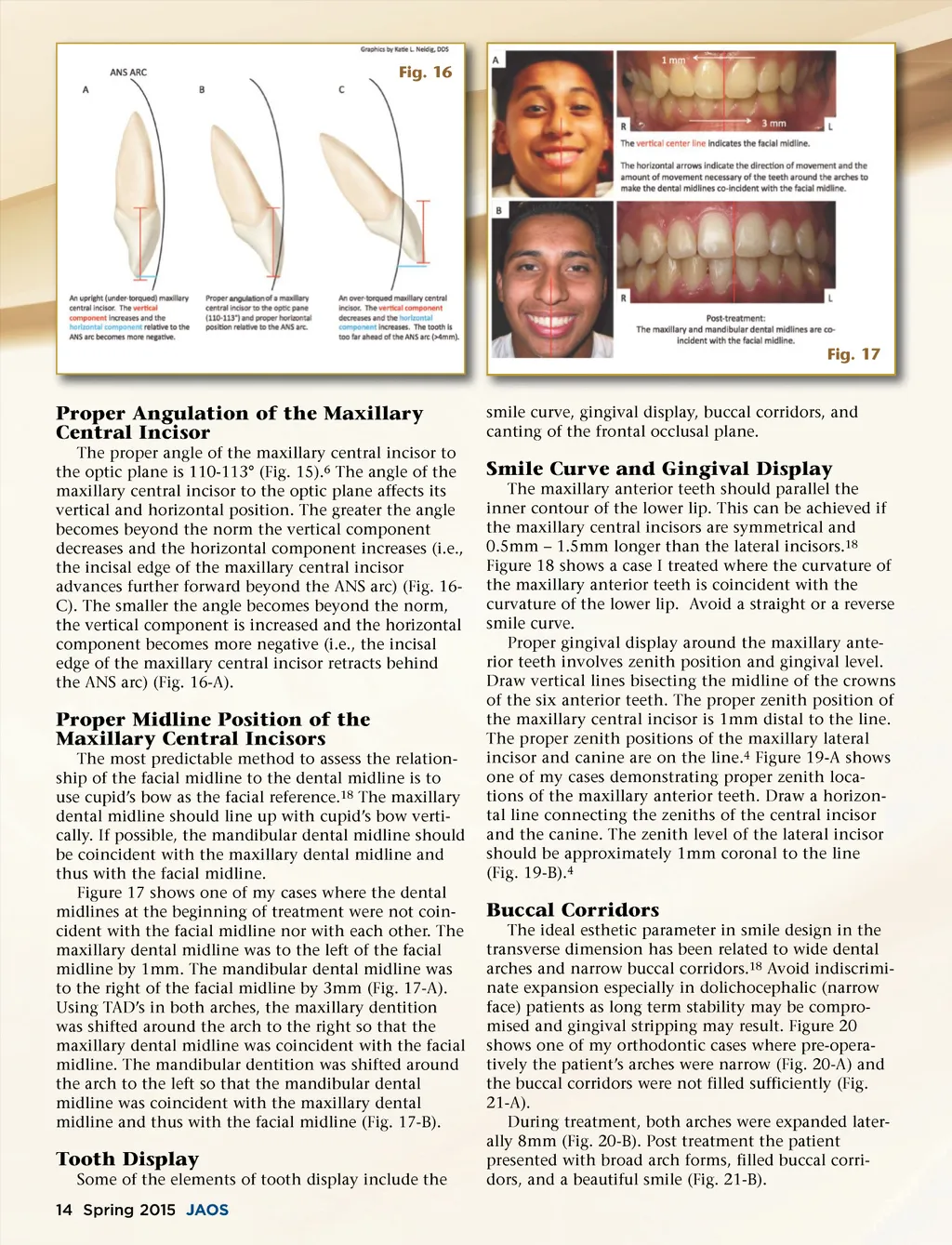
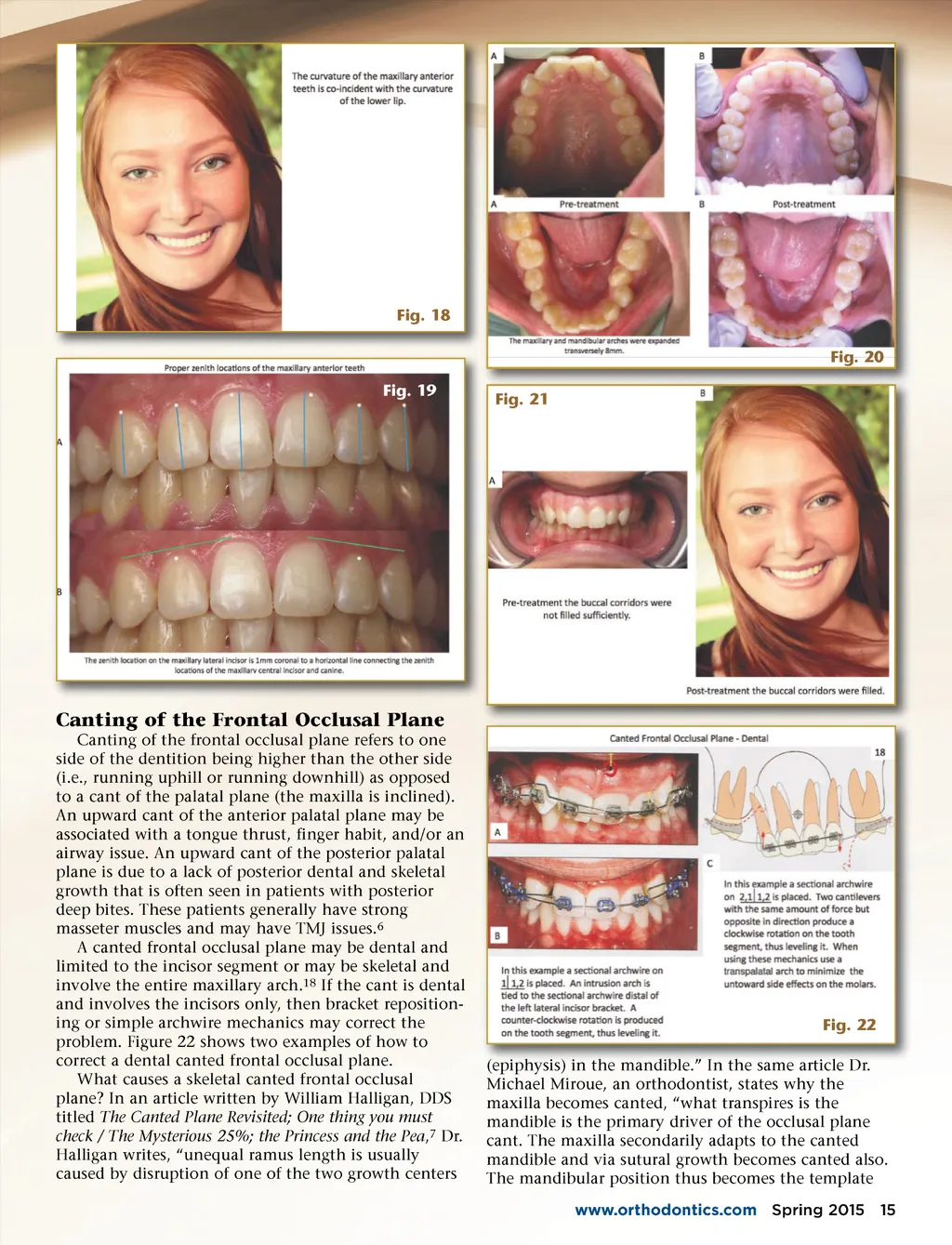
Fig. 18 Fig. 20 Fig. 19 Fig. 21 Canting of the Frontal Occlusal Plane Canting of the frontal occlusal plane refers to one side of the dentition being higher than the other side (i.e., running uphill or running downhill) as opposed to a cant of the palatal plane (the maxilla is inclined). An upward cant of the anterior palatal plane may be associated with a tongue thrust, finger habit, and/or an airway issue. An upward cant of the posterior palatal plane is due to a lack of posterior dental and skeletal growth that is often seen in patients with posterior deep bites. These patients generally have strong masseter muscles and may have TMJ issues. 6 A canted frontal occlusal plane may be dental and limited to the incisor segment or may be skeletal and involve the entire maxillary arch. 18 If the cant is dental and involves the incisors only, then bracket reposition-ing or simple archwire mechanics may correct the problem. Figure 22 shows two examples of how to correct a dental canted frontal occlusal plane. What causes a skeletal canted frontal occlusal plane? In an article written by William Halligan, DDS titled The Canted Plane Revisited; One thing you must check / The Mysterious 25%; the Princess and the Pea , 7 Dr. Halligan writes, “unequal ramus length is usually caused by disruption of one of the two growth centers Fig. 22 (epiphysis) in the mandible.” mandible ” In the same article Dr. Dr Michael Miroue, an orthodontist, states why the maxilla becomes canted, “what transpires is the mandible is the primary driver of the occlusal plane cant. The maxilla secondarily adapts to the canted mandible and via sutural growth becomes canted also. The mandibular position thus becomes the template www.orthodontics.com Spring 2015 15
Journal of the American Orthodontic Society Spring 2015: Page 15