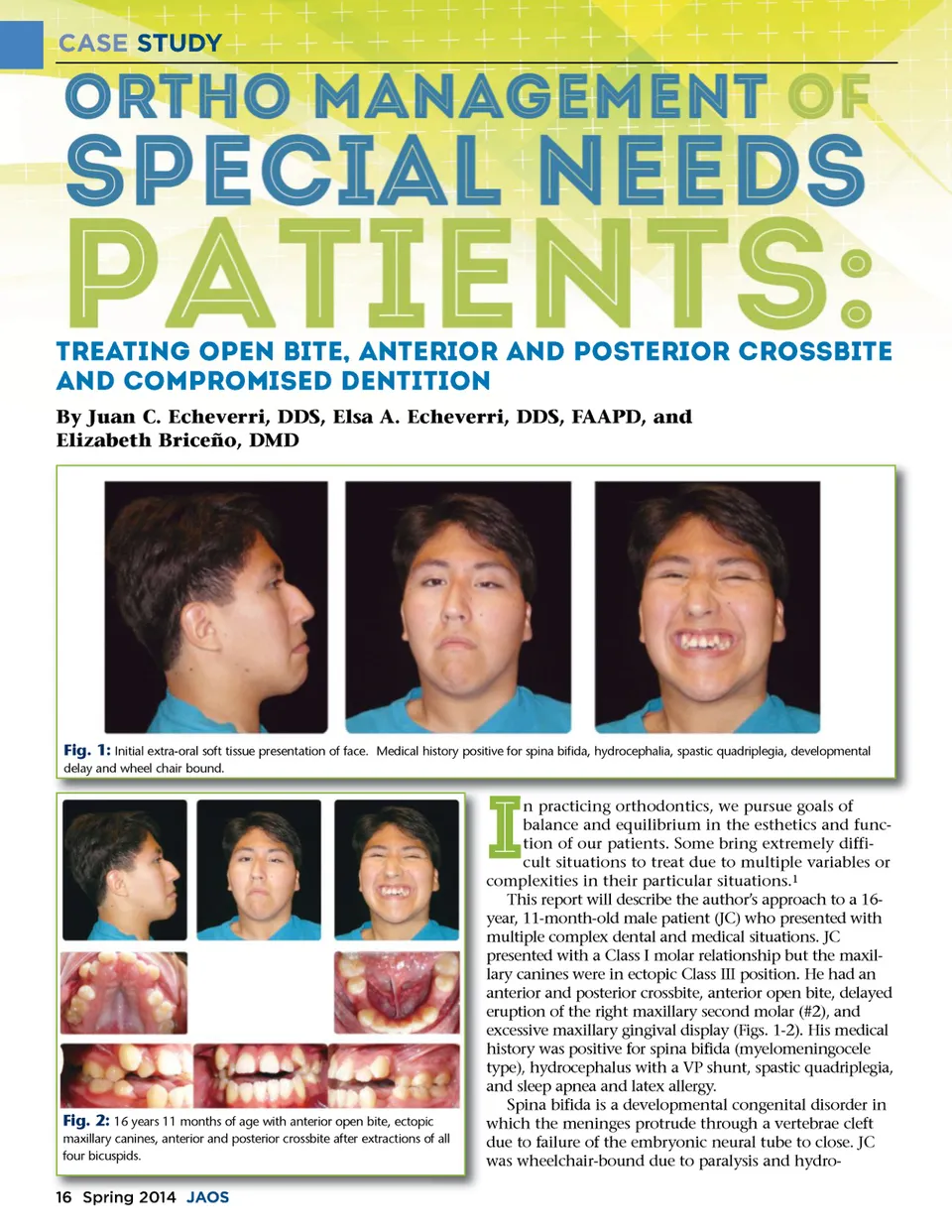
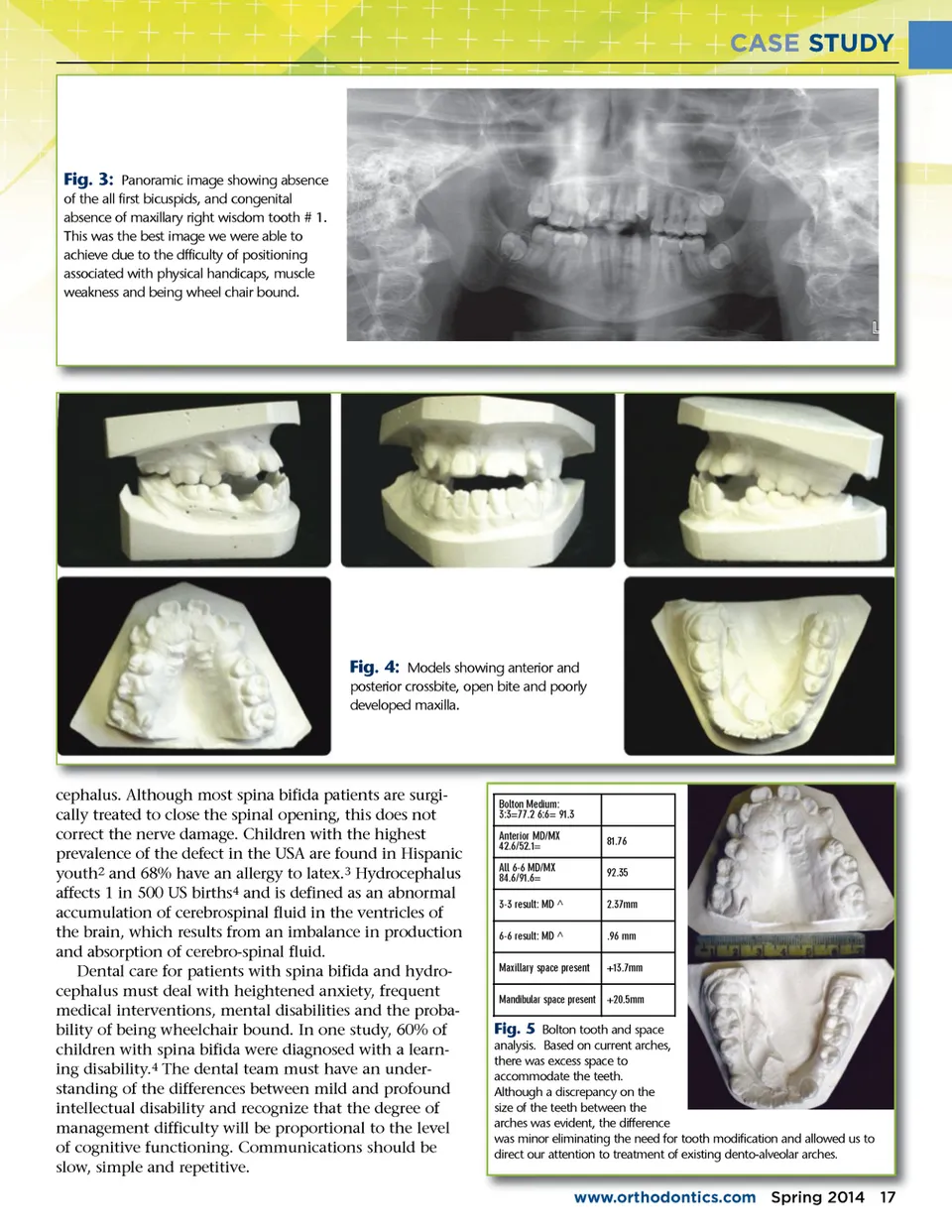
CASE STUDY Fig. 3: Panoramic image showing absence of the all first bicuspids, and congenital absence of maxillary right wisdom tooth # 1. This was the best image we were able to achieve due to the dfficulty of positioning associated with physical handicaps, muscle weakness and being wheel chair bound. Fig. 4: Models showing anterior and posterior crossbite, open bite and poorly developed maxilla. cephalus. Although most spina bifida patients are surgi-cally treated to close the spinal opening, this does not correct the nerve damage. Children with the highest prevalence of the defect in the USA are found in Hispanic youth 2 and 68% have an allergy to latex. 3 Hydrocephalus affects 1 in 500 US births 4 and is defined as an abnormal accumulation of cerebrospinal fluid in the ventricles of the brain, which results from an imbalance in production and absorption of cerebro-spinal fluid. Dental care for patients with spina bifida and hydro-cephalus must deal with heightened anxiety, frequent medical interventions, mental disabilities and the proba-bility of being wheelchair bound. In one study, 60% of children with spina bifida were diagnosed with a learn-ing disability. 4 The dental team must have an under-standing of the differences between mild and profound intellectual disability and recognize that the degree of management difficulty will be proportional to the level of cognitive functioning. Communications should be slow, simple and repetitive. Bolton Medium: 3:3=77.2 6:6= 91.3 Anterior MD/MX 42.6/52.1= All 6-6 MD/MX 84.6/91.6= 3-3 result: MD ^ 6-6 result: MD ^ Maxillary space present Mandibular space present 81.76 92.35 2.37mm .96 mm +13.7mm +20.5mm Fig. 5 Bolton tooth and space analysis. Based on current arches, there was excess space to accommodate the teeth. Although a discrepancy on the size of the teeth between the arches was evident, the difference was minor eliminating the need for tooth modification and allowed us to direct our attention to treatment of existing dento-alveolar arches. www.orthodontics.com www orthodontics com Spring 2014 17
Journal of the American Orthodontic Society Spring 2014: Page 17