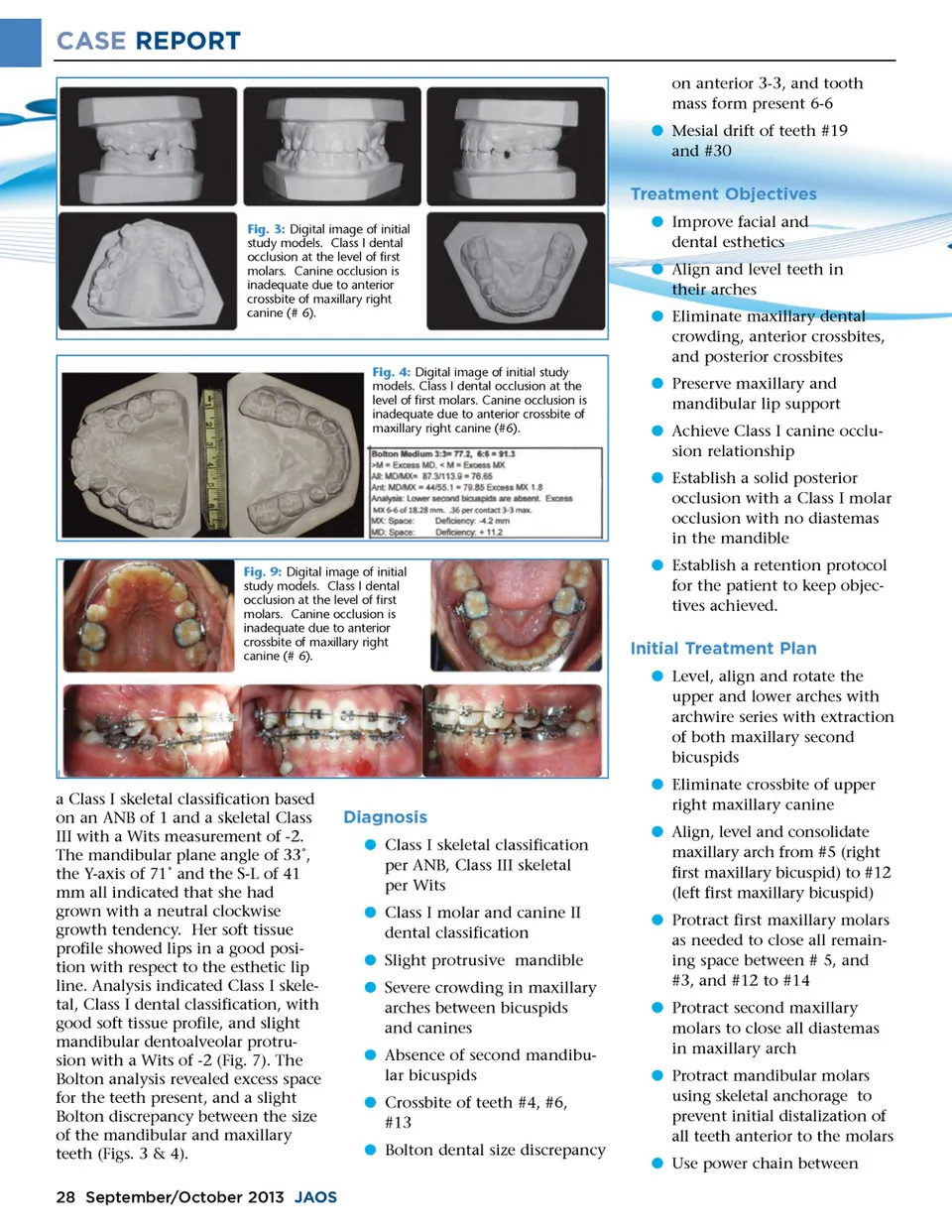
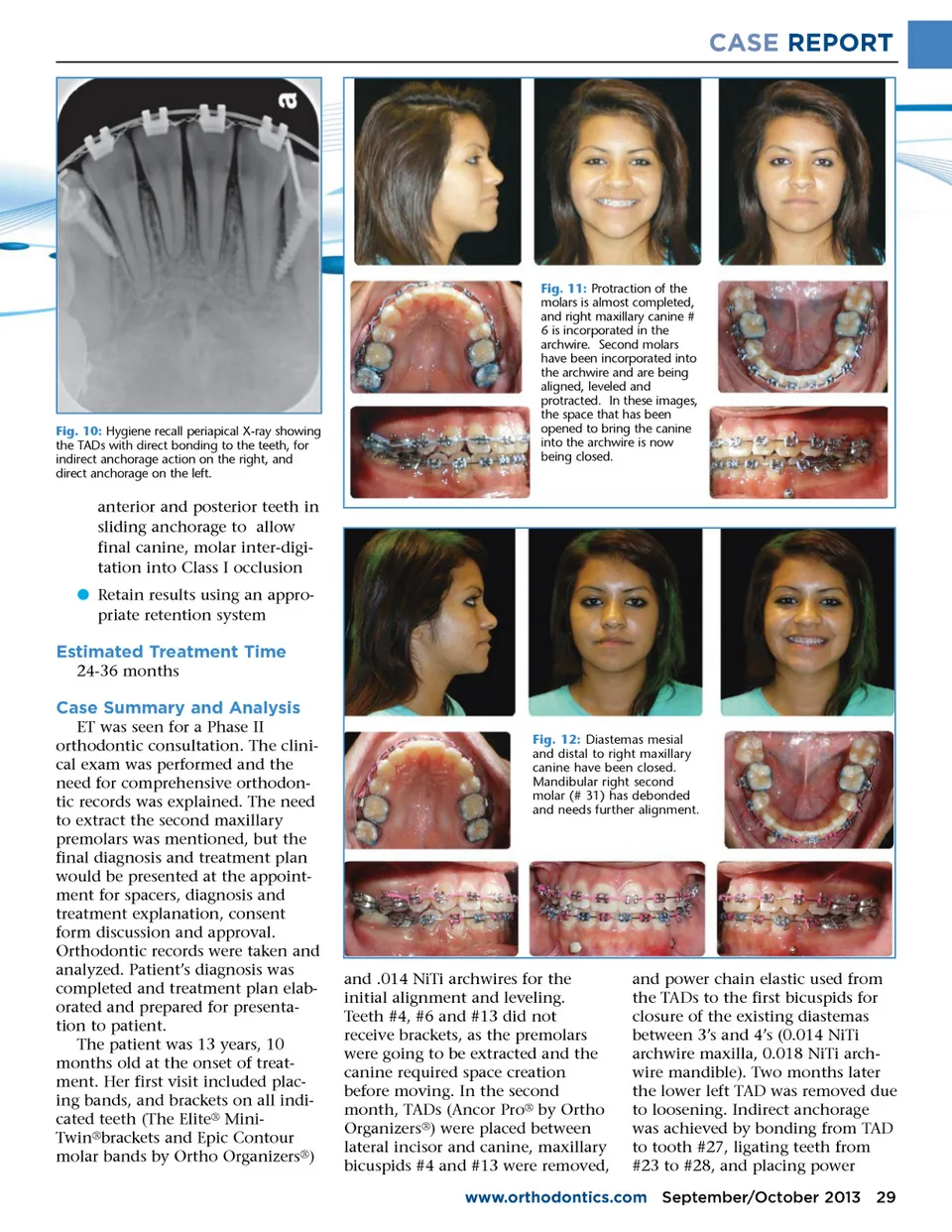
CASE REPORT Fig. 10: Hygiene recall periapical X-ray showing the TADs with direct bonding to the teeth, for indirect anchorage action on the right, and direct anchorage on the left. Fig. 11: Protraction of the molars is almost completed, and right maxillary canine # 6 is incorporated in the archwire. Second molars have been incorporated into the archwire and are being aligned, leveled and protracted. In these images, the space that has been opened to bring the canine into the archwire is now being closed. anterior and posterior teeth in sliding anchorage to allow final canine, molar inter-digi-tation into Class I occlusion b Retain results using an appro-priate retention system Estimated Treatment Time 24-36 months Case Summary and Analysis ET was seen for a Phase II orthodontic consultation. The clini-cal exam was performed and the need for comprehensive orthodon-tic records was explained. The need to extract the second maxillary premolars was mentioned, but the final diagnosis and treatment plan would be presented at the appoint-ment for spacers, diagnosis and treatment explanation, consent form discussion and approval. Orthodontic records were taken and analyzed. Patient’s diagnosis was completed and treatment plan elab-orated and prepared for presenta-tion to patient. The patient was 13 years, 10 months old at the onset of treat-ment. Her first visit included plac-ing bands, and brackets on all indi-cated teeth (The Elite ® Mini-Twin ® brackets and Epic Contour molar bands by Ortho Organizers ® ) Fig. 12: Diastemas mesial and distal to right maxillary canine have been closed. Mandibular right second molar (# 31) has debonded and needs further alignment. and .014 NiTi archwires for the initial alignment and leveling. Teeth #4, #6 and #13 did not receive brackets, as the premolars were going to be extracted and the canine required space creation before moving. In the second month, TADs (Ancor Pro ® by Ortho Organizers ® ) were placed between lateral incisor and canine, maxillary bicuspids #4 and #13 were removed, and power chain elastic used from the TADs to the first bicuspids for closure of the existing diastemas between 3’s and 4’s (0.014 NiTi archwire maxilla, 0.018 NiTi arch-wire mandible). Two months later the lower left TAD was removed due to loosening. Indirect anchorage was achieved by bonding from TAD to tooth #27, ligating teeth from #23 to #28, and placing power www.orthodontics.com September/October 2013 29
Journal of the American Orthodontic Society September-October 2013: Page 29