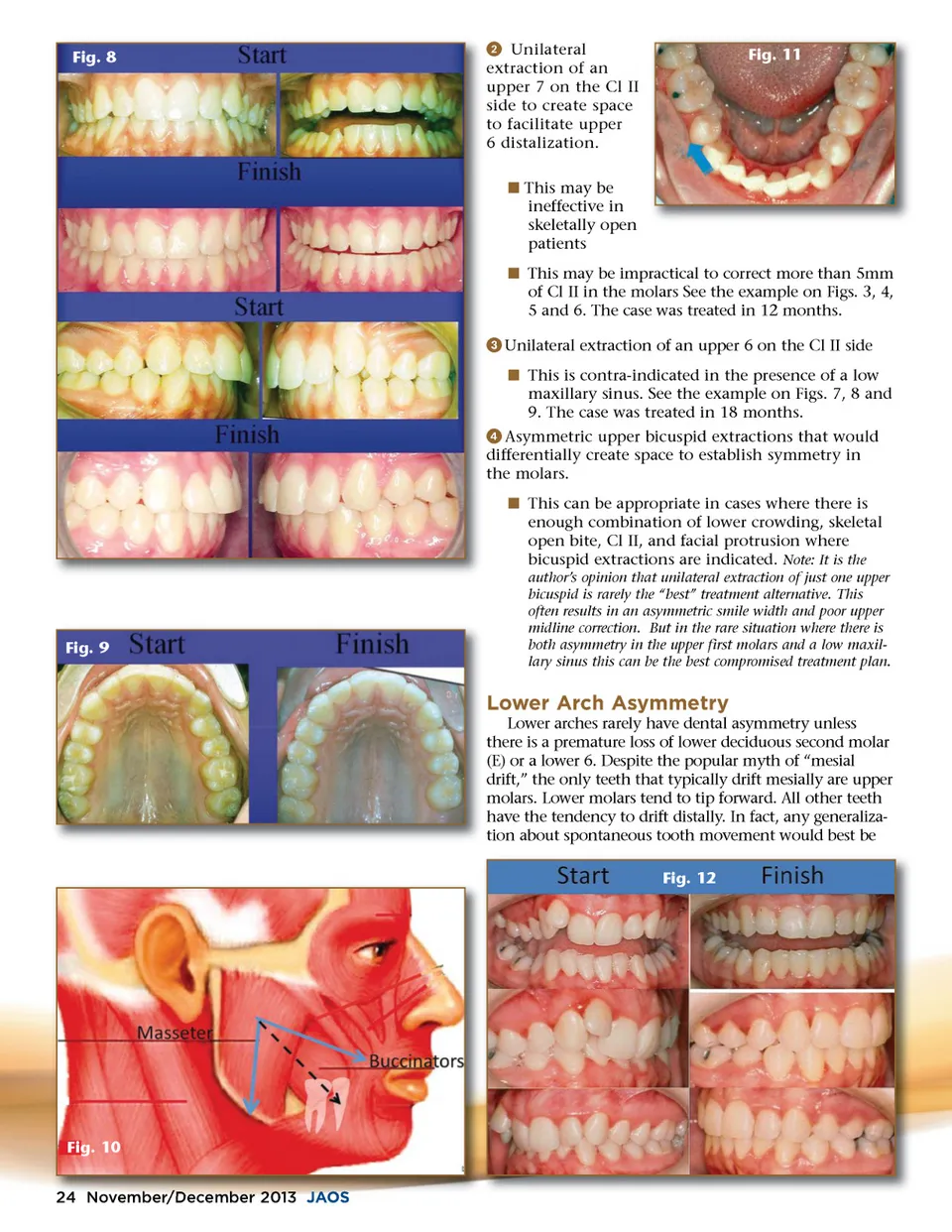
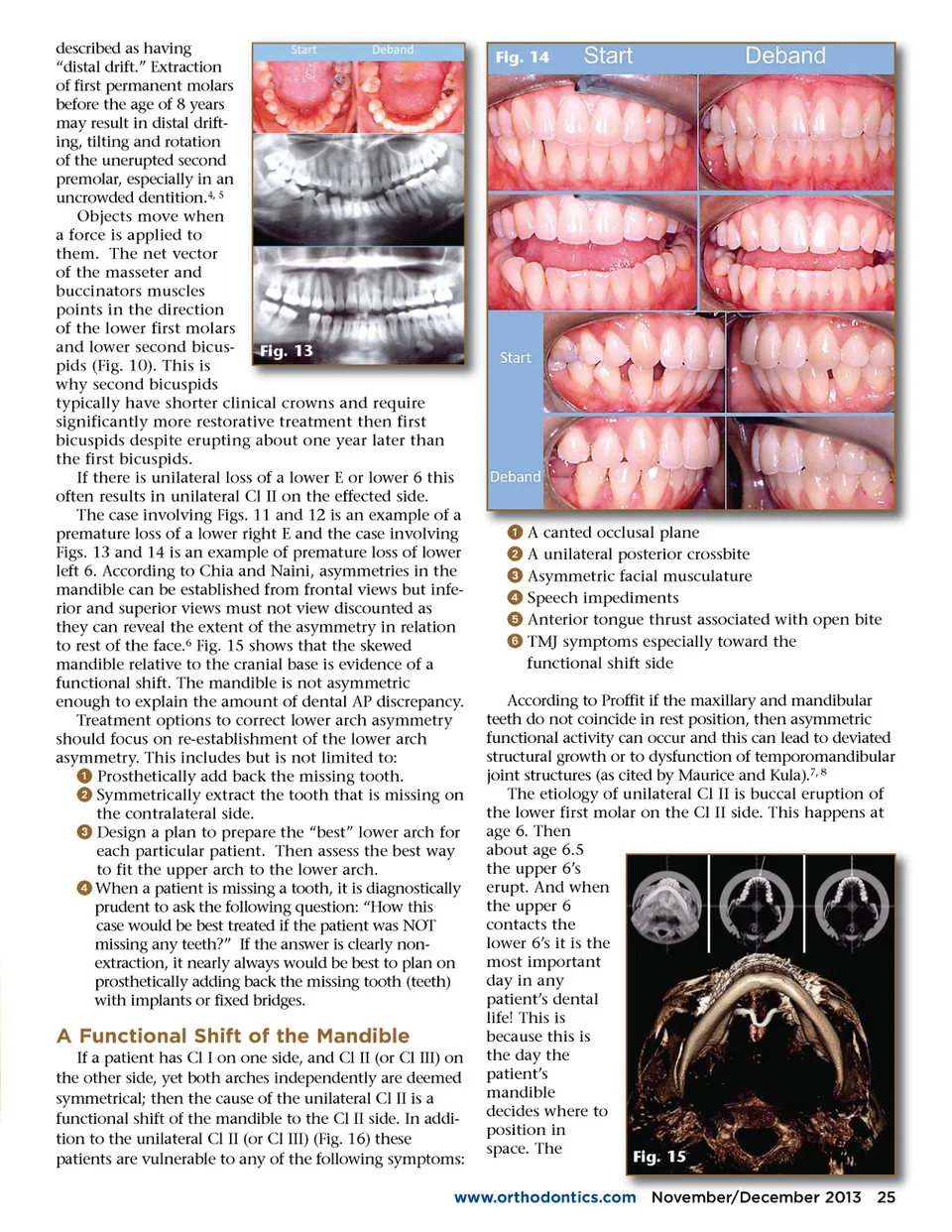
Fig. 8 ᕢ Unilateral extraction of an upper 7 on the Cl II side to create space to facilitate upper 6 distalization. í This may be ineffective in skeletally open patients Fig. 11 í This may be impractical to correct more than 5mm of Cl II in the molars See the example on Figs. 3, 4, 5 and 6. The case was treated in 12 months. ᕣ Unilateral extraction of an upper 6 on the Cl II side í This is contra-indicated in the presence of a low maxillary sinus. See the example on Figs. 7, 8 and 9. The case was treated in 18 months. ᕤ Asymmetric upper bicuspid extractions that would differentially create space to establish symmetry in the molars. í This can be appropriate in cases where there is enough combination of lower crowding, skeletal open bite, Cl II, and facial protrusion where bicuspid extractions are indicated. Note: It is the author’s opinion that unilateral extraction of just one upper bicuspid is rarely the “best” treatment alternative. This often results in an asymmetric smile width and poor upper midline correction. But in the rare situation where there is both asymmetry in the upper first molars and a low maxil-lary sinus this can be the best compromised treatment plan. Fig. 9 Lower Arch Asymmetry Lower arches rarely have dental asymmetry unless there is a premature loss of lower deciduous second molar (E) or a lower 6. Despite the popular myth of “mesial drift,” the only teeth that typically drift mesially are upper molars. Lower molars tend to tip forward. All other teeth have the tendency to drift distally. In fact, any generaliza-tion about spontaneous tooth movement would best be Fig. 12 Fig. 10 24 November/December November/ r December 2013 J JAOS AOS
Journal of the American Orthodontic Society November-December 2013: Page 24