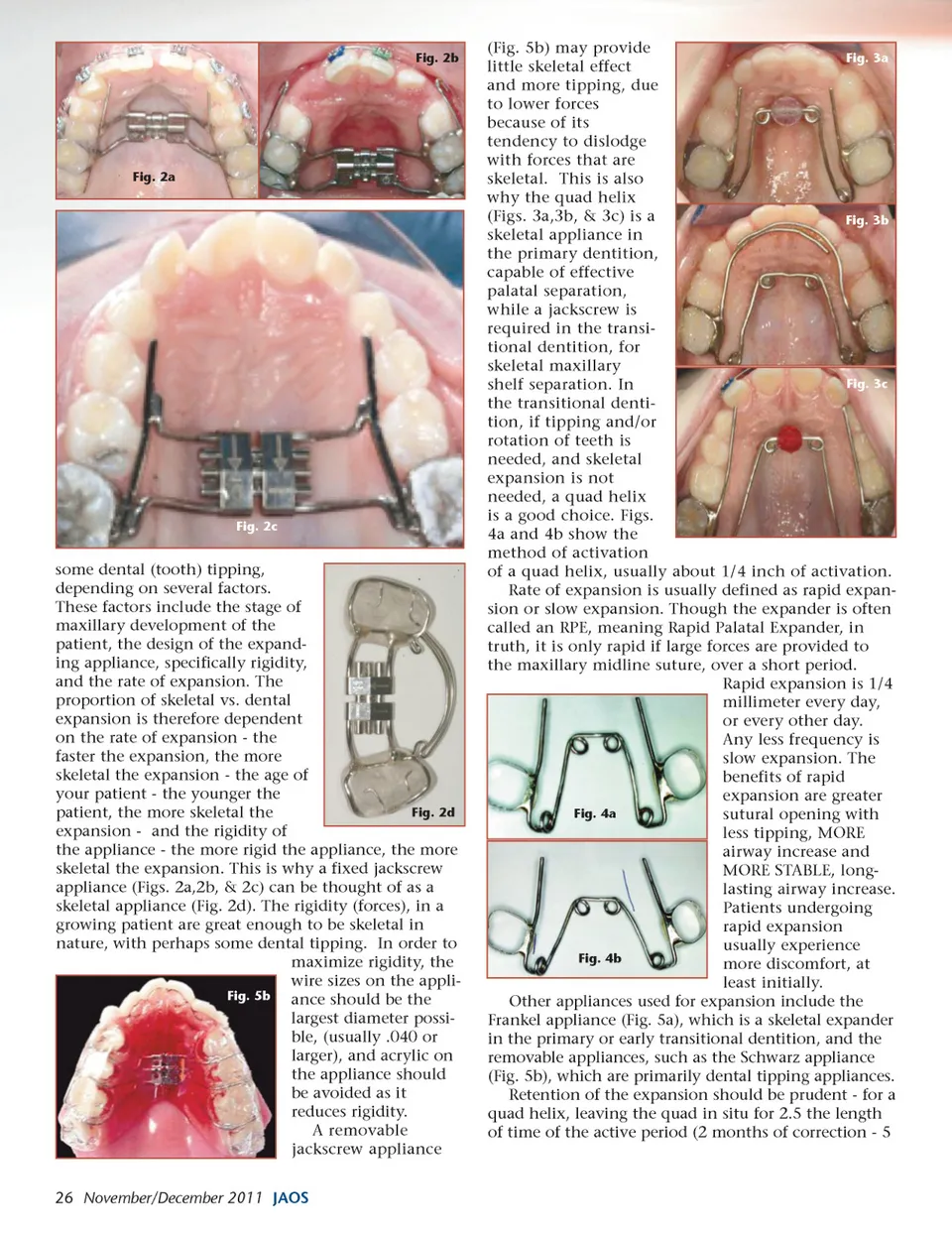
more months of retention for a total of at least 7 months appliance wear.) For a jackscrew appliance, six to eight months mini-mum retention period will Fig. 5a reduce unwanted relapse of the opened suture, and allow bony fill-in. Interception of narrow maxilla and crossbites is the key. Without early interception, the adverse growth of the jaws, maxilla and mandible, become stable and --adverse. (Fig. 6a, age 5) Without treatment, Fig. 6b, age 8. However, with interception, while growth is still occurring, there is the possibility for positive change in Fig. 7b Fig. 6a Fig. 7c Fig. 6b growth. Fig. 7a shows an 11 year old boy who presented with a lingering thumb habit. He was treated with the Bluegrass appliance shown in Fig. 7b, and after a year of Bluegrass appliance, his occlusion improved, as shown in Fig. 7c. Seriously. Again. With the extraordinary benefits available, maxillary expansion as early as possible is an opportunity to Fig. 7a transform lives, and truly our responsibility as dentists, beginning with early habit correction (Bluegrass appli-ances, Castillo-Morales appliances, and tongue cribs, shields, and spurs.) We have been given the opportu-nity to help children. It is a precious commodity -the knowing of the advantages, live-changing advantages, that expansion may offer. We should expand gener-ously, early, and definitively. Generous expansion implies looking for the signs of need, and offering/recommending expansion every time the signs are seen. It is all too frequent we overlook airway issues, habits, malocclusions........ and do not offer expansion. We should expand definitively, utilizing a quad helix in the primary dentition, and usually a jackscrew in the transitional dentition. Editor’s Note: Article references are available upon request or for download in the digital version at www.orthodontics.com. www.orthodontics.com November/December 2011 27
Journal of the American Orthodontic Society November-December 2011: Page 27