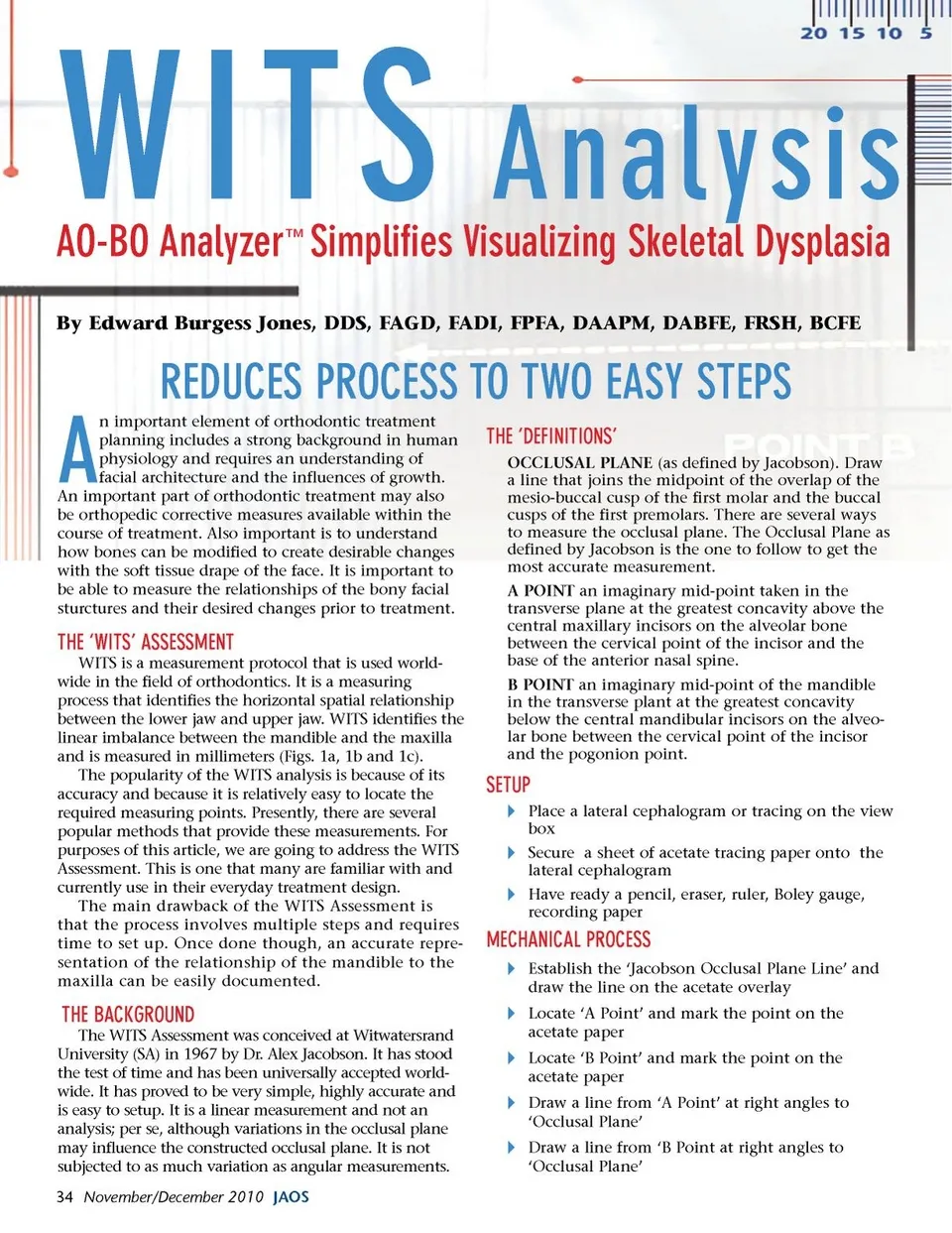
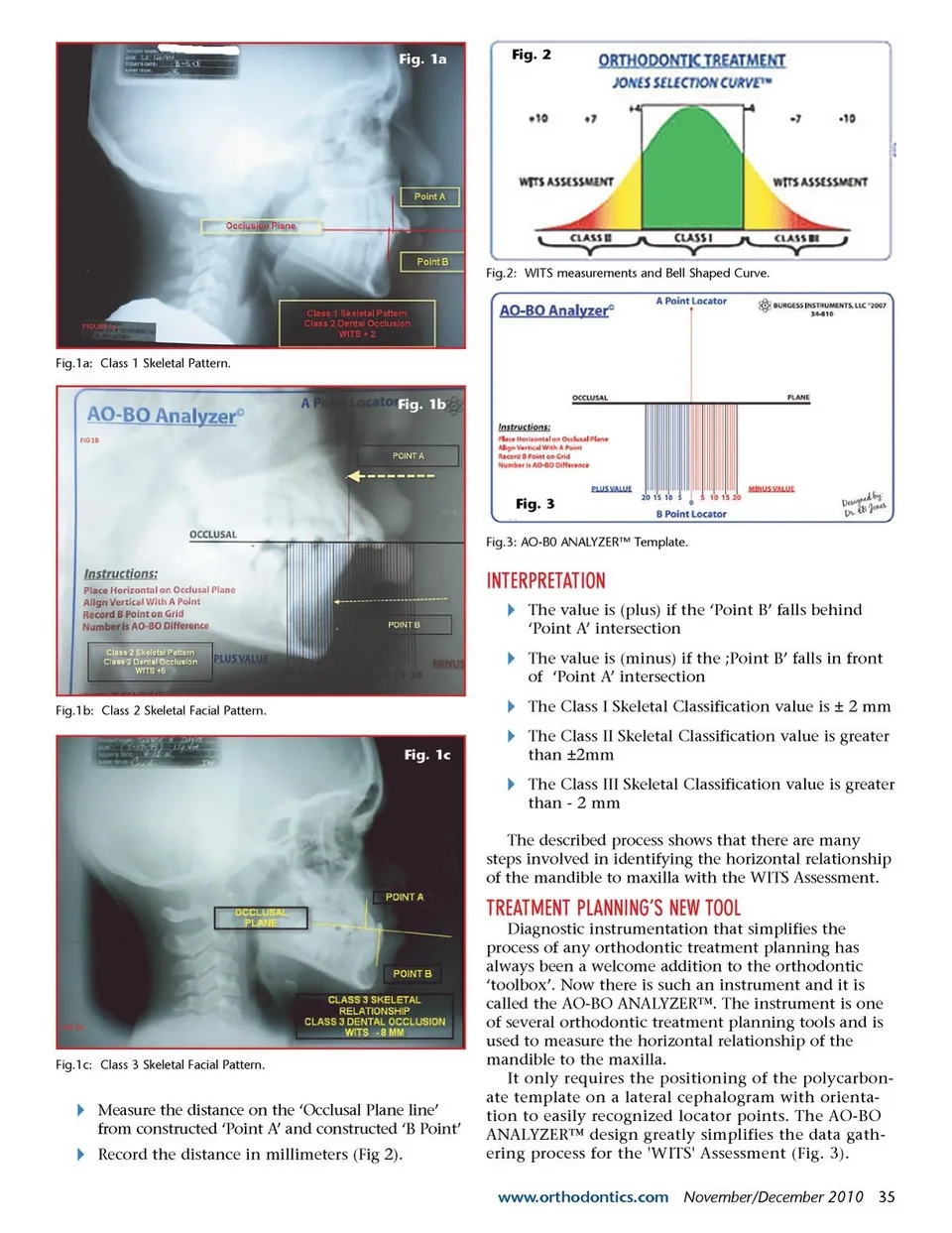
Fig. 1a Fig. 2 Fig.2: WITS measurements and Bell Shaped Curve. Fig.1a: Class 1 Skeletal Pattern. Fig. 1b Fig. 3 Fig.3: AO-B0 ANALYZER™ Template. INTERPRETATION Ī The value is (plus) if the ‘Point B’ falls behind ‘Point A’ intersection Ī The value is (minus) if the ;Point B’ falls in front of ‘Point A’ intersection Fig.1b: Class 2 Skeletal Facial Pattern. Ī The Class I Skeletal Classification value is ± 2 mm Fig. 1c Ī The Class II Skeletal Classification value is greater than ±2mm Ī The Class III Skeletal Classification value is greater than -2 mm The described process shows that there are many steps involved in identifying the horizontal relationship of the mandible to maxilla with the WITS Assessment. TREATMENT PLANNING’S NEW TOOL Diagnostic instrumentation that simplifies the process of any orthodontic treatment planning has always been a welcome addition to the orthodontic ‘toolbox’. Now there is such an instrument and it is called the AO-BO ANALYZER™. The instrument is one of several orthodontic treatment planning tools and is used to measure the horizontal relationship of the mandible to the maxilla. It only requires the positioning of the polycarbon-ate template on a lateral cephalogram with orienta-tion to easily recognized locator points. The AO-BO ANALYZER™ design greatly simplifies the data gath-ering process for the 'WITS' Assessment (Fig. 3). www.orthodontics.com November/December 2010 35 Fig.1c: Class 3 Skeletal Facial Pattern. Ī Measure the distance on the ‘Occlusal Plane line’ from constructed ‘Point A’ and constructed ‘B Point’ Ī Record the distance in millimeters (Fig 2).
Journal of the American Orthodontic Society November-December 2010: Page 35