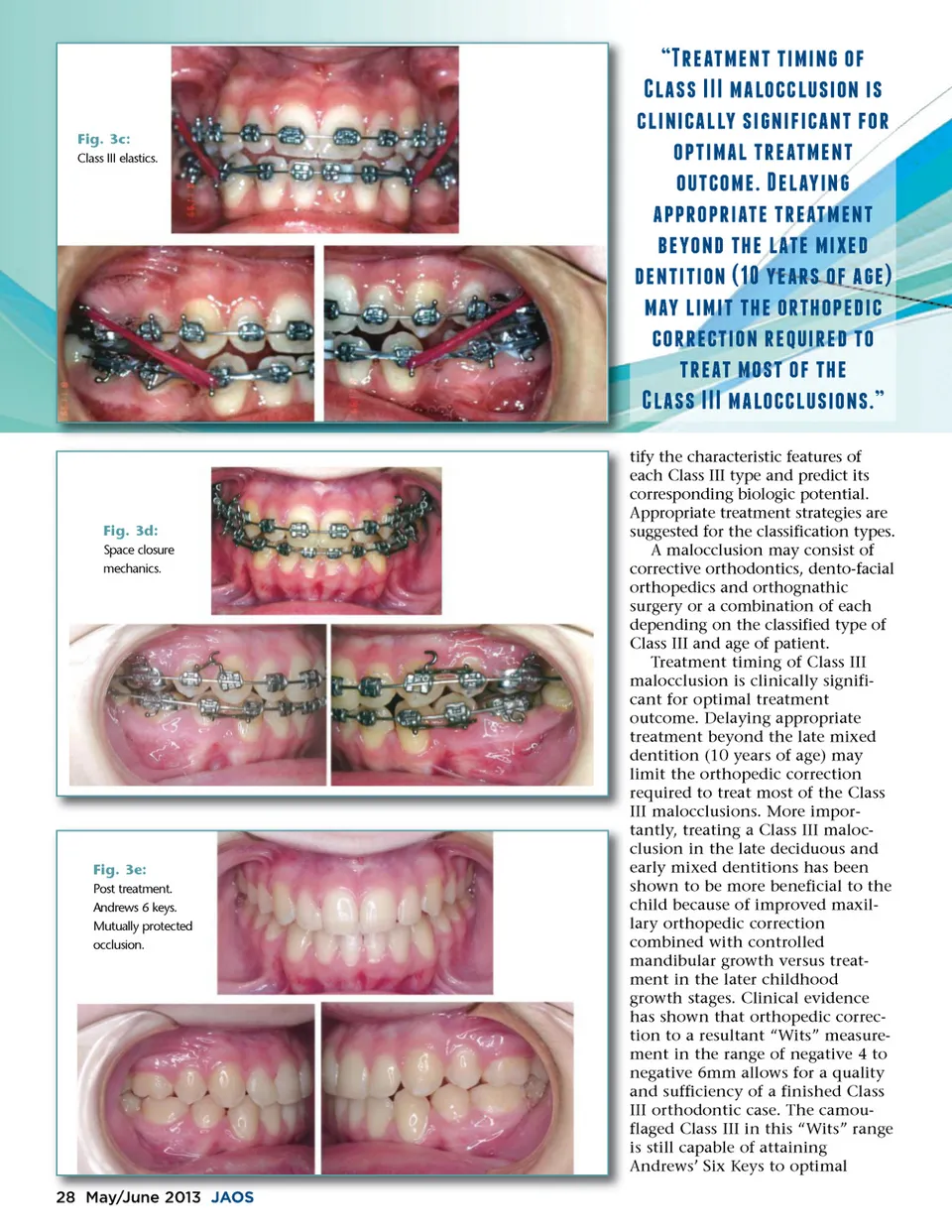
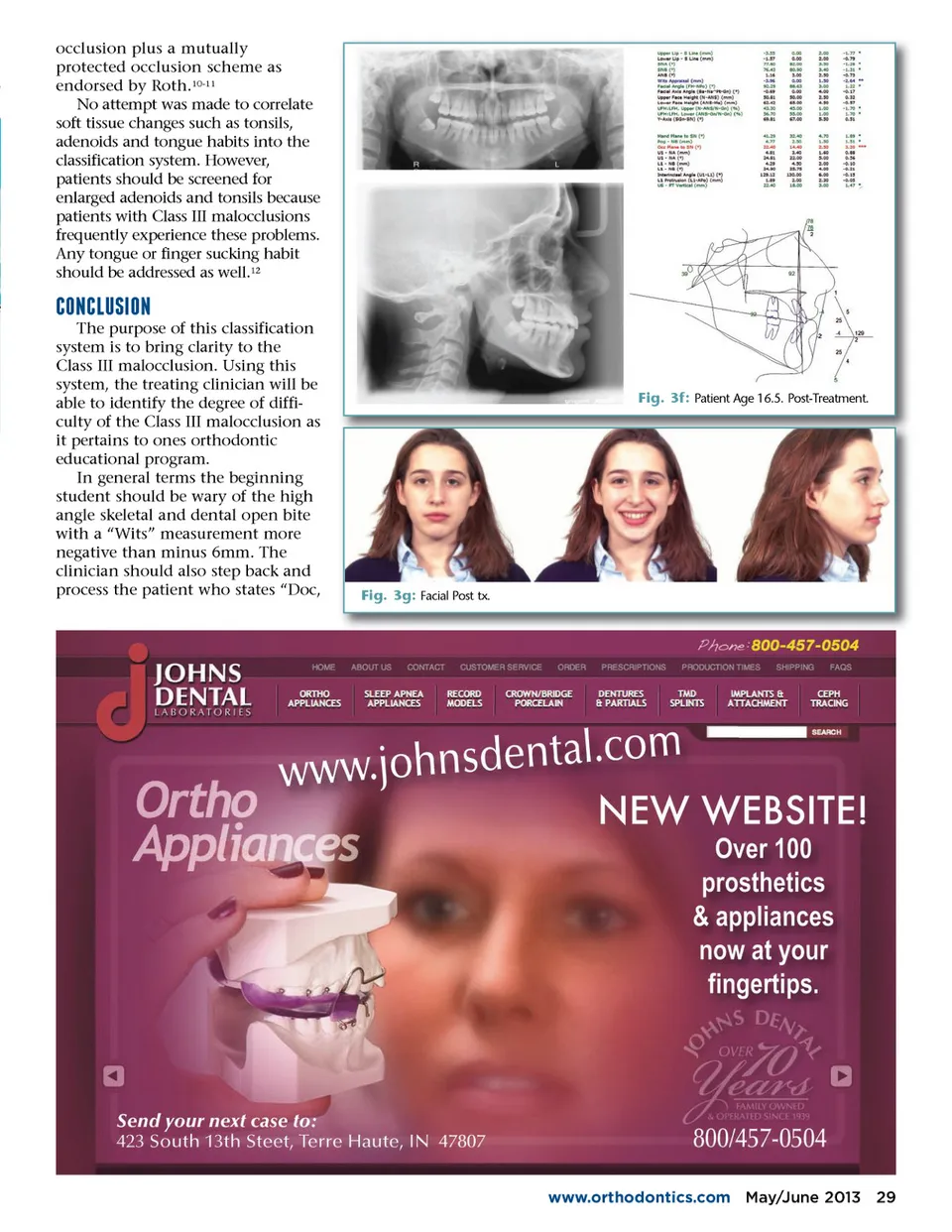
occlusion plus a mutually protected occlusion scheme as endorsed by Roth. 10-11 No attempt was made to correlate soft tissue changes such as tonsils, adenoids and tongue habits into the classification system. However, patients should be screened for enlarged adenoids and tonsils because patients with Class III malocclusions frequently experience these problems. Any tongue or finger sucking habit should be addressed as well. 12 c;c;d;# The purpose of this classification system is to bring clarity to the Class III malocclusion. Using this system, the treating clinician will be able to identify the degree of diffi-culty of the Class III malocclusion as it pertains to ones orthodontic educational program. In general terms the beginning student should be wary of the high angle skeletal and dental open bite with a “Wits” measurement more negative than minus 6mm. The clinician should also step back and process the patient who states “Doc, Fig. 3f: Patient Age 16.5. Post-Treatment. Fig. 3g: Facial Post tx. www.orthodontics.com May/June 2013 29
Journal of the American Orthodontic Society May-June 2013: Page 29