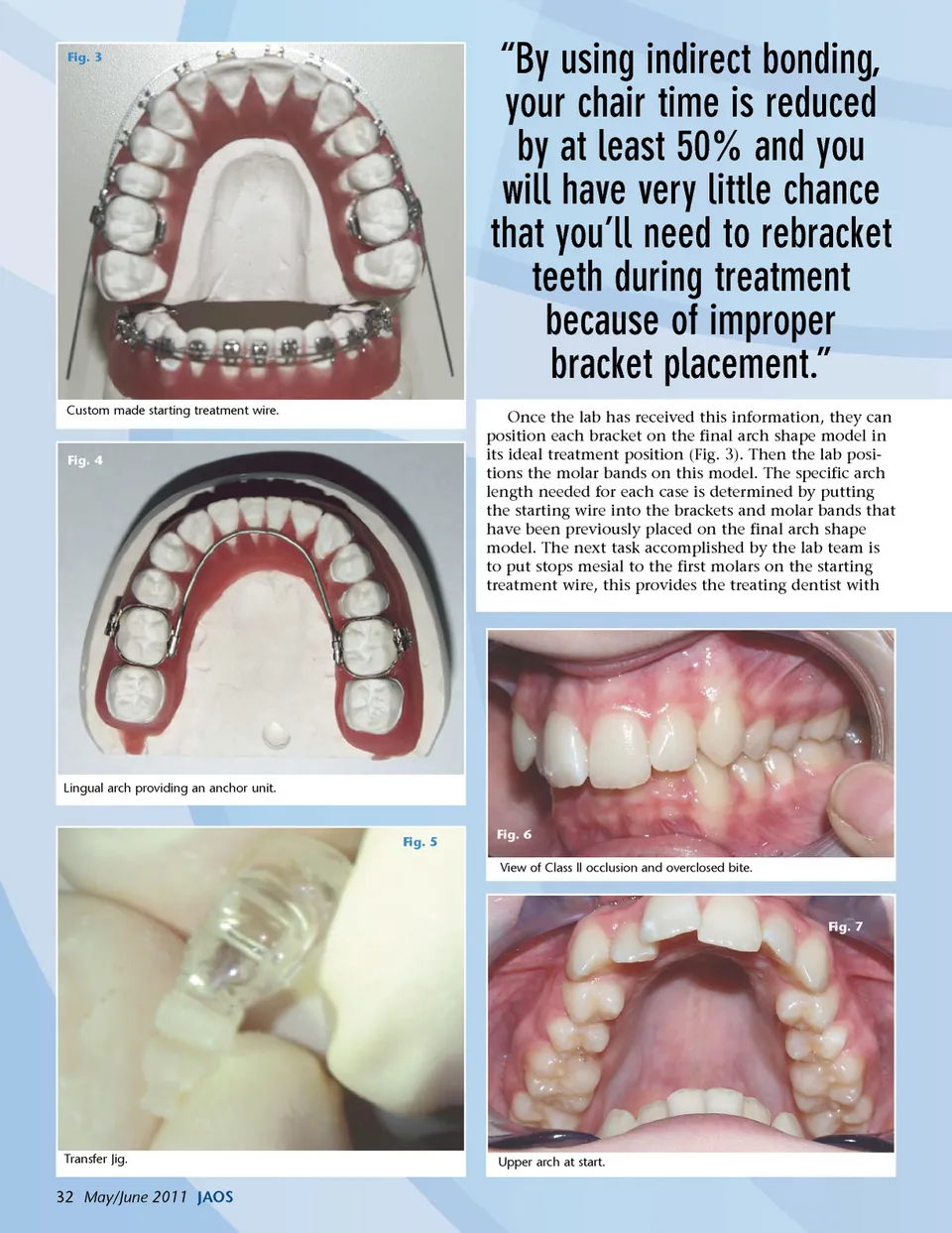
Fig. 3 “By using indirect bonding, your chair time is reduced by at least 50% and you will have very little chance that you’ll need to rebracket teeth during treatment because of improper bracket placement.” Once the lab has received this information, they can position each bracket on the final arch shape model in its ideal treatment position (Fig. 3). Then the lab posi-tions the molar bands on this model. The specific arch length needed for each case is determined by putting the starting wire into the brackets and molar bands that have been previously placed on the final arch shape model. The next task accomplished by the lab team is to put stops mesial to the first molars on the starting treatment wire, this provides the treating dentist with Custom made starting treatment wire. Fig. 4 Lingual arch providing an anchor unit. Fig. 5 Fig. 6 View of Class ll occlusion and overclosed bite. Fig. 7 Transfer Jig. Upper arch at start. 32 May/June 2011 JAOS
Journal of the American Orthodontic Society May-June 2011: Page 32