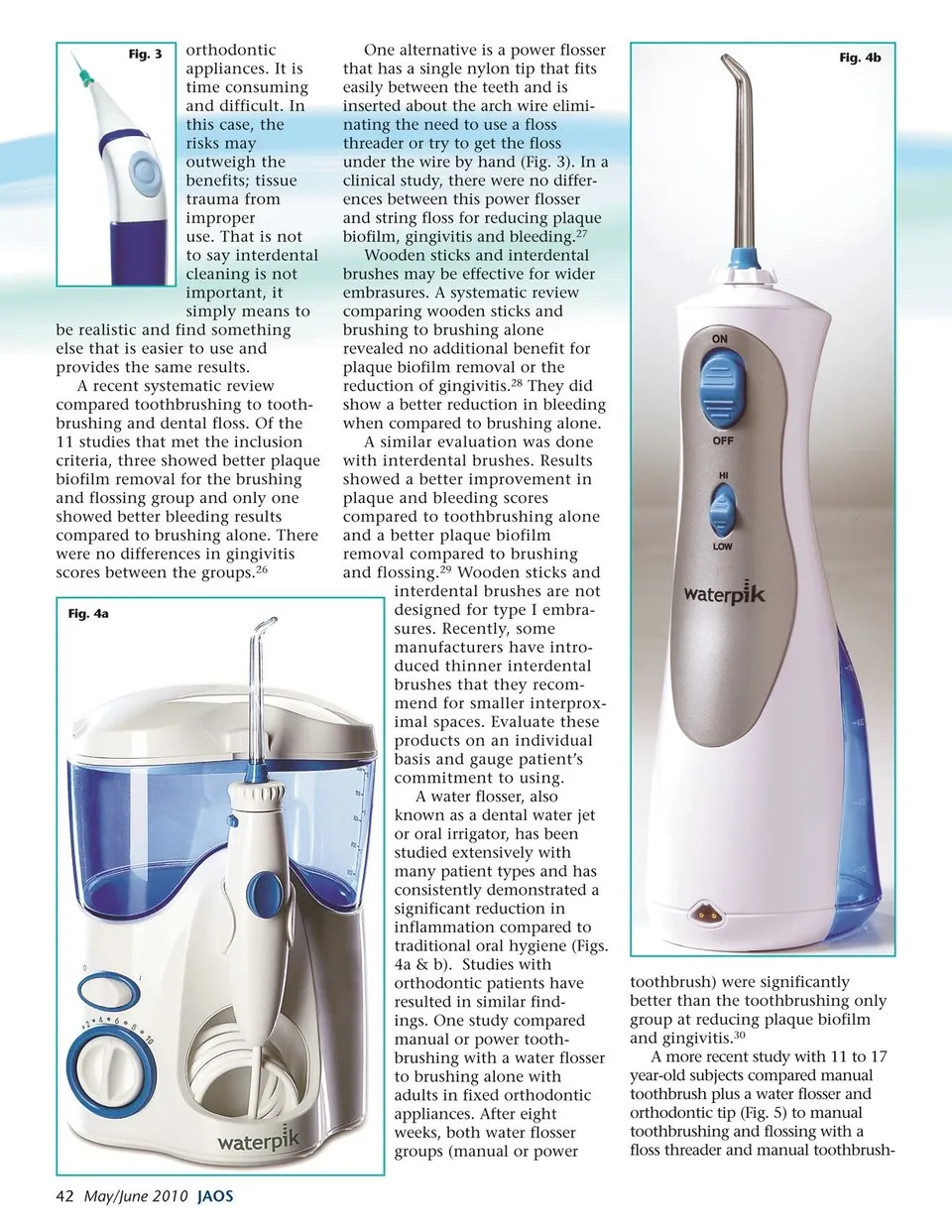
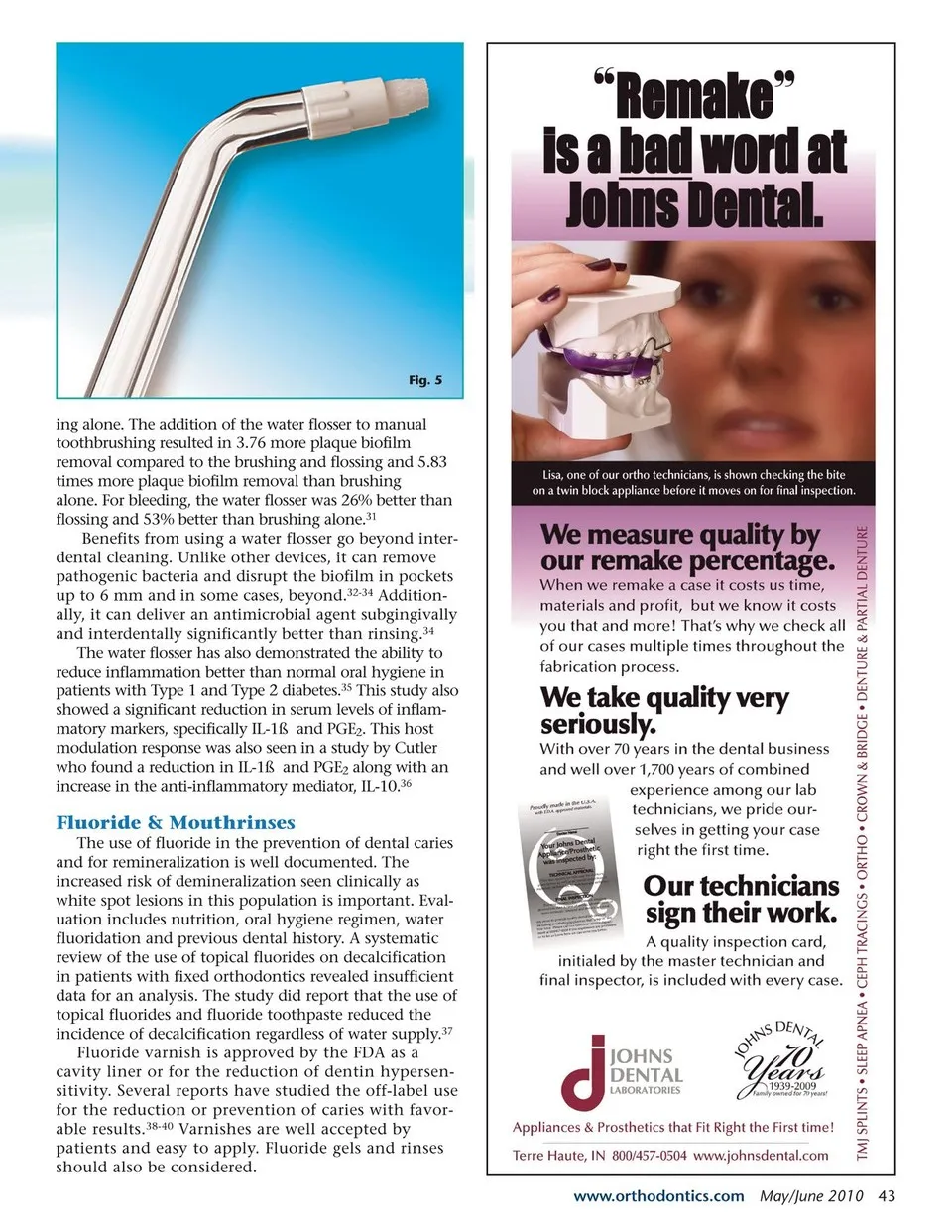
Fig. 3 orthodontic appliances. It is time consuming and difficult. In this case, the risks may outweigh the benefits; tissue trauma from improper use. That is not to say interdental cleaning is not important, it simply means to be realistic and find something else that is easier to use and provides the same results. A recent systematic review compared toothbrushing to tooth- brushing and dental floss. Of the 11 studies that met the inclusion criteria, three showed better plaque biofilm removal for the brushing and flossing group and only one showed better bleeding results compared to brushing alone. There were no differences in gingivitis scores between the groups.26 Fig. 4a One alternative is a power flosser that has a single nylon tip that fits easily between the teeth and is inserted about the arch wire elimi- nating the need to use a floss threader or try to get the floss under the wire by hand (Fig. 3). In a clinical study, there were no differ- ences between this power flosser and string floss for reducing plaque biofilm, gingivitis and bleeding.27 Wooden sticks and interdental brushes may be effective for wider embrasures. A systematic review comparing wooden sticks and brushing to brushing alone revealed no additional benefit for plaque biofilm removal or the reduction of gingivitis.28 They did show a better reduction in bleeding when compared to brushing alone. A similar evaluation was done with interdental brushes. Results showed a better improvement in plaque and bleeding scores compared to toothbrushing alone and a better plaque biofilm removal compared to brushing and flossing.29 Wooden sticks and interdental brushes are not designed for type I embra- sures. Recently, some manufacturers have intro- duced thinner interdental brushes that they recom- mend for smaller interprox- imal spaces. Evaluate these products on an individual basis and gauge patient’s commitment to using. A water flosser, also known as a dental water jet or oral irrigator, has been studied extensively with many patient types and has consistently demonstrated a significant reduction in inflammation compared to traditional oral hygiene (Figs. 4a & b). Studies with orthodontic patients have resulted in similar find- ings. One study compared manual or power tooth- brushing with a water flosser to brushing alone with adults in fixed orthodontic appliances. After eight weeks, both water flosser groups (manual or power 42 May/June 2010 JAOS Fig. 4b toothbrush) were significantly better than the toothbrushing only group at reducing plaque biofilm and gingivitis.30 A more recent study with 11 to 17 year-old subjects compared manual toothbrush plus a water flosser and orthodontic tip (Fig. 5) to manual toothbrushing and flossing with a floss threader and manual toothbrush-
Journal of the American Orthodontic Society May-June 2010: Page 42