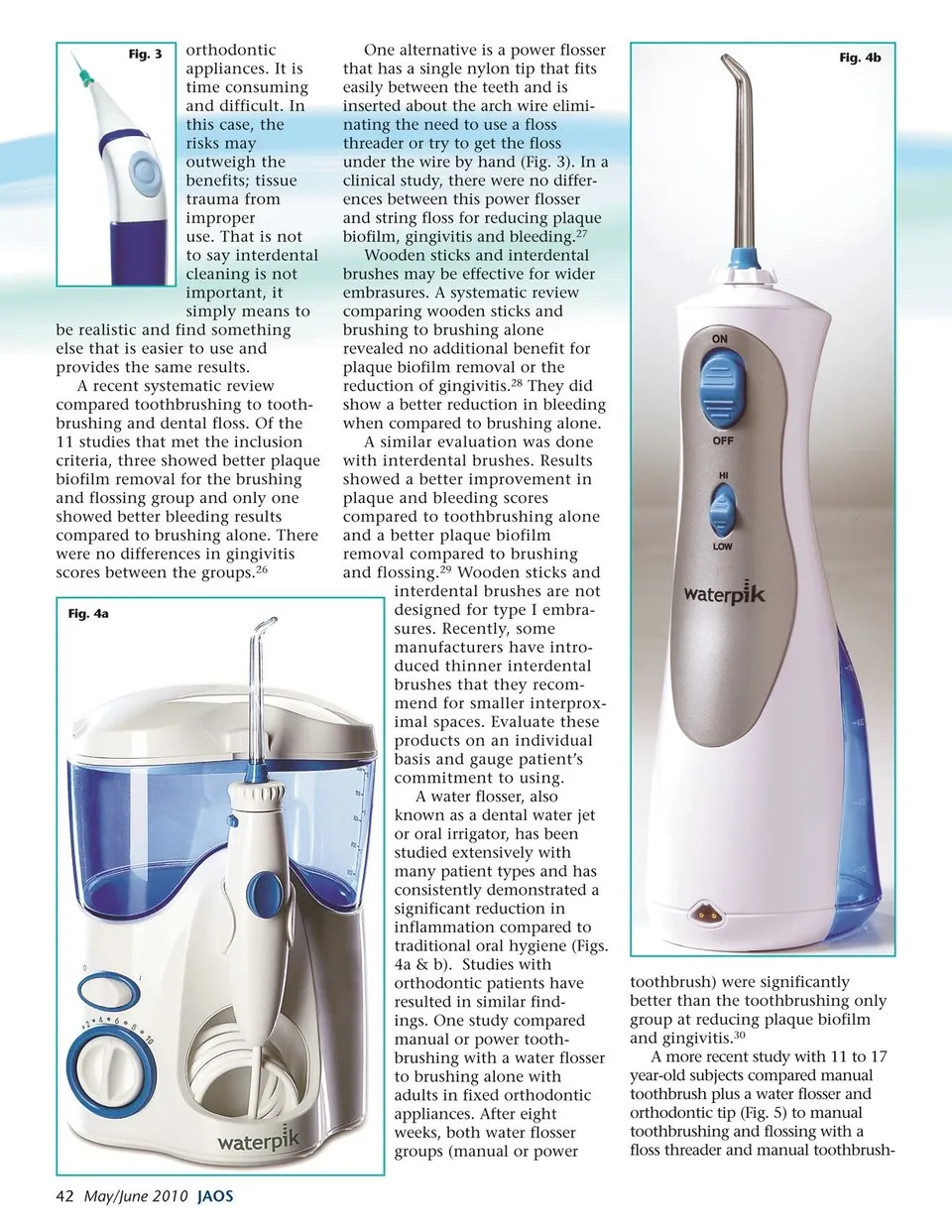
Fig. 5 ing alone. The addition of the water flosser to manual toothbrushing resulted in 3.76 more plaque biofilm removal compared to the brushing and flossing and 5.83 times more plaque biofilm removal than brushing alone. For bleeding, the water flosser was 26% better than flossing and 53% better than brushing alone.31 Benefits from using a water flosser go beyond inter- dental cleaning. Unlike other devices, it can remove pathogenic bacteria and disrupt the biofilm in pockets up to 6 mm and in some cases, beyond.32-34 Addition- ally, it can deliver an antimicrobial agent subgingivally and interdentally significantly better than rinsing.34 The water flosser has also demonstrated the ability to reduce inflammation better than normal oral hygiene in patients with Type 1 and Type 2 diabetes.35 This study also showed a significant reduction in serum levels of inflam- matory markers, specifically IL-1ß and PGE2. This host modulation response was also seen in a study by Cutler who found a reduction in IL-1ß and PGE2 along with an increase in the anti-inflammatory mediator, IL-10.36 Fluoride & Mouthrinses The use of fluoride in the prevention of dental caries and for remineralization is well documented. The increased risk of demineralization seen clinically as white spot lesions in this population is important. Eval- uation includes nutrition, oral hygiene regimen, water fluoridation and previous dental history. A systematic review of the use of topical fluorides on decalcification in patients with fixed orthodontics revealed insufficient data for an analysis. The study did report that the use of topical fluorides and fluoride toothpaste reduced the incidence of decalcification regardless of water supply.37 Fluoride varnish is approved by the FDA as a cavity liner or for the reduction of dentin hypersen- sitivity. Several reports have studied the off-label use for the reduction or prevention of caries with favor- able results.38-40 Varnishes are well accepted by patients and easy to apply. Fluoride gels and rinses should also be considered. www.orthodontics.com May/June 2010 43
Journal of the American Orthodontic Society May-June 2010: Page 43