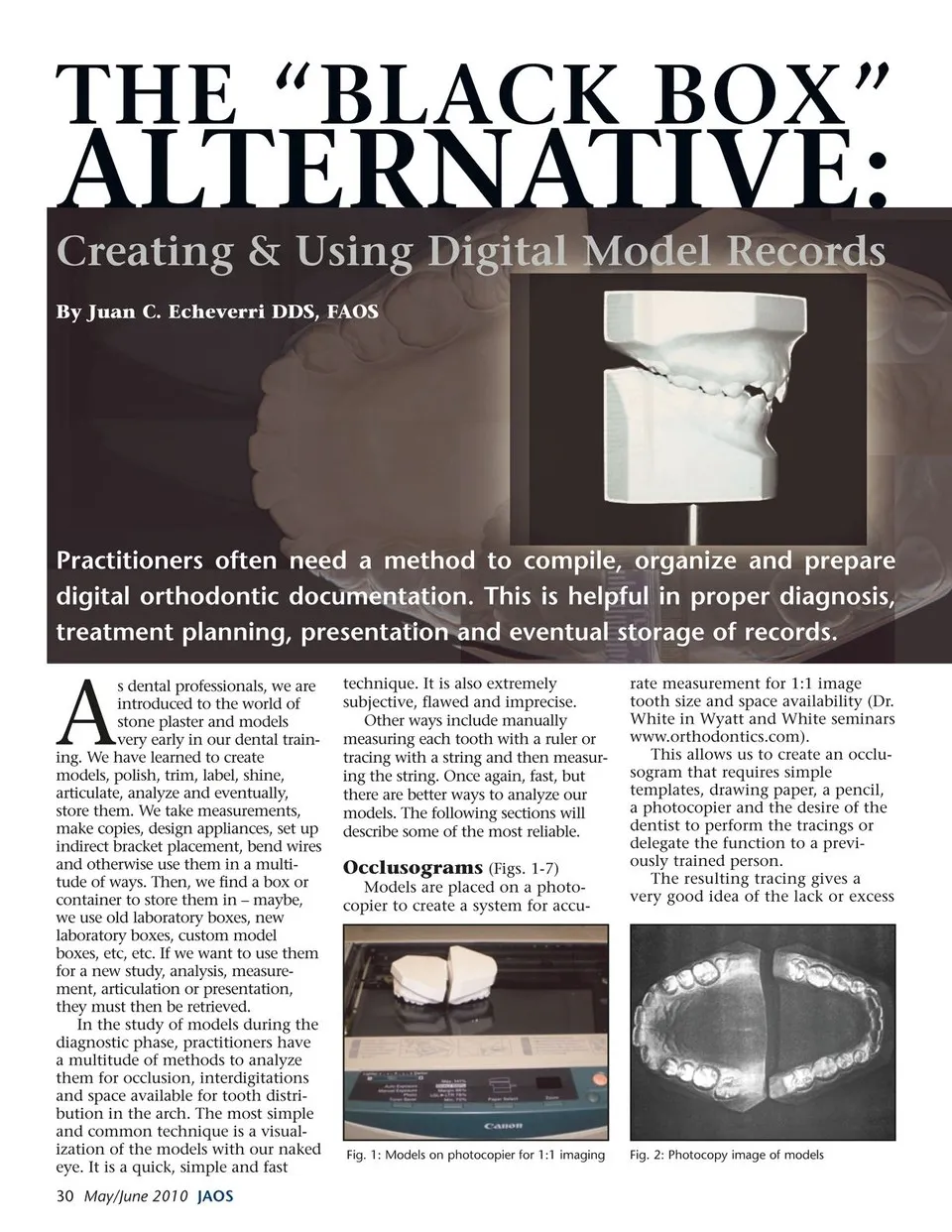
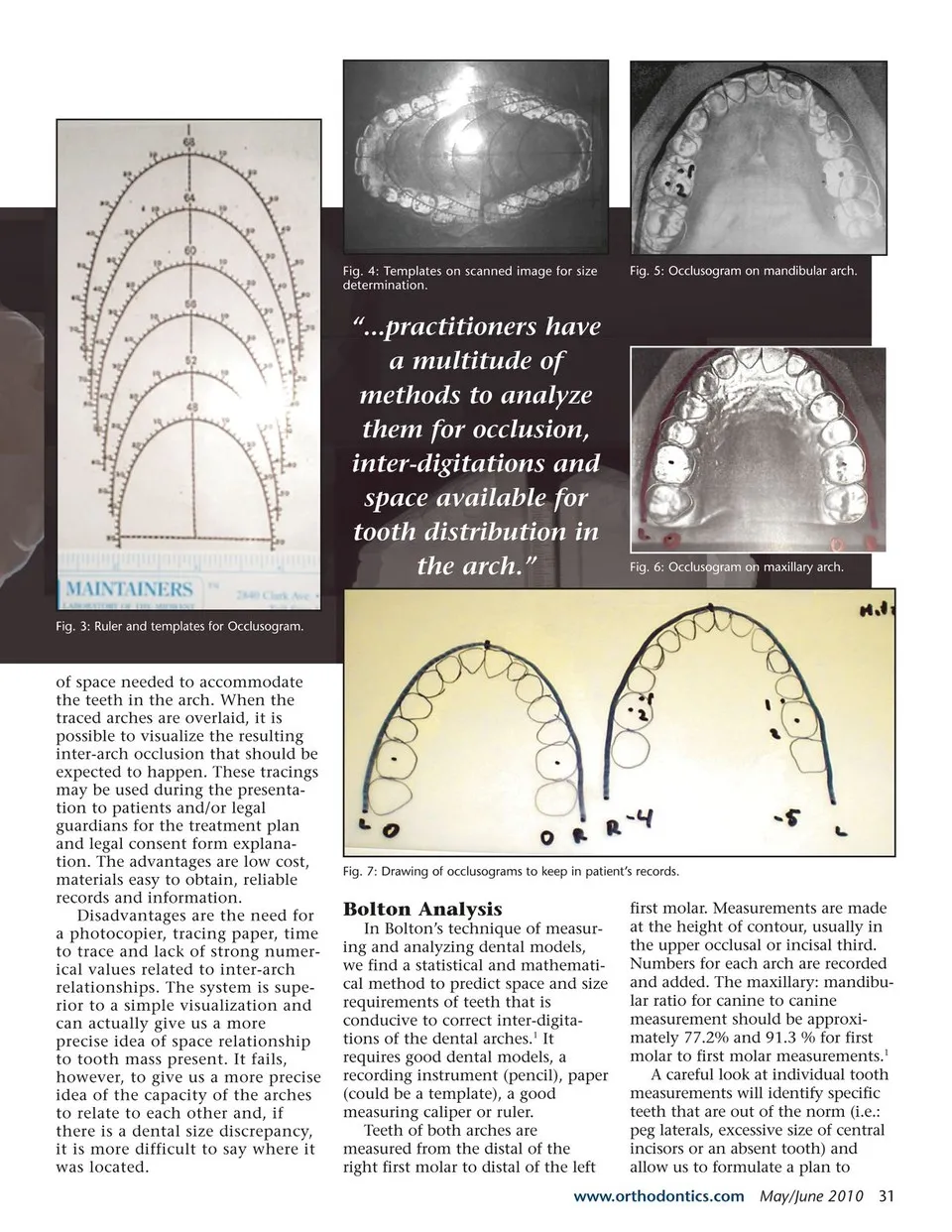
Fig. 4: Templates on scanned image for size determination. “...practitioners have a multitude of methods to analyze them for occlusion, inter-digitations and space available for tooth distribution in the arch.” Fig. 3: Ruler and templates for Occlusogram. of space needed to accommodate the teeth in the arch. When the traced arches are overlaid, it is possible to visualize the resulting inter-arch occlusion that should be expected to happen. These tracings may be used during the presenta- tion to patients and/or legal guardians for the treatment plan and legal consent form explana- tion. The advantages are low cost, materials easy to obtain, reliable records and information. Disadvantages are the need for a photocopier, tracing paper, time to trace and lack of strong numer- ical values related to inter-arch relationships. The system is supe- rior to a simple visualization and can actually give us a more precise idea of space relationship to tooth mass present. It fails, however, to give us a more precise idea of the capacity of the arches to relate to each other and, if there is a dental size discrepancy, it is more difficult to say where it was located. Fig. 5: Occlusogram on mandibular arch. Fig. 6: Occlusogram on maxillary arch. Fig. 7: Drawing of occlusograms to keep in patient’s records. Bolton Analysis In Bolton’s technique of measur- ing and analyzing dental models, we find a statistical and mathemati- cal method to predict space and size requirements of teeth that is conducive to correct inter-digita- tions of the dental arches.1 It requires good dental models, a recording instrument (pencil), paper (could be a template), a good measuring caliper or ruler. Teeth of both arches are measured from the distal of the right first molar to distal of the left first molar. Measurements are made at the height of contour, usually in the upper occlusal or incisal third. Numbers for each arch are recorded and added. The maxillary: mandibu- lar ratio for canine to canine measurement should be approxi- mately 77.2% and 91.3 % for first molar to first molar measurements.1 A careful look at individual tooth measurements will identify specific teeth that are out of the norm (i.e.: peg laterals, excessive size of central incisors or an absent tooth) and allow us to formulate a plan to www.orthodontics.com May/June 2010 31
Journal of the American Orthodontic Society May-June 2010: Page 31