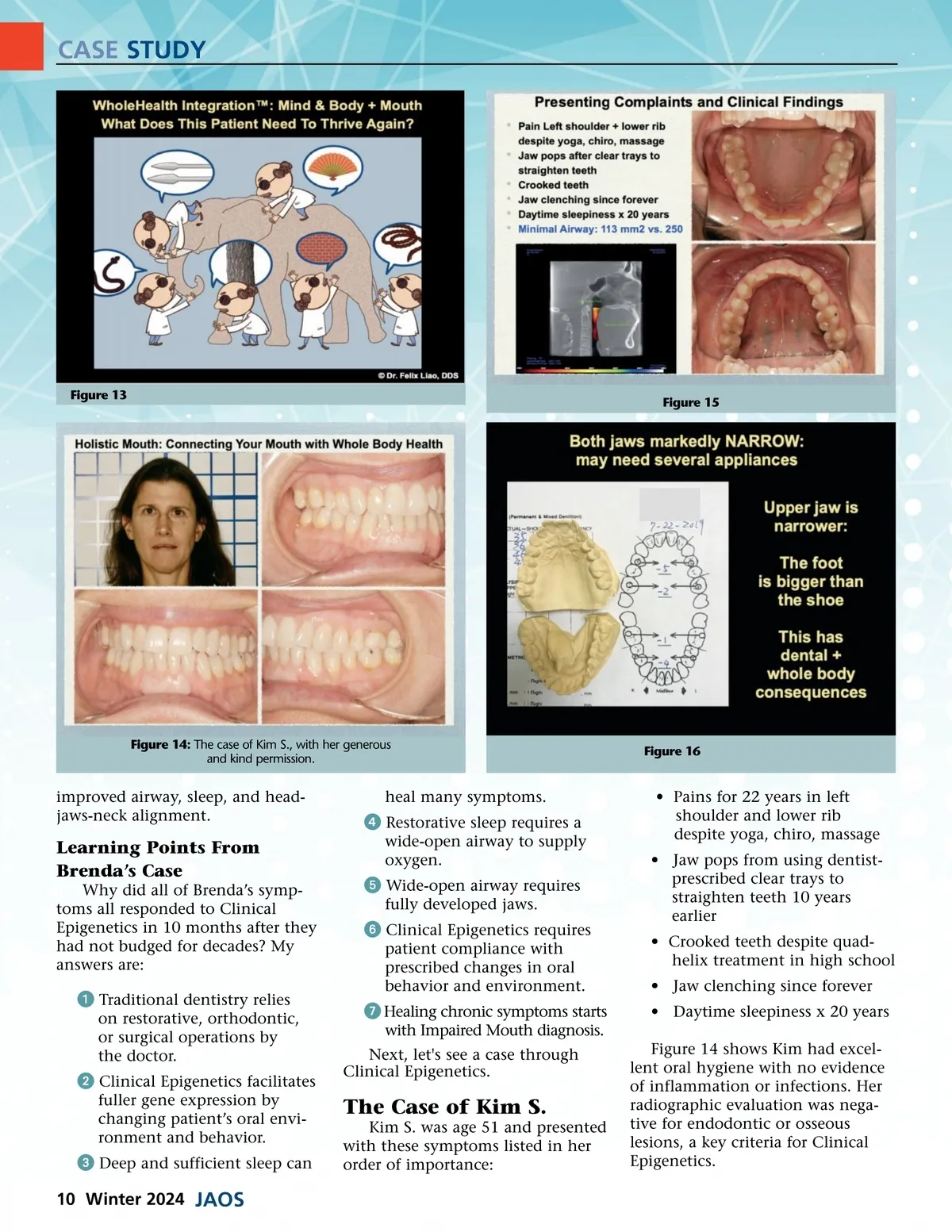
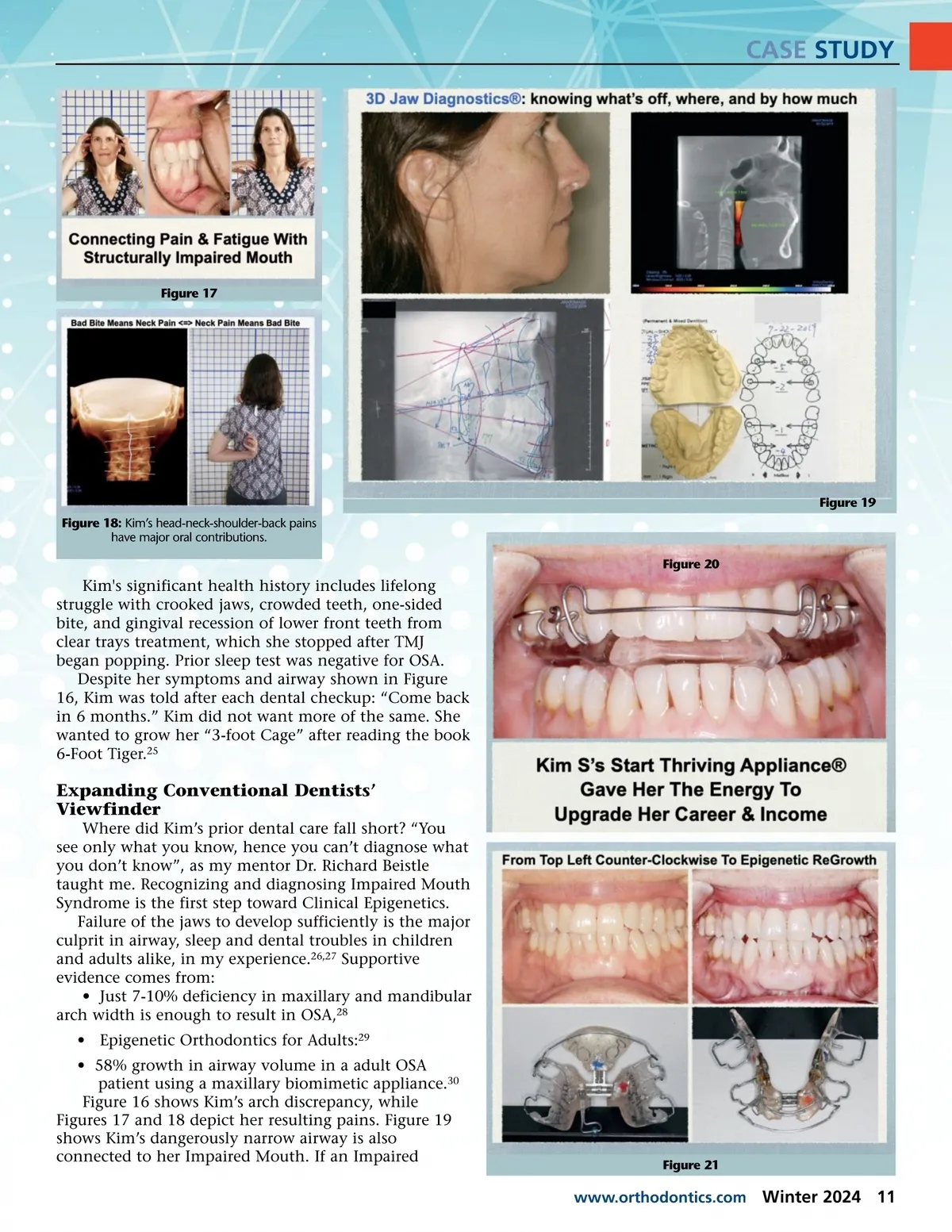
CASE STUDY Figure 17 Figure 19 Figure 18: Kim’s head-neck-shoulder-back pains have major oral contributions. Figure 20 Kim's significant health history includes lifelong struggle with crooked jaws, crowded teeth, one-sided bite, and gingival recession of lower front teeth from clear trays treatment, which she stopped after TMJ began popping. Prior sleep test was negative for OSA. Despite her symptoms and airway shown in Figure 16, Kim was told after each dental checkup: “Come back in 6 months.” Kim did not want more of the same. She wanted to grow her “3-foot Cage” after reading the book 6-Foot Tiger. 25 Expanding Conventional Dentists’ Viewfinder Where did Kim’s prior dental care fall short? “You see only what you know, hence you can’t diagnose what you don’t know”, as my mentor Dr. Richard Beistle taught me. Recognizing and diagnosing Impaired Mouth Syndrome is the first step toward Clinical Epigenetics. Failure of the jaws to develop sufficiently is the major culprit in airway, sleep and dental troubles in children and adults alike, in my experience. 26,27 Supportive evidence comes from: • Just 7-10% deficiency in maxillary and mandibular arch width is enough to result in OSA, 28 • Epigenetic Orthodontics for Adults: 29 • 58% growth in airway volume in a adult OSA patient using a maxillary biomimetic appliance. 30 Figure 16 shows Kim’s arch discrepancy, while Figures 17 and 18 depict her resulting pains. Figure 19 shows Kim’s dangerously narrow airway is also connected to her Impaired Mouth. If an Impaired Figure 21 www.orthodontics.com Winter 2024 11
Journal of the American Orthodontic Society JAOS Winter 2024: Page 11