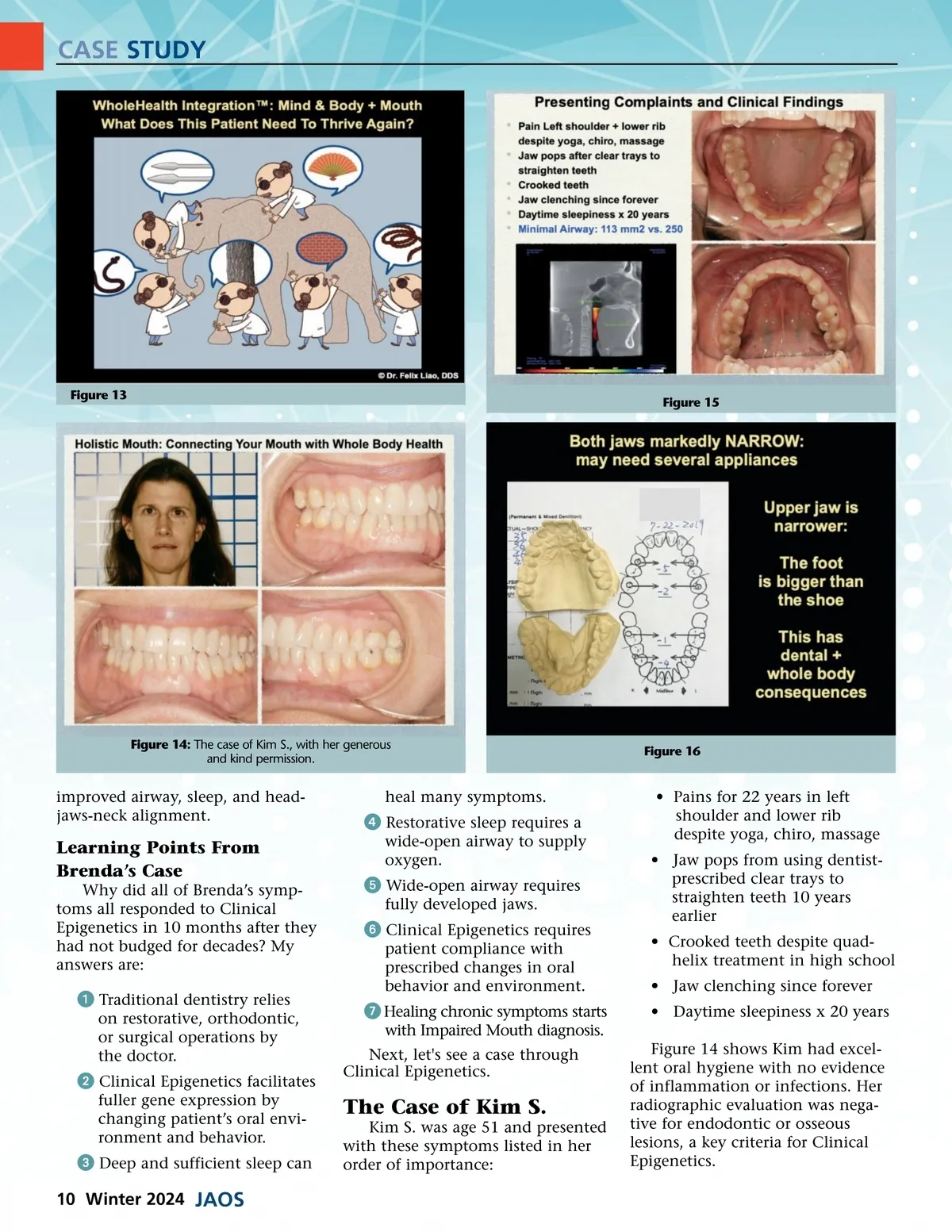
CASE STUDY Figure 13 Figure 15 Figure 14: The case of Kim S., with her generous and kind permission. Figure 16 improved airway, sleep, and head-jaws-neck alignment. heal many symptoms. ᕤ Restorative sleep requires a wide-open airway to supply oxygen. Learning Points From Brenda’s Case Why did all of Brenda’s symp-toms all responded to Clinical Epigenetics in 10 months after they had not budged for decades? My answers are: • Pains for 22 years in left shoulder and lower rib despite yoga, chiro, massage • Jaw pops from using dentist-prescribed clear trays to straighten teeth 10 years earlier • Crooked teeth despite quad-helix treatment in high school • Jaw clenching since forever • Daytime sleepiness x 20 years Figure 14 shows Kim had excel-lent oral hygiene with no evidence of inflammation or infections. Her radiographic evaluation was nega-tive for endodontic or osseous lesions, a key criteria for Clinical Epigenetics. ᕥ Wide-open airway requires fully developed jaws. ᕦ Clinical Epigenetics requires patient compliance with prescribed changes in oral behavior and environment. ᕡ Traditional dentistry relies on restorative, orthodontic, or surgical operations by the doctor. ᕧ Healing chronic symptoms starts with Impaired Mouth diagnosis. Next, let's see a case through Clinical Epigenetics. ᕢ Clinical Epigenetics facilitates fuller gene expression by changing patient’s oral envi-ronment and behavior. The Case of Kim S. Kim S. was age 51 and presented with these symptoms listed in her order of importance: ᕣ Deep and sufficient sleep can 10 Winter 2024 JAOS
Journal of the American Orthodontic Society JAOS Winter 2024: Page 10