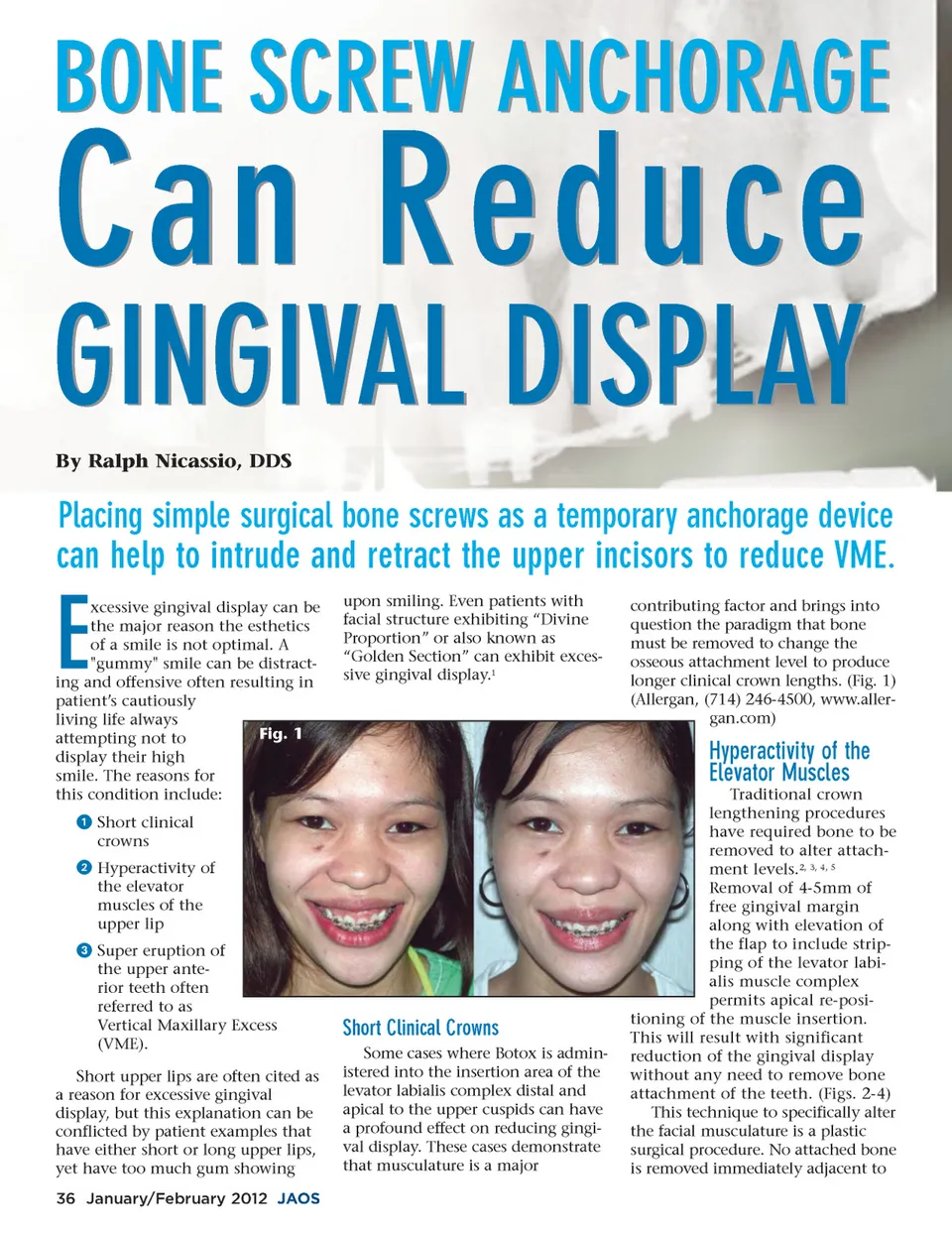
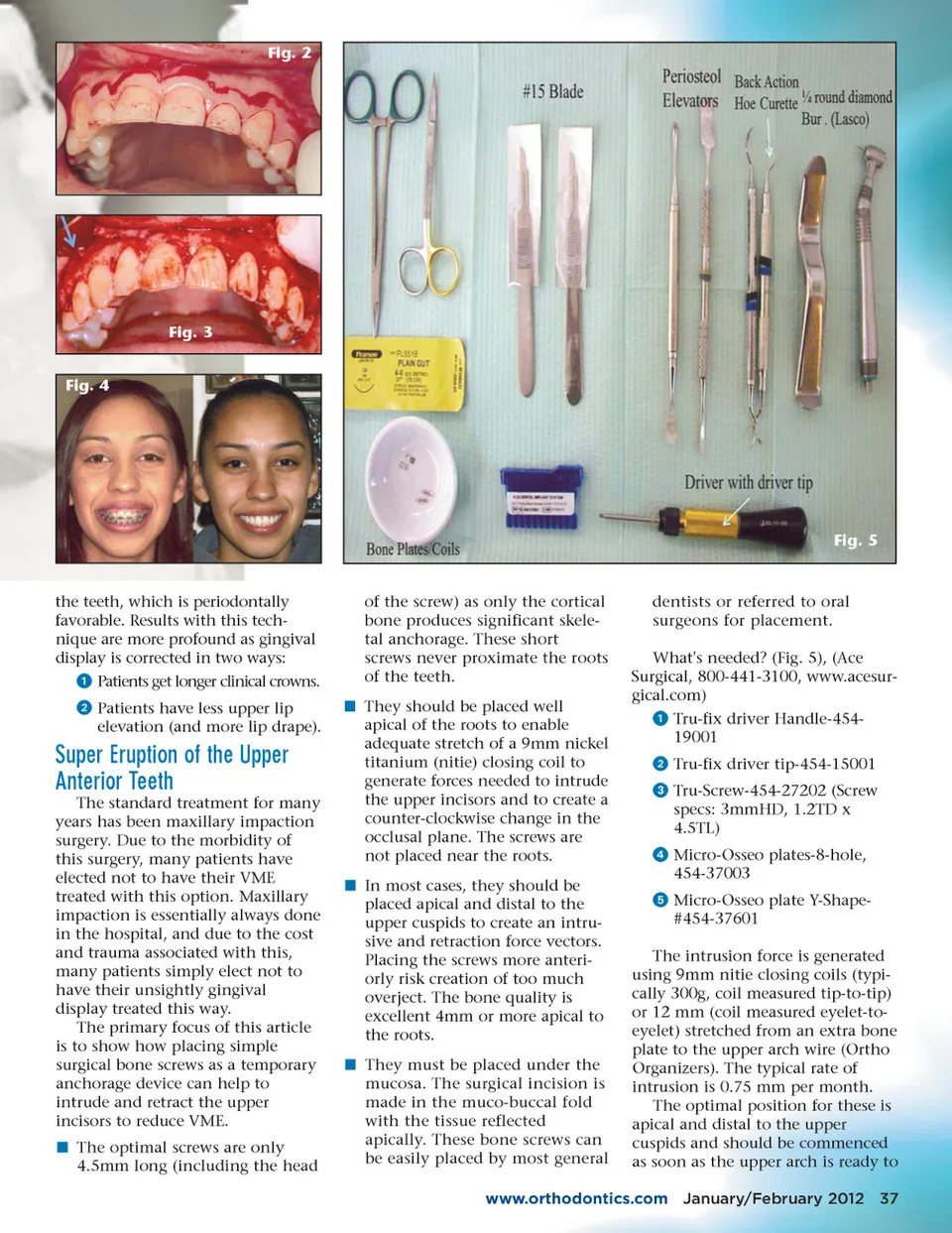
BONE SCREW ANCHORAGE Can Reduce GINGIVAL DISPLAY By Ralph Nicassio, DDS Placing simple surgical bone screws as a temporary anchorage device can help to intrude and retract the upper incisors to reduce VME. E xcessive gingival display can be the major reason the esthetics of a smile is not optimal. A "gummy" smile can be distract-ing and offensive often resulting in patient’s cautiously living life always Fig. 1 attempting not to display their high smile. The reasons for this condition include: ᕡ Short clinical crowns ᕢ Hyperactivity of the elevator muscles of the upper lip ᕣ Super eruption of the upper ante-rior teeth often referred to as Vertical Maxillary Excess (VME). Short upper lips are often cited as a reason for excessive gingival display, but this explanation can be conflicted by patient examples that have either short or long upper lips, yet have too much gum showing 36 January/February 2012 JAOS upon smiling. Even patients with facial structure exhibiting “Divine Proportion” or also known as “Golden Section” can exhibit exces-sive gingival display. 1 contributing factor and brings into question the paradigm that bone must be removed to change the osseous attachment level to produce longer clinical crown lengths. (Fig. 1) (Allergan, (714) 246-4500, www.aller-gan.com) Hyperactivity of the Elevator Muscles Traditional crown lengthening procedures have required bone to be removed to alter attach-ment levels. 2, 3, 4, 5 Removal of 4-5mm of free gingival margin along with elevation of the flap to include strip-ping of the levator labi-alis muscle complex permits apical re-posi-tioning of the muscle insertion. This will result with significant reduction of the gingival display without any need to remove bone attachment of the teeth. (Figs. 2-4) This technique to specifically alter the facial musculature is a plastic surgical procedure. No attached bone is removed immediately adjacent to Short Clinical Crowns Some cases where Botox is admin-istered into the insertion area of the levator labialis complex distal and apical to the upper cuspids can have a profound effect on reducing gingi-val display. These cases demonstrate that musculature is a major
Journal of the American Orthodontic Society January-February 2012: Page 36