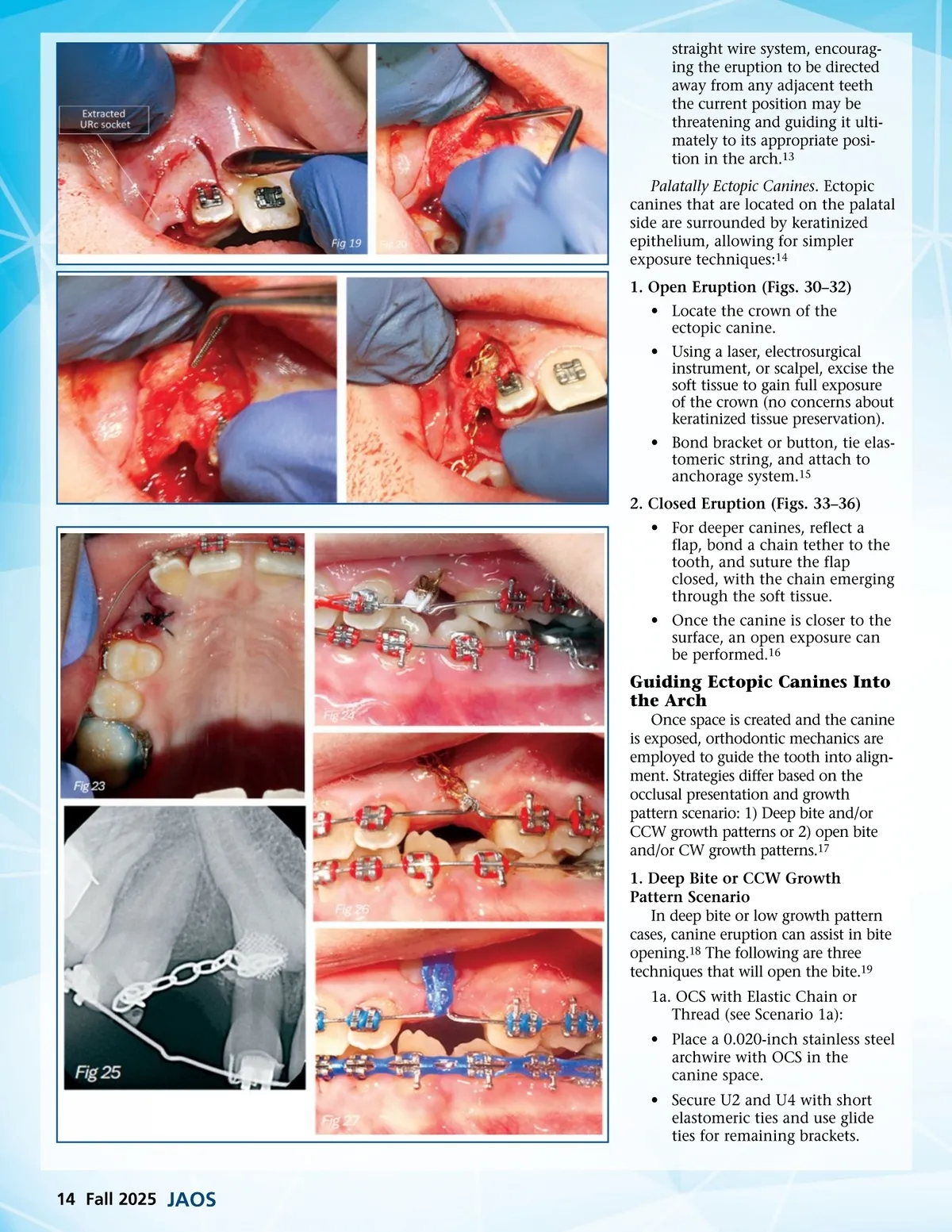
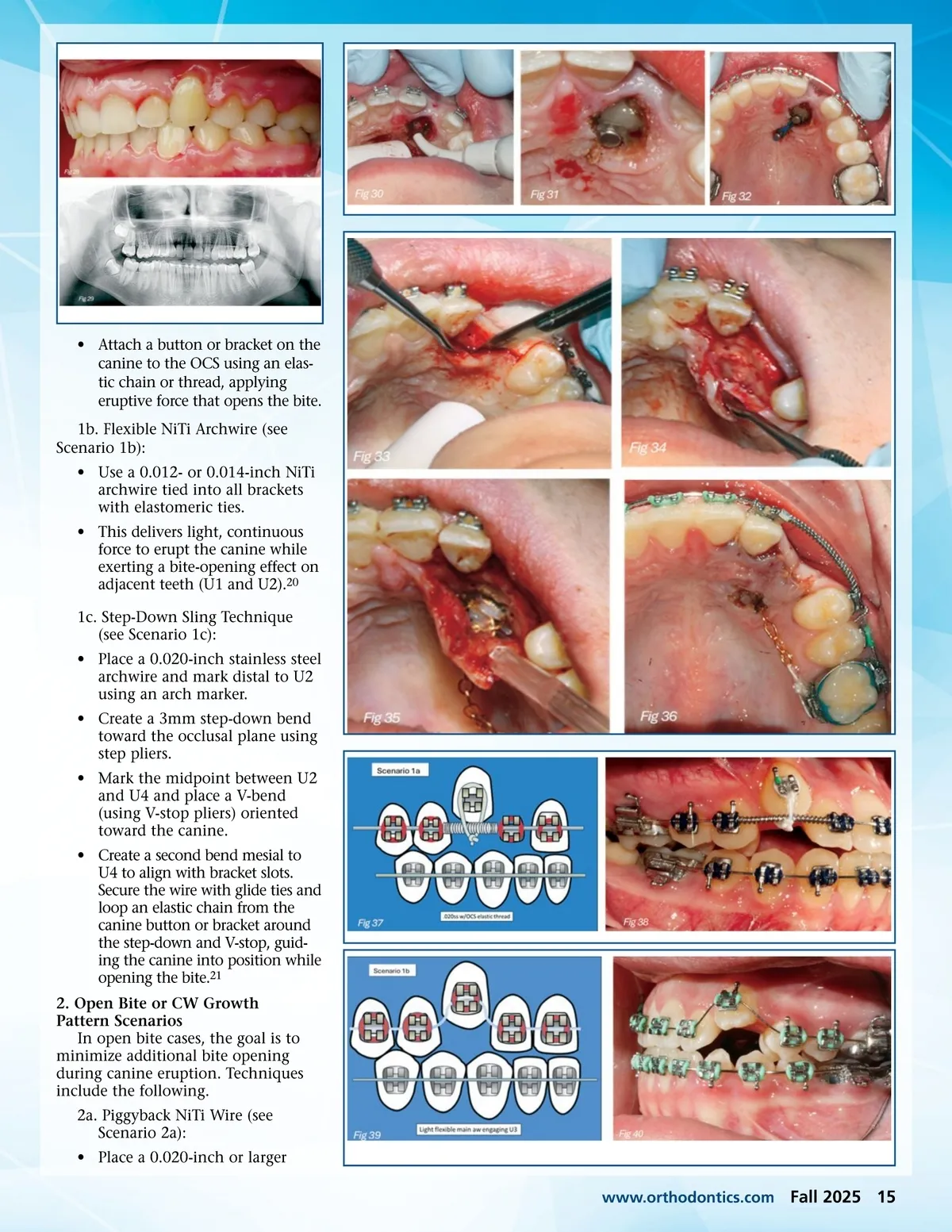
• Attach a button or bracket on the canine to the OCS using an elas-tic chain or thread, applying eruptive force that opens the bite. 1b. Flexible NiTi Archwire (see Scenario 1b): • Use a 0.012-or 0.014-inch NiTi archwire tied into all brackets with elastomeric ties. • This delivers light, continuous force to erupt the canine while exerting a bite-opening effect on adjacent teeth (U1 and U2). 20 1c. Step-Down Sling Technique (see Scenario 1c): • Place a 0.020-inch stainless steel archwire and mark distal to U2 using an arch marker. • Create a 3mm step-down bend toward the occlusal plane using step pliers. • Mark the midpoint between U2 and U4 and place a V-bend (using V-stop pliers) oriented toward the canine. • Create a second bend mesial to U4 to align with bracket slots. Secure the wire with glide ties and loop an elastic chain from the canine button or bracket around the step-down and V-stop, guid-ing the canine into position while opening the bite. 21 2. Open Bite or CW Growth Pattern Scenarios In open bite cases, the goal is to minimize additional bite opening during canine eruption. Techniques include the following. 2a. Piggyback NiTi Wire (see Scenario 2a): • Place a 0.020-inch or larger www.orthodontics.com Fall 2025 15
Journal of the American Orthodontic Society Fall 2025: Page 15