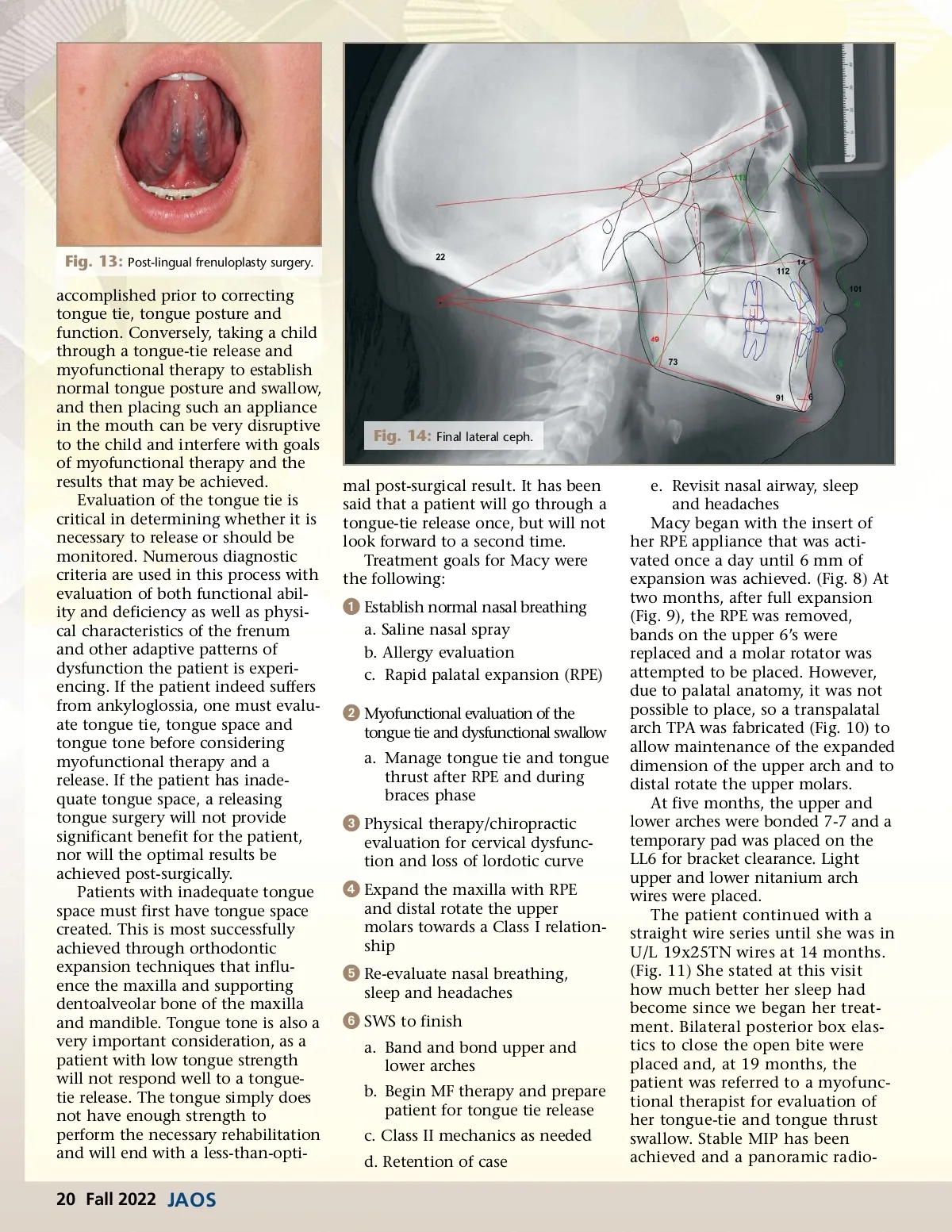
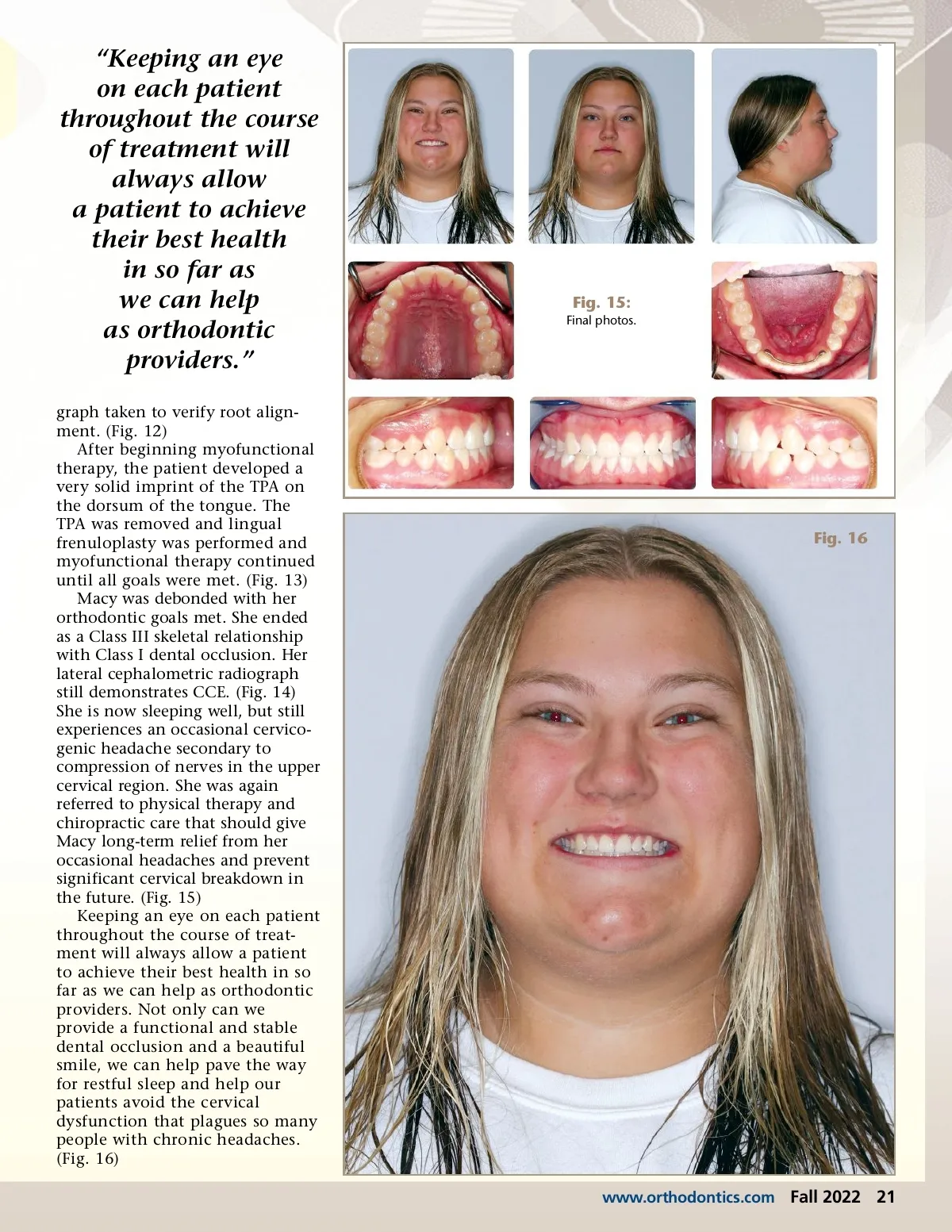
“Keeping an eye on each patient throughout the course of treatment will always allow a patient to achieve their best health in so far as we can help as orthodontic providers.” graph taken to verify root align-ment. (Fig. 12) After beginning myofunctional therapy, the patient developed a very solid imprint of the TPA on the dorsum of the tongue. The TPA was removed and lingual frenuloplasty was performed and myofunctional therapy continued until all goals were met. (Fig. 13) Macy was debonded with her orthodontic goals met. She ended as a Class III skeletal relationship with Class I dental occlusion. Her lateral cephalometric radiograph still demonstrates CCE. (Fig. 14) She is now sleeping well, but still experiences an occasional cervico-genic headache secondary to compression of nerves in the upper cervical region. She was again referred to physical therapy and chiropractic care that should give Macy long-term relief from her occasional headaches and prevent significant cervical breakdown in the future. (Fig. 15) Keeping an eye on each patient throughout the course of treat-ment will always allow a patient to achieve their best health in so far as we can help as orthodontic providers. Not only can we provide a functional and stable dental occlusion and a beautiful smile, we can help pave the way for restful sleep and help our patients avoid the cervical dysfunction that plagues so many people with chronic headaches. (Fig. 16) Fig. 15: Final photos. Fig. 16 www.orthodontics.com Fall 2022 21
Journal of the American Orthodontic Society Fall 2022: Page 21