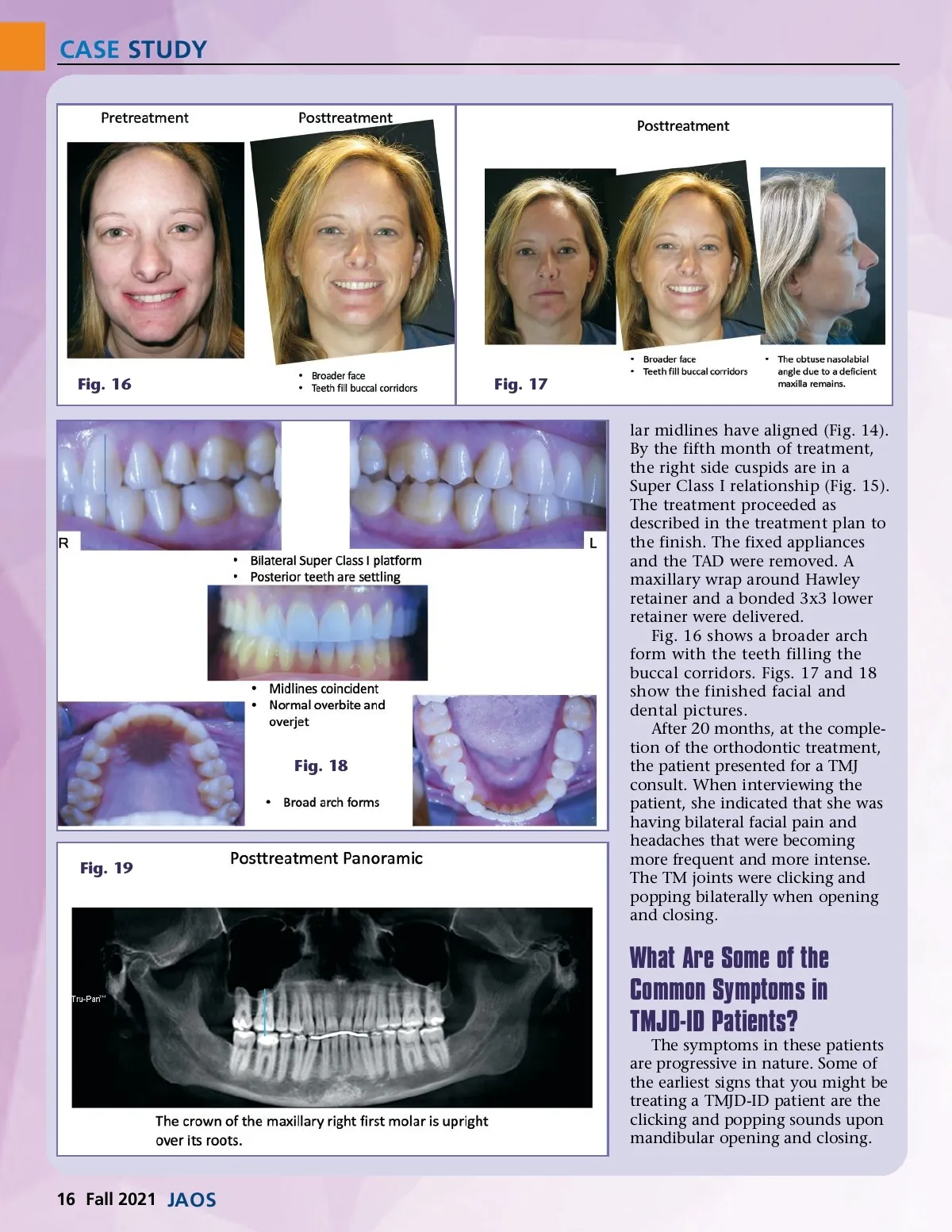
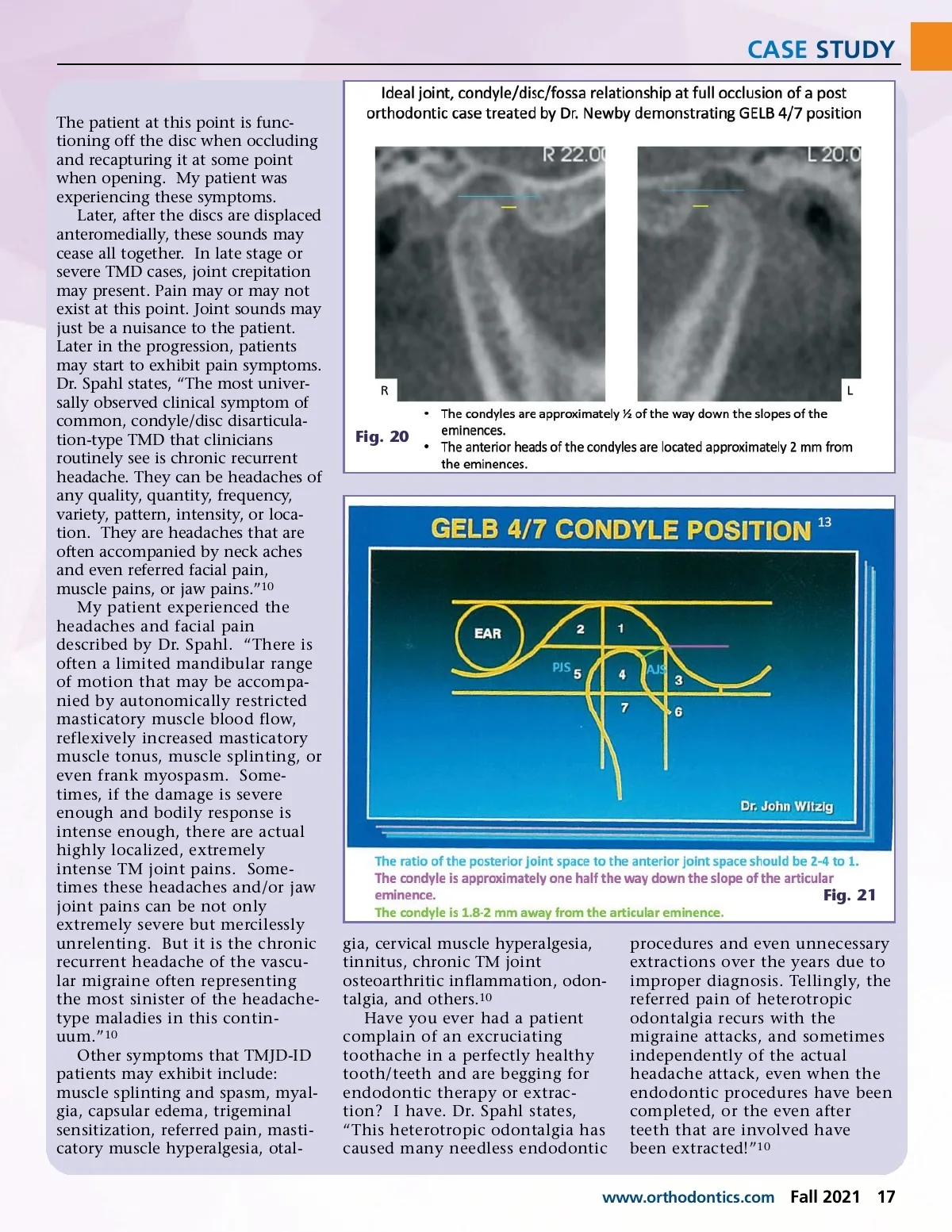
CASE STUDY Fig. 16 Fig. 17 lar midlines have aligned (Fig. 14). By the fifth month of treatment, the right side cuspids are in a Super Class I relationship (Fig. 15). The treatment proceeded as described in the treatment plan to the finish. The fixed appliances and the TAD were removed. A maxillary wrap around Hawley retainer and a bonded 3x3 lower retainer were delivered. Fig. 16 shows a broader arch form with the teeth filling the buccal corridors. Figs. 17 and 18 show the finished facial and dental pictures. After 20 months, at the comple-tion of the orthodontic treatment, the patient presented for a TMJ consult. When interviewing the patient, she indicated that she was having bilateral facial pain and headaches that were becoming more frequent and more intense. The TM joints were clicking and popping bilaterally when opening and closing. Fig. 18 Fig. 19 What Are Some of the Common Symptoms in TMJD-ID Patients? The symptoms in these patients are progressive in nature. Some of the earliest signs that you might be treating a TMJD-ID patient are the clicking and popping sounds upon mandibular opening and closing. 16 Fall 2021 JAOS
Journal of the American Orthodontic Society Fall 2021: Page 16