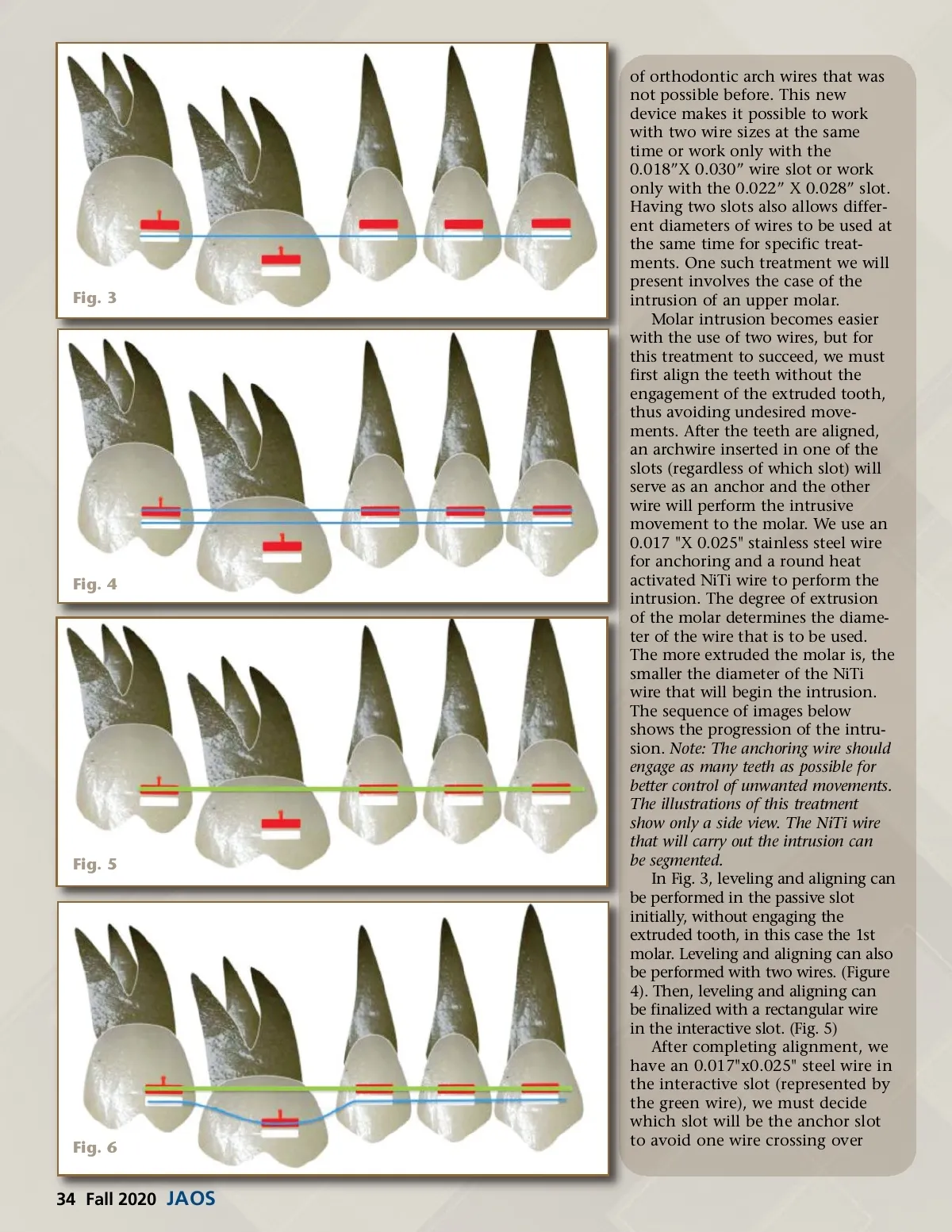
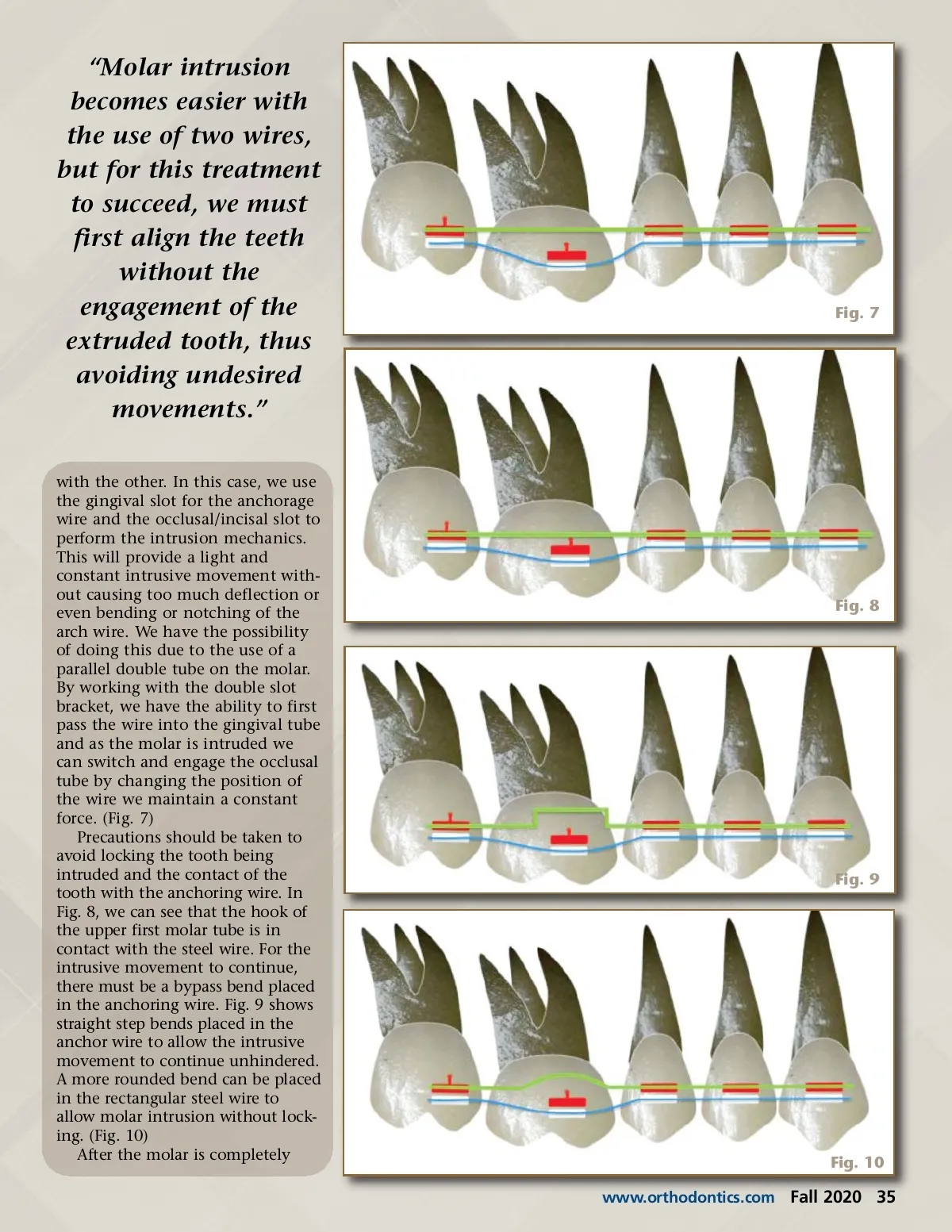
“Molar intrusion becomes easier with the use of two wires, but for this treatment to succeed, we must first align the teeth without the engagement of the extruded tooth, thus avoiding undesired movements.” with the other. In this case, we use the gingival slot for the anchorage wire and the occlusal/incisal slot to perform the intrusion mechanics. This will provide a light and constant intrusive movement with-out causing too much deflection or even bending or notching of the arch wire. We have the possibility of doing this due to the use of a parallel double tube on the molar. By working with the double slot bracket, we have the ability to first pass the wire into the gingival tube and as the molar is intruded we can switch and engage the occlusal tube by changing the position of the wire we maintain a constant force. (Fig. 7) Precautions should be taken to avoid locking the tooth being intruded and the contact of the tooth with the anchoring wire. In Fig. 8, we can see that the hook of the upper first molar tube is in contact with the steel wire. For the intrusive movement to continue, there must be a bypass bend placed in the anchoring wire. Fig. 9 shows straight step bends placed in the anchor wire to allow the intrusive movement to continue unhindered. A more rounded bend can be placed in the rectangular steel wire to allow molar intrusion without lock-ing. (Fig. 10) After the molar is completely www.orthodontics.com Fig. 7 Fig. 8 Fig. 9 Fig. 10 Fall 2020 35
Journal of the American Orthodontic Society Fall 2020: Page 35