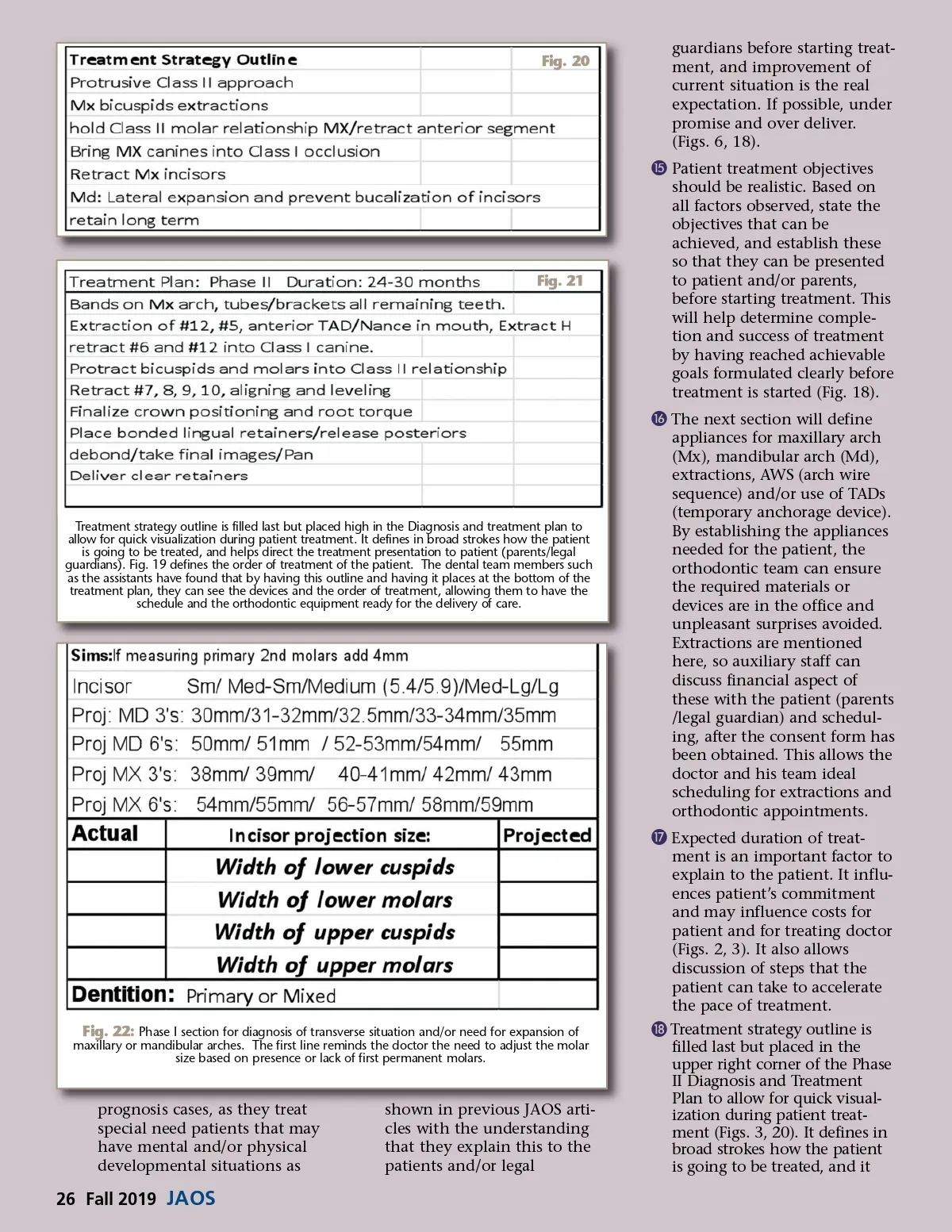
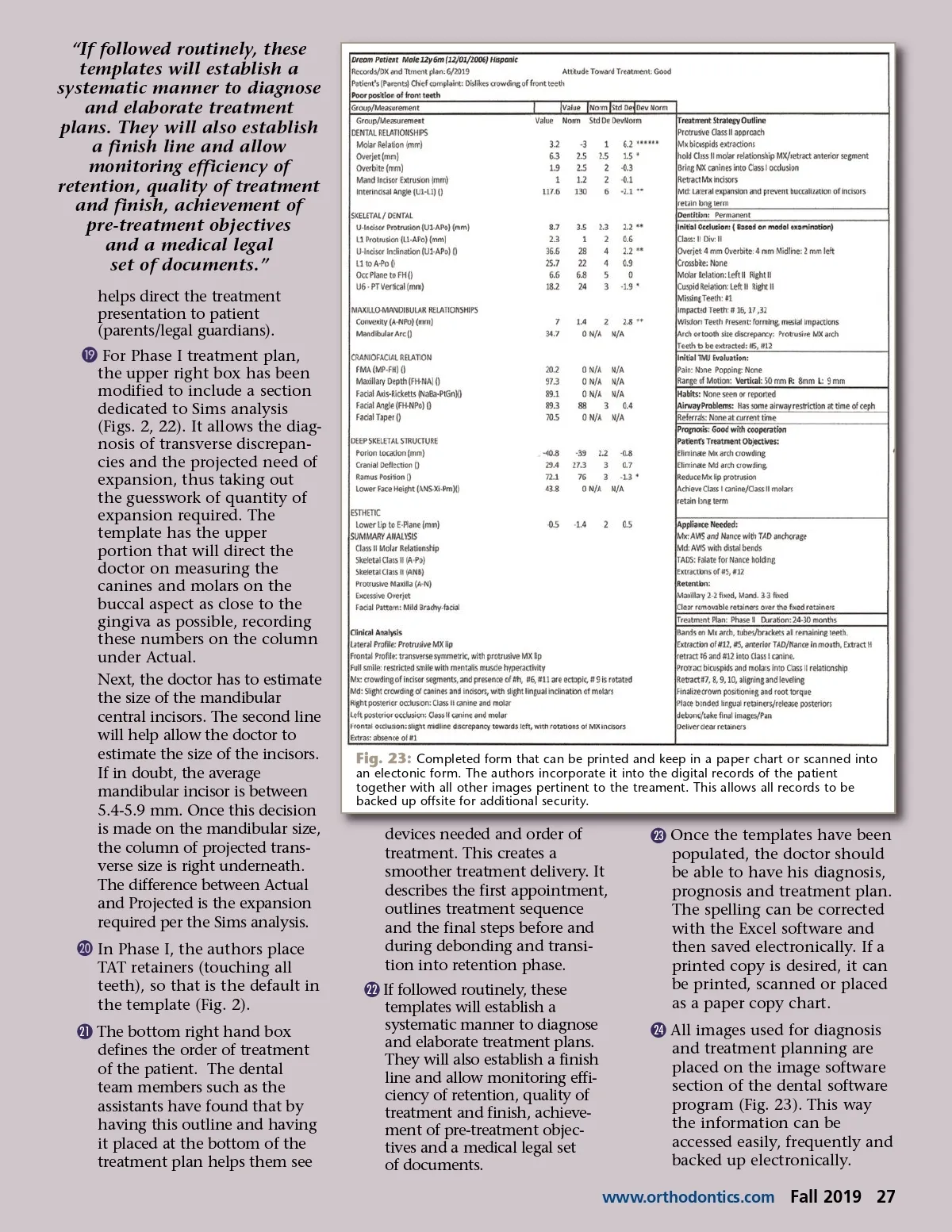
Fig. 20 guardians before starting treat-ment, and improvement of current situation is the real expectation. If possible, under promise and over deliver. (Figs. 6, 18). ƺ Patient treatment objectives should be realistic. Based on all factors observed, state the objectives that can be achieved, and establish these so that they can be presented to patient and/or parents, before starting treatment. This will help determine comple-tion and success of treatment by having reached achievable goals formulated clearly before treatment is started (Fig. 18). ƻ The next section will define appliances for maxillary arch (Mx), mandibular arch (Md), extractions, AWS (arch wire sequence) and/or use of TADs (temporary anchorage device). By establishing the appliances needed for the patient, the orthodontic team can ensure the required materials or devices are in the office and unpleasant surprises avoided. Extractions are mentioned here, so auxiliary staff can discuss financial aspect of these with the patient (parents /legal guardian) and schedul-ing, after the consent form has been obtained. This allows the doctor and his team ideal scheduling for extractions and orthodontic appointments. Ƽ Expected duration of treat-ment is an important factor to explain to the patient. It influ-ences patient’s commitment and may influence costs for patient and for treating doctor (Figs. 2, 3). It also allows discussion of steps that the patient can take to accelerate the pace of treatment. ƽ Treatment strategy outline is filled last but placed in the upper right corner of the Phase II Diagnosis and Treatment Plan to allow for quick visual-ization during patient treat-ment (Figs. 3, 20). It defines in broad strokes how the patient is going to be treated, and it Fig. 21 Treatment strategy outline is filled last but placed high in the Diagnosis and treatment plan to allow for quick visualization during patient treatment. It defines in broad strokes how the patient is going to be treated, and helps direct the treatment presentation to patient (parents/legal guardians). Fig. 19 defines the order of treatment of the patient. The dental team members such as the assistants have found that by having this outline and having it places at the bottom of the treatment plan, they can see the devices and the order of treatment, allowing them to have the schedule and the orthodontic equipment ready for the delivery of care. Fig. 22: Phase I section for diagnosis of transverse situation and/or need for expansion of maxillary or mandibular arches. The first line reminds the doctor the need to adjust the molar size based on presence or lack of first permanent molars. prognosis cases, as they treat special need patients that may have mental and/or physical developmental situations as shown in previous JAOS arti-cles with the understanding that they explain this to the patients and/or legal 26 Fall 2019 JAOS
Journal of the American Orthodontic Society Fall 2019: Page 26