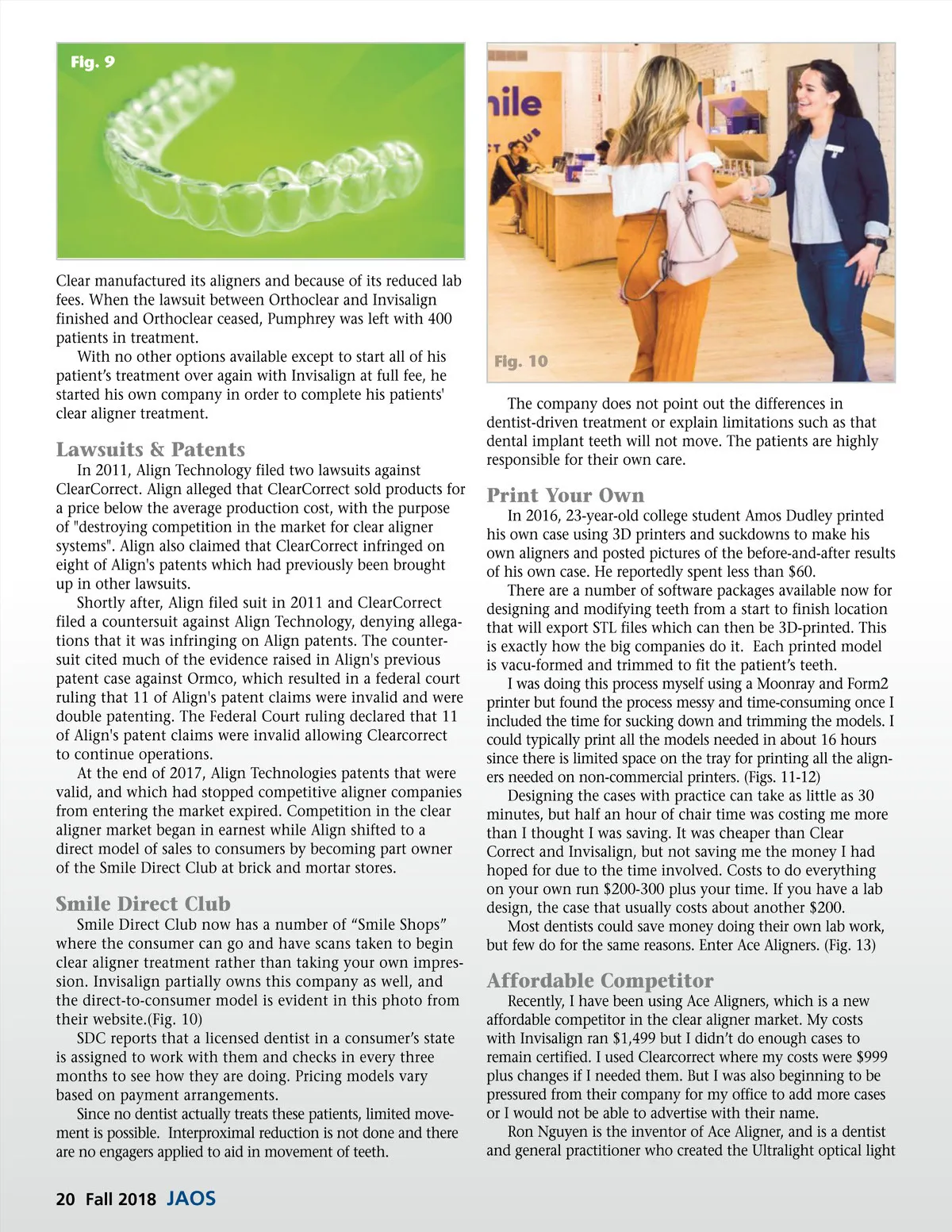
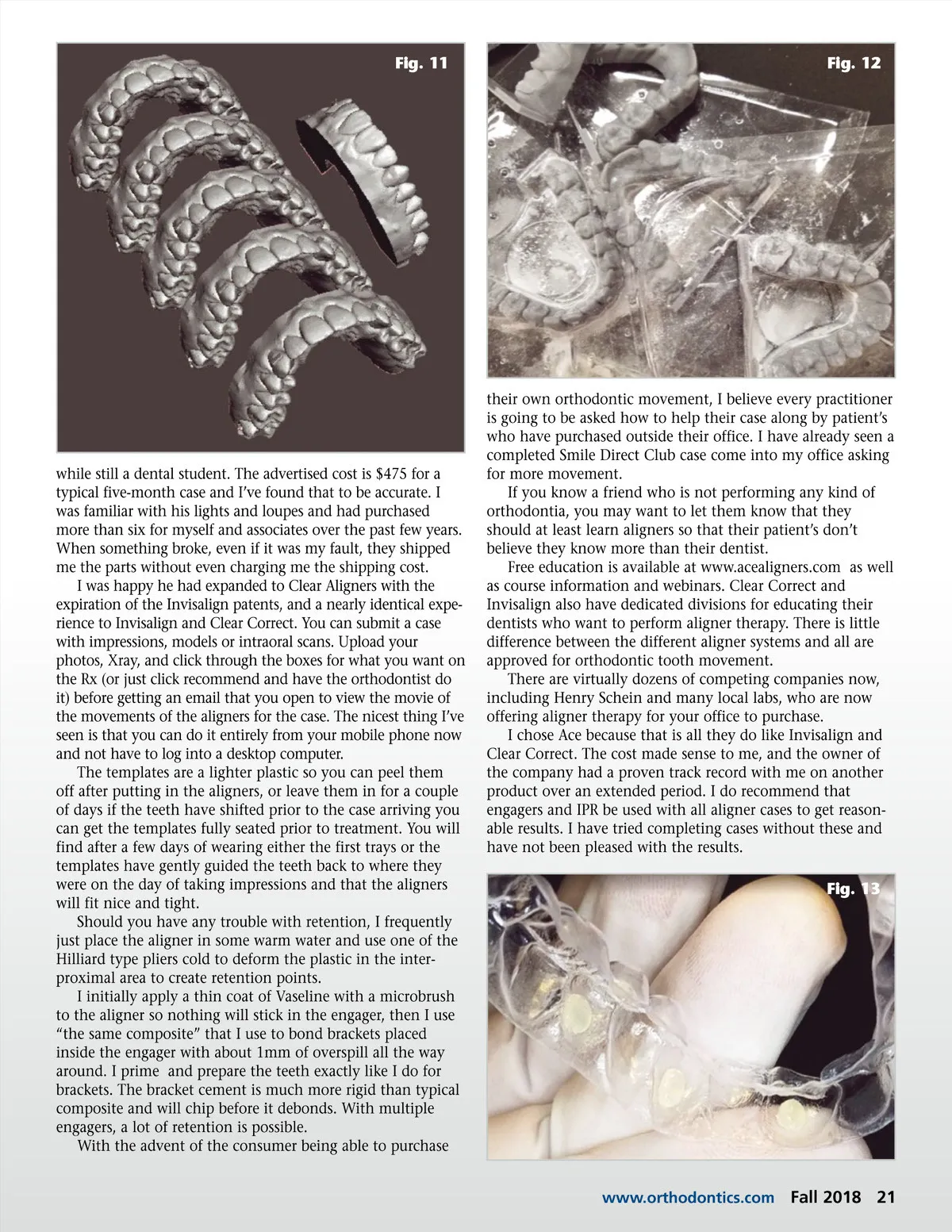
Fig. 11 Fig. 12 while still a dental student. The advertised cost is $475 for a typical five-month case and I’ve found that to be accurate. I was familiar with his lights and loupes and had purchased more than six for myself and associates over the past few years. When something broke, even if it was my fault, they shipped me the parts without even charging me the shipping cost. I was happy he had expanded to Clear Aligners with the expiration of the Invisalign patents, and a nearly identical expe-rience to Invisalign and Clear Correct. You can submit a case with impressions, models or intraoral scans. Upload your photos, Xray, and click through the boxes for what you want on the Rx (or just click recommend and have the orthodontist do it) before getting an email that you open to view the movie of the movements of the aligners for the case. The nicest thing I’ve seen is that you can do it entirely from your mobile phone now and not have to log into a desktop computer. The templates are a lighter plastic so you can peel them off after putting in the aligners, or leave them in for a couple of days if the teeth have shifted prior to the case arriving you can get the templates fully seated prior to treatment. You will find after a few days of wearing either the first trays or the templates have gently guided the teeth back to where they were on the day of taking impressions and that the aligners will fit nice and tight. Should you have any trouble with retention, I frequently just place the aligner in some warm water and use one of the Hilliard type pliers cold to deform the plastic in the inter-proximal area to create retention points. I initially apply a thin coat of Vaseline with a microbrush to the aligner so nothing will stick in the engager, then I use “the same composite” that I use to bond brackets placed inside the engager with about 1mm of overspill all the way around. I prime and prepare the teeth exactly like I do for brackets. The bracket cement is much more rigid than typical composite and will chip before it debonds. With multiple engagers, a lot of retention is possible. With the advent of the consumer being able to purchase their own orthodontic movement, I believe every practitioner is going to be asked how to help their case along by patient’s who have purchased outside their office. I have already seen a completed Smile Direct Club case come into my office asking for more movement. If you know a friend who is not performing any kind of orthodontia, you may want to let them know that they should at least learn aligners so that their patient’s don’t believe they know more than their dentist. Free education is available at www.acealigners.com as well as course information and webinars. Clear Correct and Invisalign also have dedicated divisions for educating their dentists who want to perform aligner therapy. There is little difference between the different aligner systems and all are approved for orthodontic tooth movement. There are virtually dozens of competing companies now, including Henry Schein and many local labs, who are now offering aligner therapy for your office to purchase. I chose Ace because that is all they do like Invisalign and Clear Correct. The cost made sense to me, and the owner of the company had a proven track record with me on another product over an extended period. I do recommend that engagers and IPR be used with all aligner cases to get reason-able results. I have tried completing cases without these and have not been pleased with the results. Fig. 13 www.orthodontics.com Fall 2018 21
Journal of the American Orthodontic Society Fall 2018: Page 21