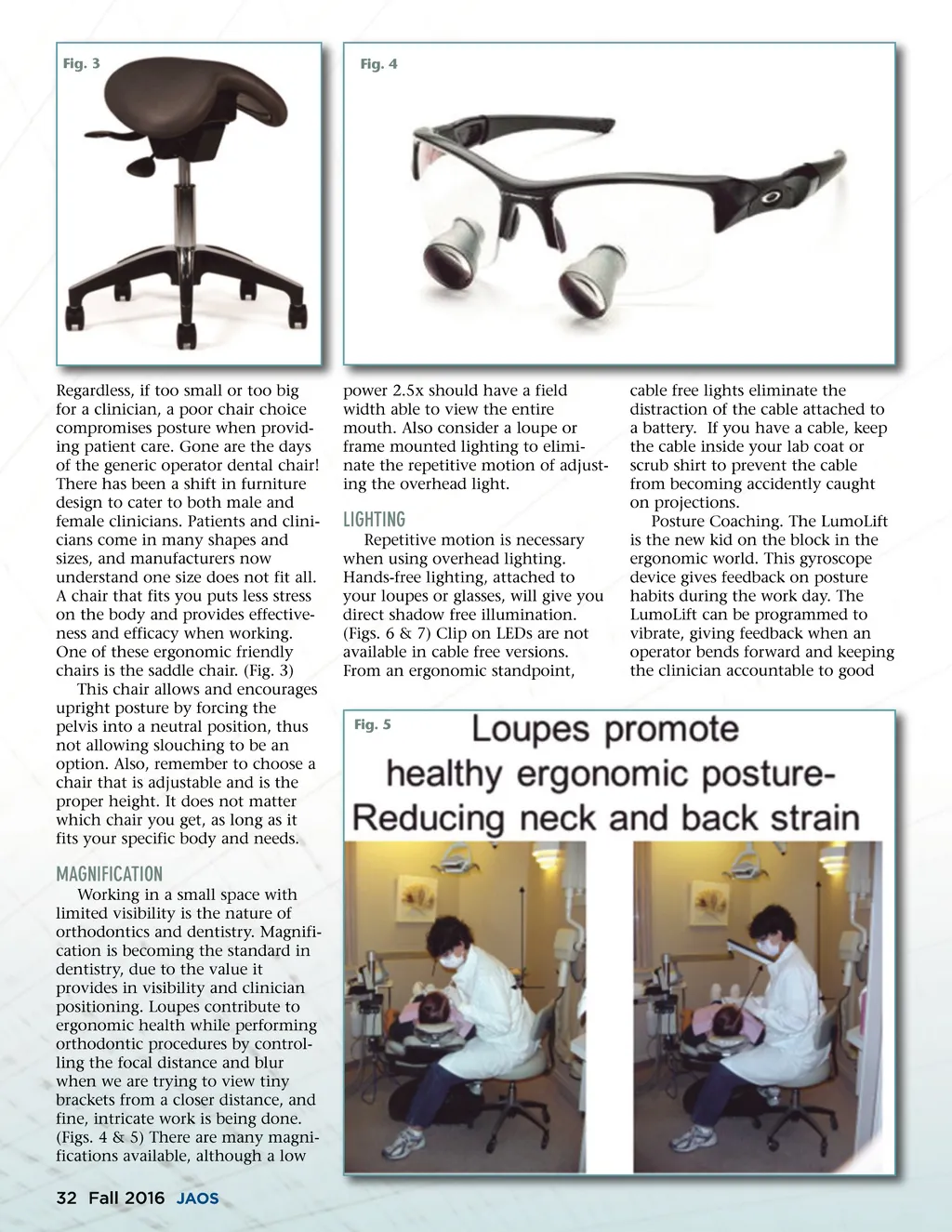
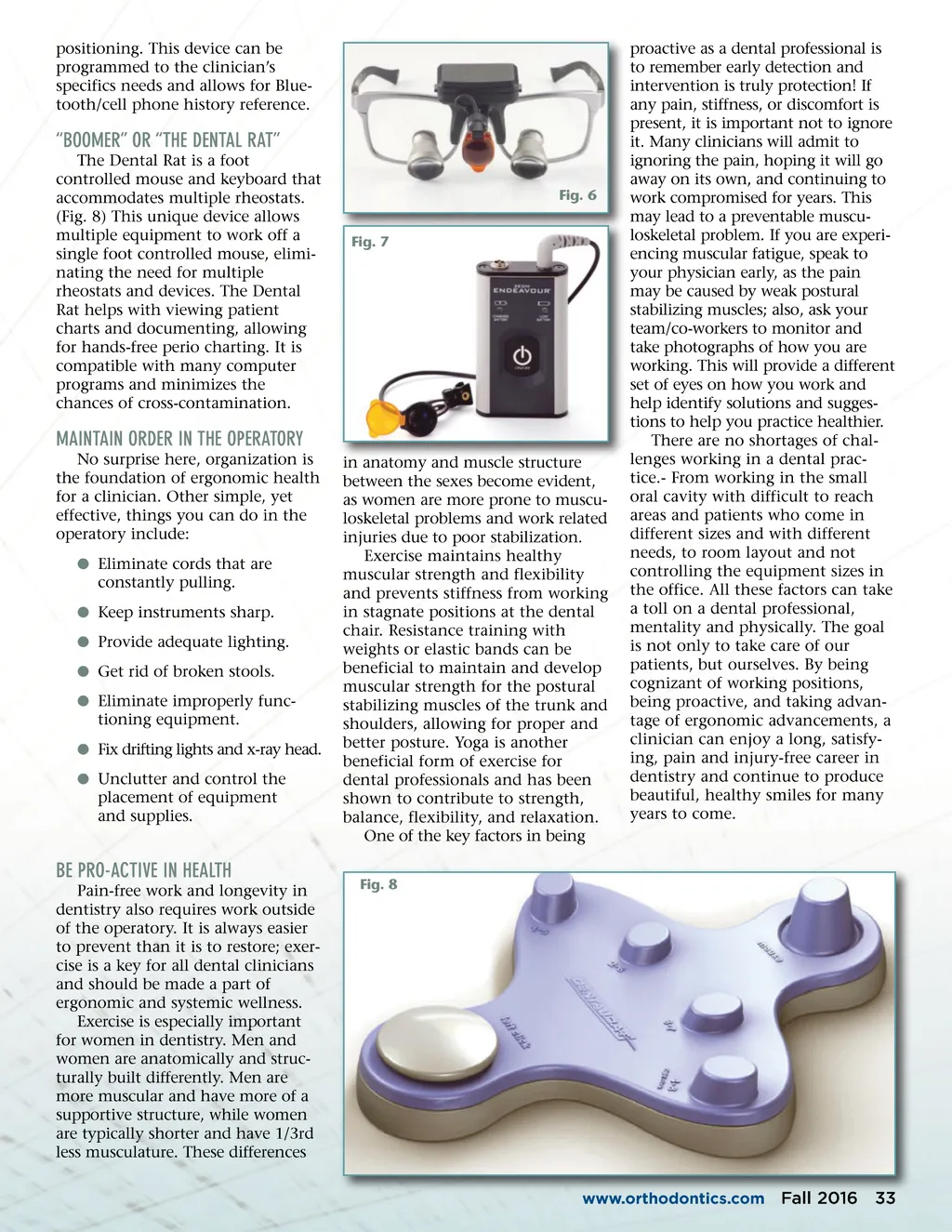
positioning. This device can be programmed to the clinician’s specifics needs and allows for Blue-tooth/cell phone history reference. “BOOMER” OR “THE DENTAL RAT” The Dental Rat is a foot controlled mouse and keyboard that accommodates multiple rheostats. (Fig. 8) This unique device allows multiple equipment to work off a single foot controlled mouse, elimi-nating the need for multiple rheostats and devices. The Dental Rat helps with viewing patient charts and documenting, allowing for hands-free perio charting. It is compatible with many computer programs and minimizes the chances of cross-contamination. Fig. 6 Fig. 7 MAINTAIN ORDER IN THE OPERATORY No surprise here, organization is the foundation of ergonomic health for a clinician. Other simple, yet effective, things you can do in the operatory include: b Eliminate cords that are constantly pulling. b Keep instruments sharp. b Provide adequate lighting. b Get rid of broken stools. b Eliminate improperly func-tioning equipment. b Fix drifting lights and x-ray head. b Unclutter and control the placement of equipment and supplies. in anatomy and muscle structure between the sexes become evident, as women are more prone to muscu-loskeletal problems and work related injuries due to poor stabilization. Exercise maintains healthy muscular strength and flexibility and prevents stiffness from working in stagnate positions at the dental chair. Resistance training with weights or elastic bands can be beneficial to maintain and develop muscular strength for the postural stabilizing muscles of the trunk and shoulders, allowing for proper and better posture. Yoga is another beneficial form of exercise for dental professionals and has been shown to contribute to strength, balance, flexibility, and relaxation. One of the key factors in being Fig. 8 proactive as a dental professional is to remember early detection and intervention is truly protection! If any pain, stiffness, or discomfort is present, it is important not to ignore it. Many clinicians will admit to ignoring the pain, hoping it will go away on its own, and continuing to work compromised for years. This may lead to a preventable muscu-loskeletal problem. If you are experi-encing muscular fatigue, speak to your physician early, as the pain may be caused by weak postural stabilizing muscles; also, ask your team/co-workers to monitor and take photographs of how you are working. This will provide a different set of eyes on how you work and help identify solutions and sugges-tions to help you practice healthier. There are no shortages of chal-lenges working in a dental prac-tice.-From working in the small oral cavity with difficult to reach areas and patients who come in different sizes and with different needs, to room layout and not controlling the equipment sizes in the office. All these factors can take a toll on a dental professional, mentality and physically. The goal is not only to take care of our patients, but ourselves. By being cognizant of working positions, being proactive, and taking advan-tage of ergonomic advancements, a clinician can enjoy a long, satisfy-ing, pain and injury-free career in dentistry and continue to produce beautiful, healthy smiles for many years to come. BE PRO-ACTIVE IN HEALTH Pain-free work and longevity in dentistry also requires work outside of the operatory. It is always easier to prevent than it is to restore; exer-cise is a key for all dental clinicians and should be made a part of ergonomic and systemic wellness. Exercise is especially important for women in dentistry. Men and women are anatomically and struc-turally built differently. Men are more muscular and have more of a supportive structure, while women are typically shorter and have 1/3rd less musculature. These differences www.orthodontics.com Fall 2016 33
Journal of the American Orthodontic Society Fall 2016: Page 33