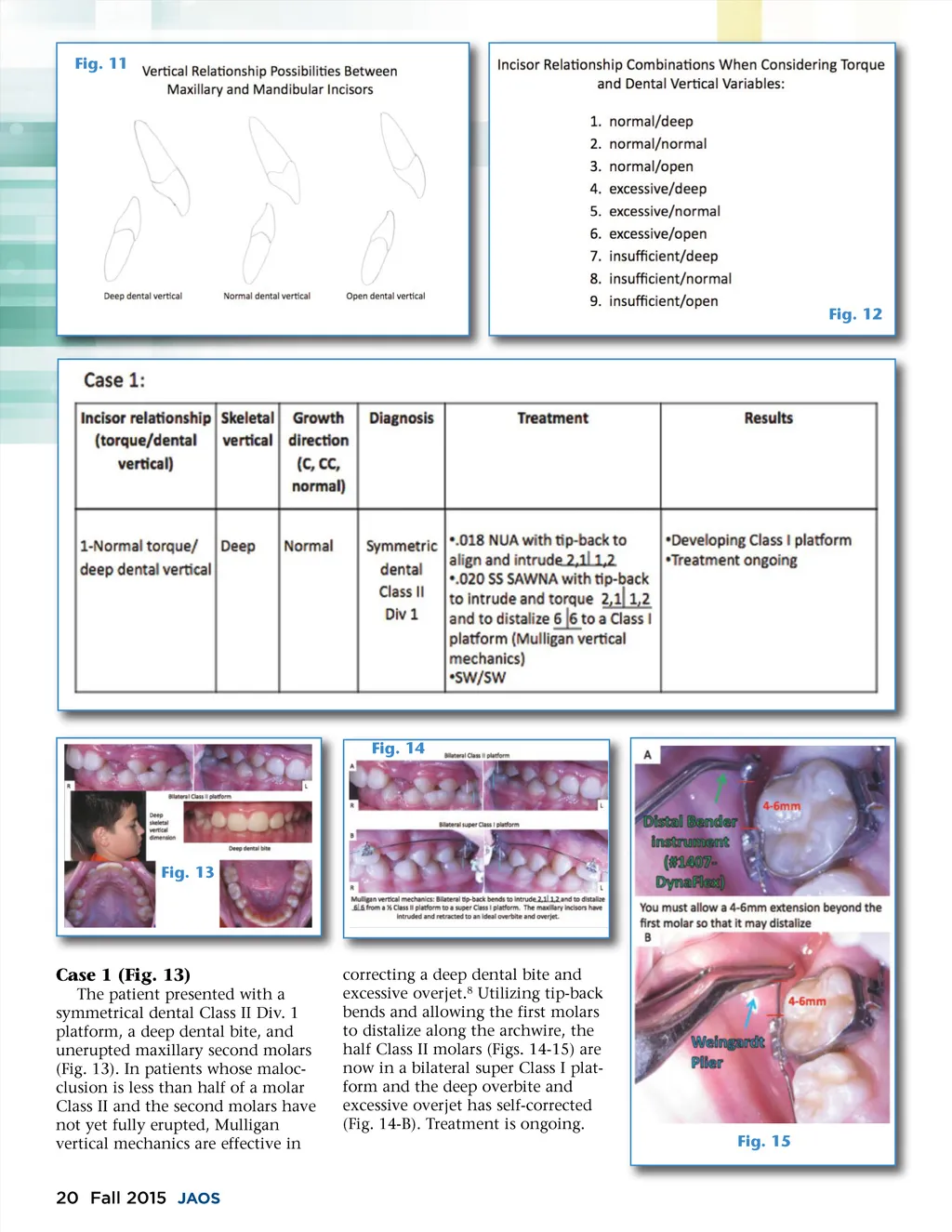
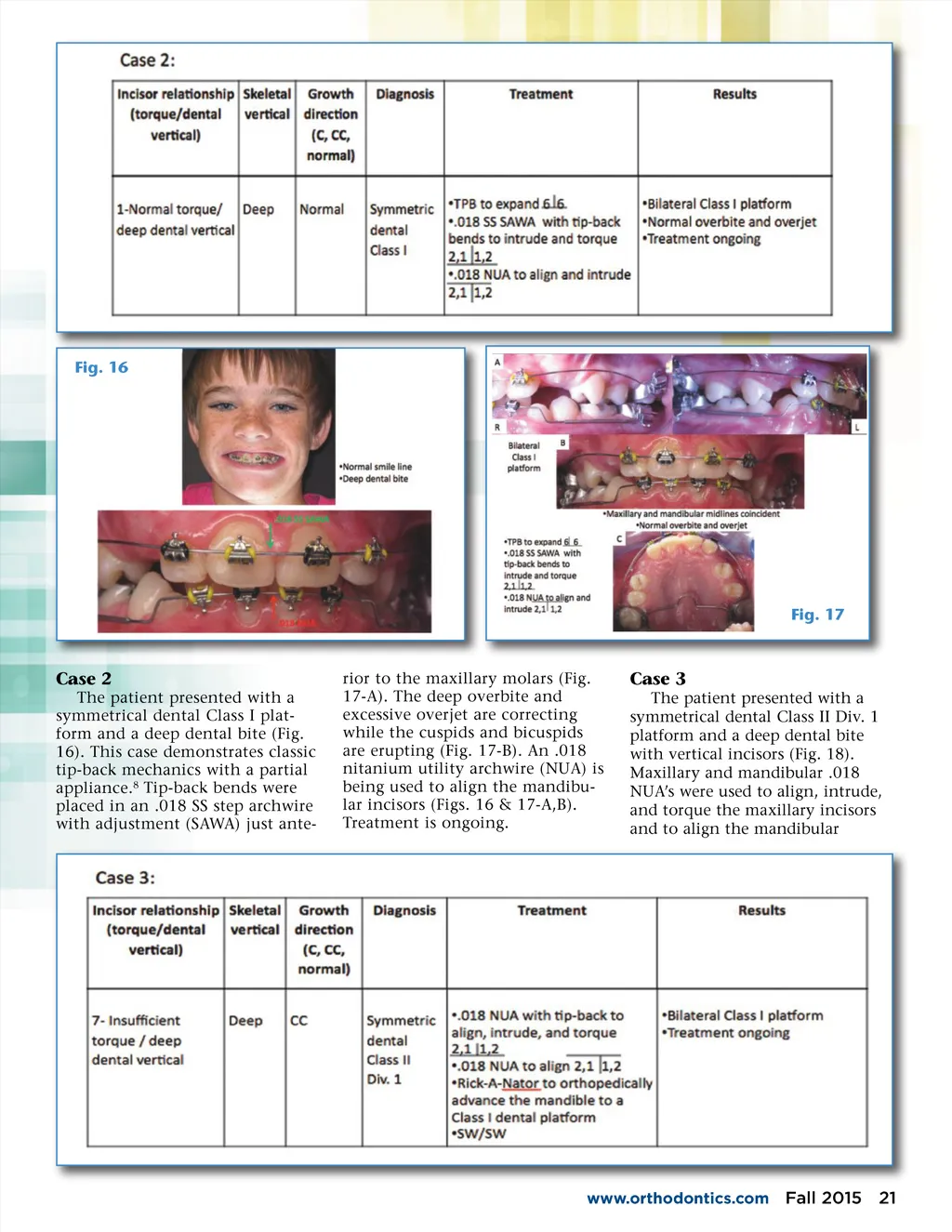
Fig. 16 Fig. 17 Case 2 The patient presented with a symmetrical dental Class I plat-form and a deep dental bite (Fig. 16). This case demonstrates classic tip-back mechanics with a partial appliance. 8 Tip-back bends were placed in an .018 SS step archwire with adjustment (SAWA) just ante-rior to the maxillary molars (Fig. 17-A). The deep overbite and excessive overjet are correcting while the cuspids and bicuspids are erupting (Fig. 17-B). An .018 nitanium utility archwire (NUA) is being used to align the mandibu-lar incisors (Figs. 16 & 17-A,B). Treatment is ongoing. Case 3 The patient presented with a symmetrical dental Class II Div. 1 platform and a deep dental bite with vertical incisors (Fig. 18). Maxillary and mandibular .018 NUA’s were used to align, intrude, and torque the maxillary incisors and to align the mandibular www.orthodontics.com Fall 2015 21
Journal of the American Orthodontic Society Fall 2015: Page 21