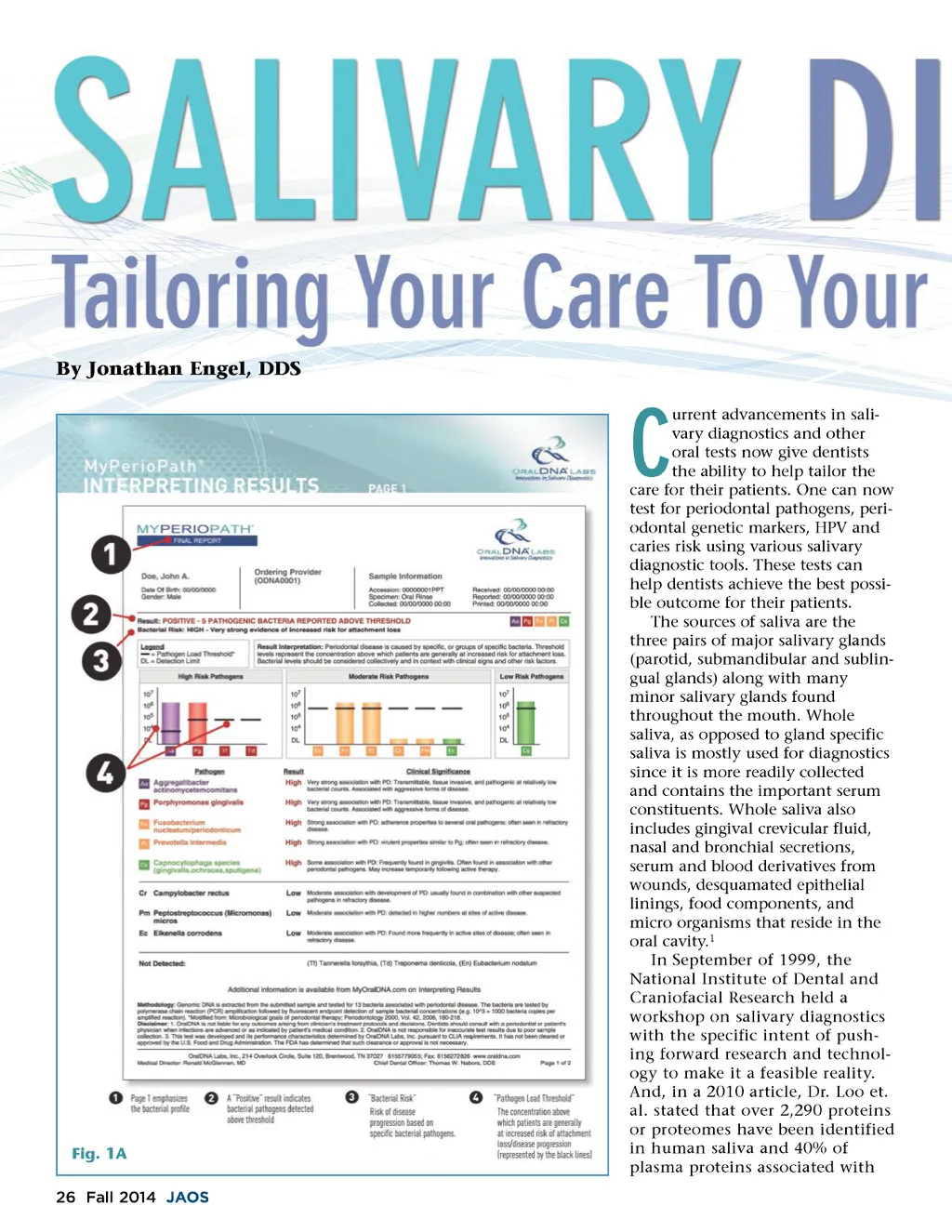
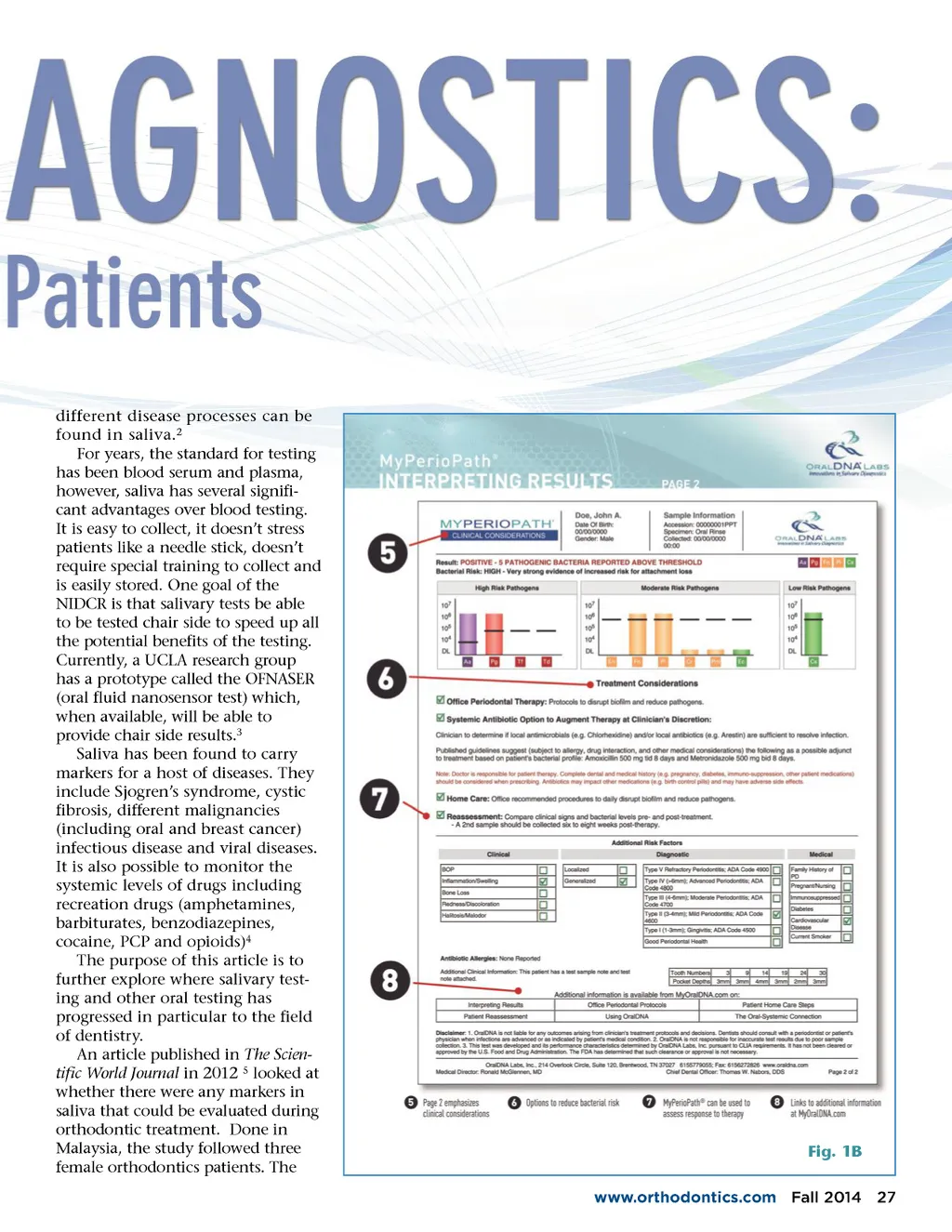
different disease processes can be found in saliva. 2 For years, the standard for testing has been blood serum and plasma, however, saliva has several signifi-cant advantages over blood testing. It is easy to collect, it doesn’t stress patients like a needle stick, doesn’t require special training to collect and is easily stored. One goal of the NIDCR is that salivary tests be able to be tested chair side to speed up all the potential benefits of the testing. Currently, a UCLA research group has a prototype called the OFNASER (oral fluid nanosensor test) which, when available, will be able to provide chair side results. 3 Saliva has been found to carry markers for a host of diseases. They include Sjogren’s syndrome, cystic fibrosis, different malignancies (including oral and breast cancer) infectious disease and viral diseases. It is also possible to monitor the systemic levels of drugs including recreation drugs (amphetamines, barbiturates, benzodiazepines, cocaine, PCP and opioids) 4 The purpose of this article is to further explore where salivary test-ing and other oral testing has progressed in particular to the field of dentistry. An article published in The Scien-tific World Journal in 2012 5 looked at whether there were any markers in saliva that could be evaluated during orthodontic treatment. Done in Malaysia, the study followed three female orthodontics patients. The Fig. 1B www.orthodontics.com Fall 2014 27
Journal of the American Orthodontic Society Fall 2014: Page 27