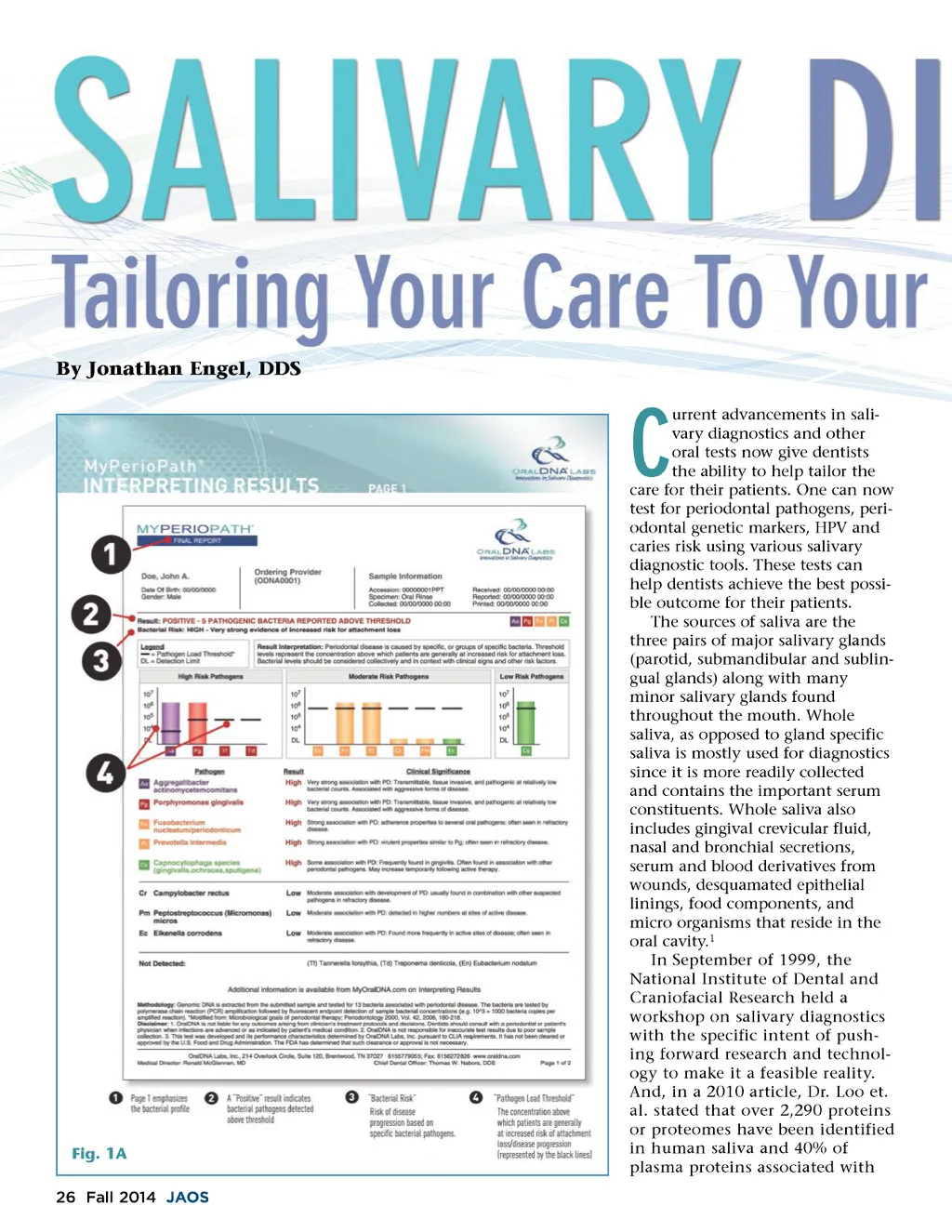
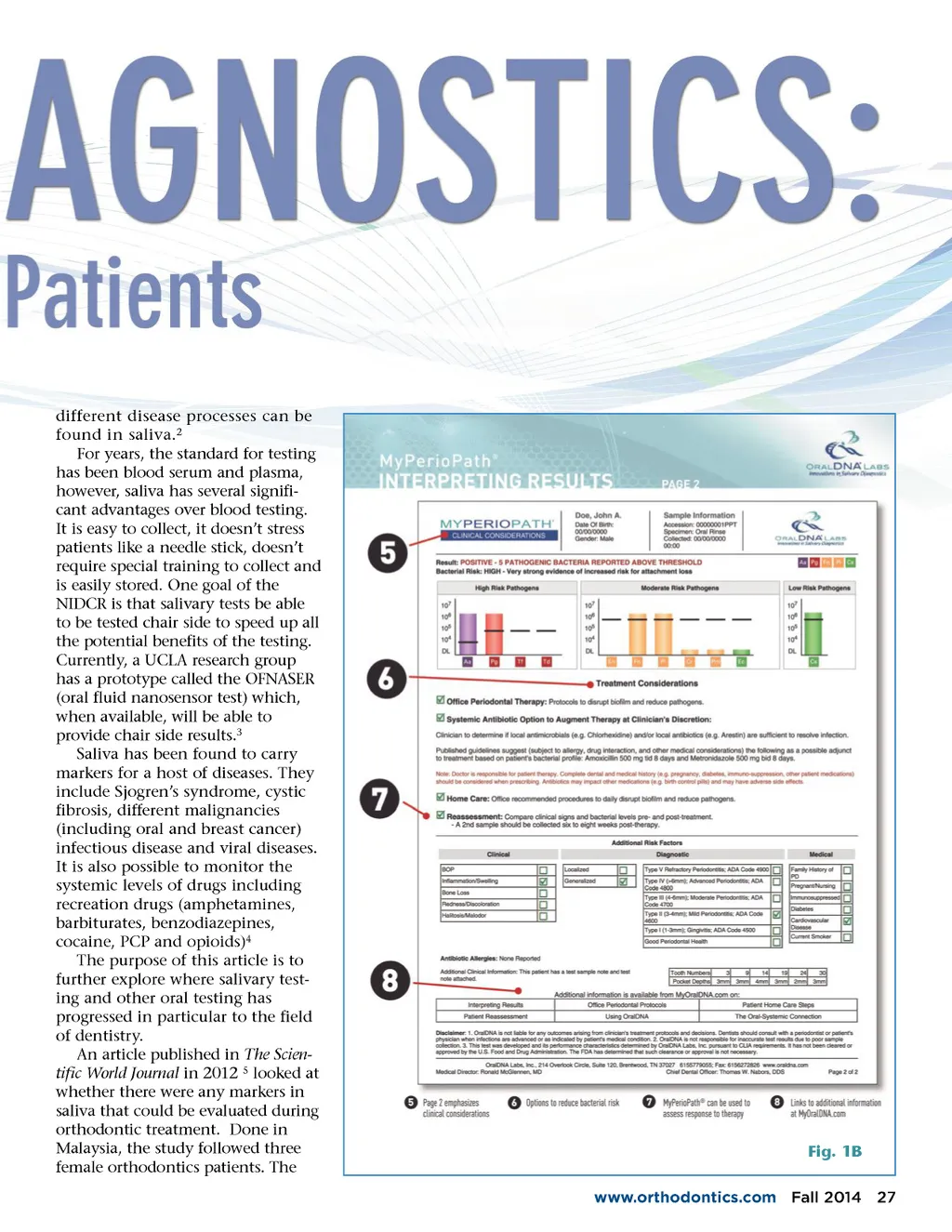
By Jonathan Engel, DDS urrent advancements in sali-vary diagnostics and other oral tests now give dentists the ability to help tailor the care for their patients. One can now test for periodontal pathogens, peri-odontal genetic markers, HPV and caries risk using various salivary diagnostic tools. These tests can help dentists achieve the best possi-ble outcome for their patients. The sources of saliva are the three pairs of major salivary glands (parotid, submandibular and sublin-gual glands) along with many minor salivary glands found throughout the mouth. Whole saliva, as opposed to gland specific saliva is mostly used for diagnostics since it is more readily collected and contains the important serum constituents. Whole saliva also includes gingival crevicular fluid, nasal and bronchial secretions, serum and blood derivatives from wounds, desquamated epithelial linings, food components, and micro organisms that reside in the oral cavity. 1 In September of 1999, the National Institute of Dental and Craniofacial Research held a workshop on salivary diagnostics with the specific intent of push-ing forward research and technol-ogy to make it a feasible reality. And, in a 2010 article, Dr. Loo et. al. stated that over 2,290 proteins or proteomes have been identified in human saliva and 40% of plasma proteins associated with C Fig. 1A 26 Fall 2014 JAOS
Journal of the American Orthodontic Society Fall 2014: Page 26